
 简体中文
简体中文 繁体中文
繁体中文 Deutsch
 日本語
日本語 한국어
한국어 Tiếng Việt
 Русский
 ไทย
ไทย Bahasa Indonesia
 Bahasa Melayu
 Filipino
 لالعربية
 Français

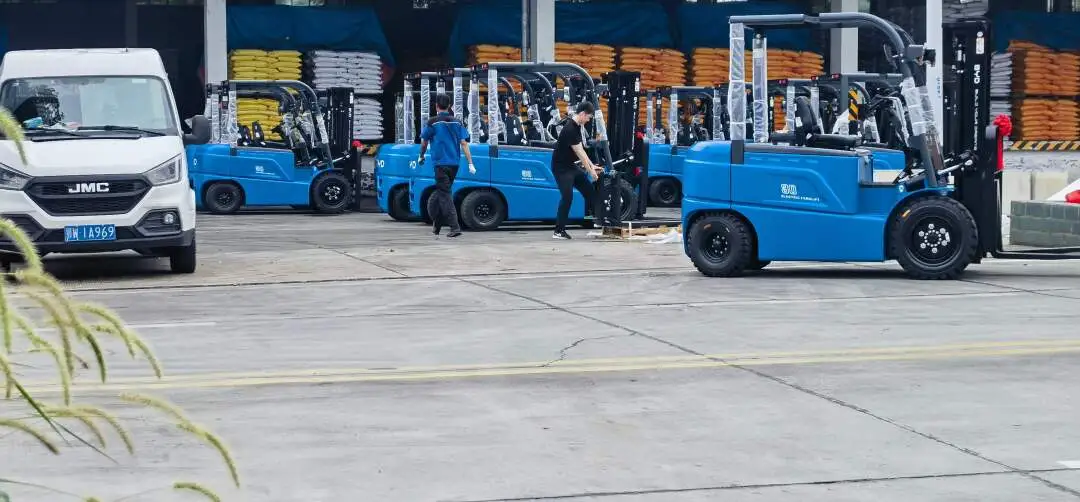
Differences in the basic positioning of the two forklifts
Targeted mainstream use cases
The CPD40 is a counterbalanced heavy-duty electric forklift, which is more suitable for outdoor open-air loading and unloading and long-distance transshipment operation scenarios. It has relatively low requirements for road surface flatness, which can meet the needs of cross-regional cargo turnover between factories, and can easily cope with various complex traffic conditions at outdoor loading and unloading points. The ECB40 is a 4-ton electric handling model that focuses on stacking operations. It is more suitable for narrow channel operations in warehouses, focusing on high-level stacking and short-distance transshipment in warehouses. It has a higher utilization rate of operating space and can fully match the moving line planning requirements of warehousing scenarios.
Target user groups
CPD40 is more suitable for logistics transit yards and heavy manufacturing enterprises with outdoor loading and unloading needs. It is suitable for scenarios with high requirements for single continuous operation time, and can support the inbound and outbound transshipment of large batches of goods. ECB40 is more suitable for e-commerce and fast-moving consumer storage sites with large storage scale and regular channel planning in the warehouse. It can effectively improve the warehouse floor area ratio and reduce the space waste caused by channel occupation.
Differences in core configuration orientation
PTO Adjustment Difference
The power output adjustment of the CPD40 is more biased towards large torque output, and it can pass smoothly in the face of large slope factory ramps and uneven gravel roads, without the problem of power shortage. The power adjustment of the ECB40 is more biased towards fine control, and the smoothness performance is better when adjusting the position in a narrow channel and lifting high-level goods, which can effectively avoid the hidden danger of overturning goods caused by improper operation.
Bearing structure design focuses on
The chassis of the CPD40 has higher ground clearance, the overall structure is designed for heavy-duty continuous operation, the weight distribution of the body is more balanced, and the performance of the partial load is more stable. The body width of the ECB40 has been specifically optimized, and the optional range of the lifting height of the gantry is larger, which is suitable for the storage needs of high shelves, which can further expand the upper storage space of the warehouse.
The difference in actual cost of use
Daily operation and maintenance focus
Both models use a mature three-power system, and the daily DevOps flow is relatively simple and does not require too much maintenance effort. The wearing parts of the CPD40 are more designed for outdoor use, and the replacement cycle is relatively longer, which is suitable for high-frequency outdoor operations. The accessories of the ECB40 are more inclined to the low-loss scene in the warehouse, and the overall purchase cost is more friendly.
Investment difference in long-term adaptation conditions
Users can choose the corresponding model according to their actual operation scenarios, without having to pay for non-essential functions, and the long-term use is more adaptable, which can further improve the overall efficiency of handling operations and reduce the waste of resources caused by unnecessary function idleness.


