
 简体中文
简体中文 繁体中文
繁体中文 Deutsch
 日本語
日本語 한국어
한국어 Tiếng Việt
 Русский
 ไทย
ไทย Bahasa Indonesia
 Bahasa Melayu
 Filipino
 لالعربية
 Français

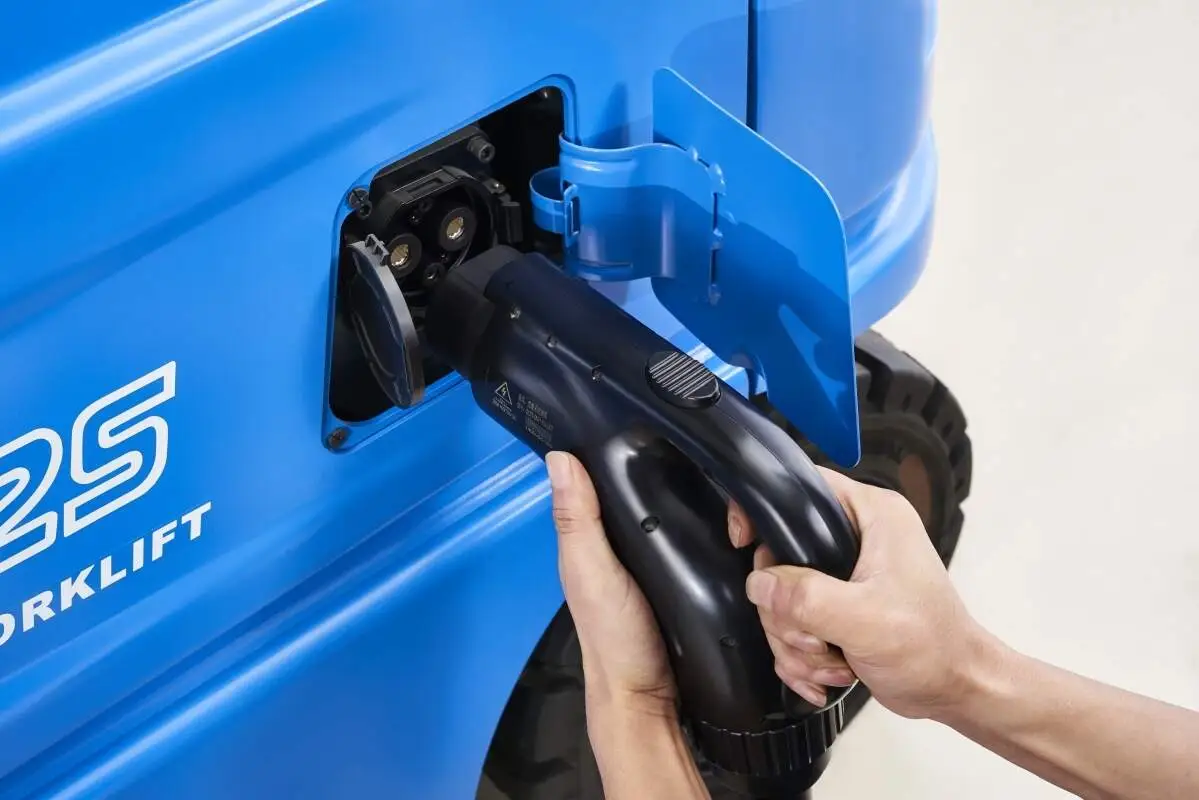
Cold chain logistics scenarios usually have the characteristics of low temperature and high humidity, which will bring many challenges to the operation of lithium-ion forklifts, especially the condensation and moisture that can easily erode core components such as batteries and circuits, affecting the reliability and service life of the equipment. Therefore, for lithium-ion forklifts in cold chain scenarios, the design of anti-condensation and moisture-proof structures has become one of the core technical points. The following will analyze its design principles from multiple dimensions.
Sealed protection system: the first line of defense against moisture intrusion
The sealing design of the overall cabin is the foundation. The cabin where the core components such as the battery compartment and the electronic control cabin are located adopts an integrated sealing structure. Through continuous sealing strips and fine sealing treatment at the splicing, the entry channel of external humid air is minimized. The local precision sealing treatment is aimed at the parts that are prone to gaps such as the wiring harness interface and the charging port, and special seals are used for protection to prevent moisture from penetrating into the interior through subtle gaps, reducing the influence of moisture from the source.
Temperature regulation mechanism: the core means to reduce temperature difference condensation
The temperature balance control of the cabin is the key. Through the built-in temperature control module, the internal temperature of the battery compartment is maintained within a reasonable range with a small temperature difference from the external environment, so as to avoid the condensation of water vapor in the air into liquid water due to the excessive temperature difference. The intelligent temperature control adjustment function can automatically adjust the running state of the temperature control system according to the change of the external environment temperature and humidity. When the external humidity is high, the internal temperature of the cabin is appropriately raised to further reduce the probability of condensation.
Drainage and moisture conduction structures: Safeguards for handling micro-condensation
The design of the diversion and drainage system can effectively deal with a small amount of condensation. At the bottom of the battery compartment and the electronic control compartment, inclined diversion grooves and drainage holes are set up. Once condensation occurs, it can be collected through the diversion grooves and discharged to the outside of the equipment through the drainage holes to avoid water accumulation. At the same time, materials with excellent moisture absorption performance are placed in key parts of the cabin to absorb trace water vapor in the air in time to prevent water vapor accumulation and form condensation, double ensuring the internal dry environment.
Corrosion-resistant material selection: the foundation for enhancing long-term moisture resistance
The metal structural parts of the forklift are made of galvanizing, electrophoresis and other anti-corrosion processes to enhance their corrosion resistance in high-humidity environments, avoid moisture erosion and cause damage to components, and prolong the service life of the equipment. The protective layer of the circuit components is made of insulating materials with moisture resistance to prevent moisture from affecting the circuit insulation performance, reduce the probability of short-circuit failures, and ensure the stable operation of the electrical system.
The anti-condensation and moisture-proof structure of the cold chain lithium forklift is a systematic design. Through the synergistic effect of sealing protection, temperature control, drainage moisture conduction, and material optimization, it can effectively adapt to the cold chain operating environment of low temperature and high humidity, ensure the stable operation of the equipment, and provide reliable support for the efficient operation of cold chain logistics.


