
 简体中文
简体中文 繁体中文
繁体中文 Deutsch
 日本語
日本語 한국어
한국어 Tiếng Việt
 Русский
 ไทย
ไทย Bahasa Indonesia
 Bahasa Melayu
 Filipino
 لالعربية
 Français

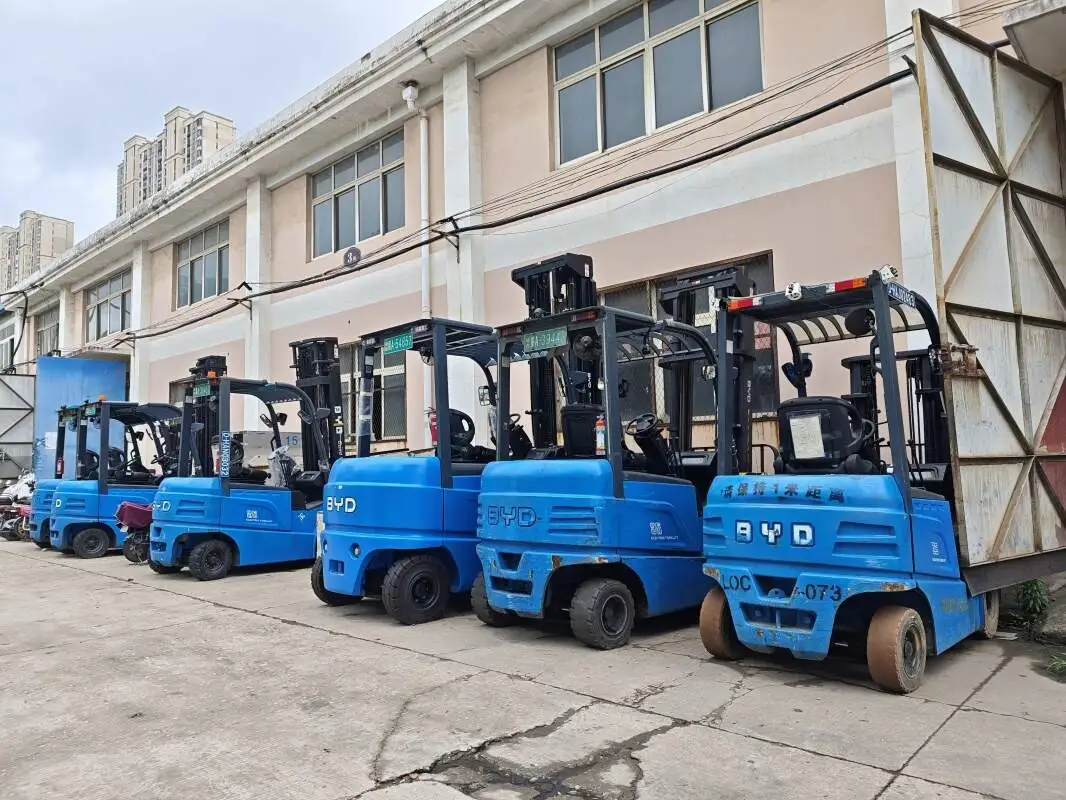
In the assembly line operation of a modern workshop, the efficiency of the supporting transfer link directly affects the overall production rhythm. Lithium forklifts have become the core equipment for such scenarios with their environmentally friendly and efficient characteristics. Choosing the right lithium forklift configuration can greatly improve the accuracy and fluency of transfer, and adapt to the operation needs of different assembly lines.
Load and fork configuration of the suitable assembly line
There are differences in the weight and specifications of materials in different assembly lines. When choosing a lithium-ion forklift, it is first necessary to match the corresponding load class, which not only meets the daily transshipment needs, but also avoids the waste of resources caused by excessive configuration. The configuration of the fork is also crucial. For the spacing and material size of the assembly line station, forks with adjustable length can be selected to adapt to pallets and material boxes of different specifications. At the same time, the anti-skid design of the fork can reduce the risk of material slipping during transshipment and ensure the safety of transshipment.
Battery life and charging configuration
The workshop assembly line usually has a long continuous operation time, and the battery life of the lithium forklift needs to match the needs of the production shift. The lithium battery of the corresponding capacity can be selected according to the daily operation time. In addition, the fast charging configuration can quickly replenish energy by using the production gap to reduce the waiting time for downtime. Some lithium forklifts adapted to the workshop scene also support the power exchange mode, which further improves the continuity of the operation and avoids the interruption of charging affecting the transfer rhythm of the assembly line.
Control and security configuration
The space around the assembly line in the workshop is often limited, and personnel and equipment are staggered. The flexibility of the control of lithium-ion forklifts is particularly important. The precise adjustment of the steering system allows the forklift to travel flexibly between narrow stations, and the low-speed driving mode is equipped to reduce the speed when approaching the assembly line station to avoid collisions with equipment and personnel. In addition, safety configurations such as anti-collision warning devices and emergency braking functions can further enhance the safety of the transfer process in the workshop and reduce the probability of accidents.
Protection configuration for the suitable environment
There are differences in the working environment of different workshops, such as dust and humidity in some workshops. Lithium forklifts need to have corresponding protection levels to avoid dust or water vapor entering the internal circuit and affecting the operation of the equipment. At the same time, the wear-resistant and non-slip tire configuration can adapt to different materials on the floor of the workshop, ensure the stability of the forklift, and reduce the occurrence of slippage during transshipment.
Overall, the configuration of lithium-ion forklifts supporting the transfer of the workshop assembly line needs to be selected based on various factors such as the load, battery life, space, and environment of the operation scene. The appropriate configuration can not only improve the transfer efficiency, but also reduce equipment loss, providing strong support for the smooth operation of workshop production.


