
 简体中文
简体中文 繁体中文
繁体中文 Deutsch
 日本語
日本語 한국어
한국어 Tiếng Việt
 Русский
 ไทย
ไทย Bahasa Indonesia
 Bahasa Melayu
 Filipino
 لالعربية
 Français

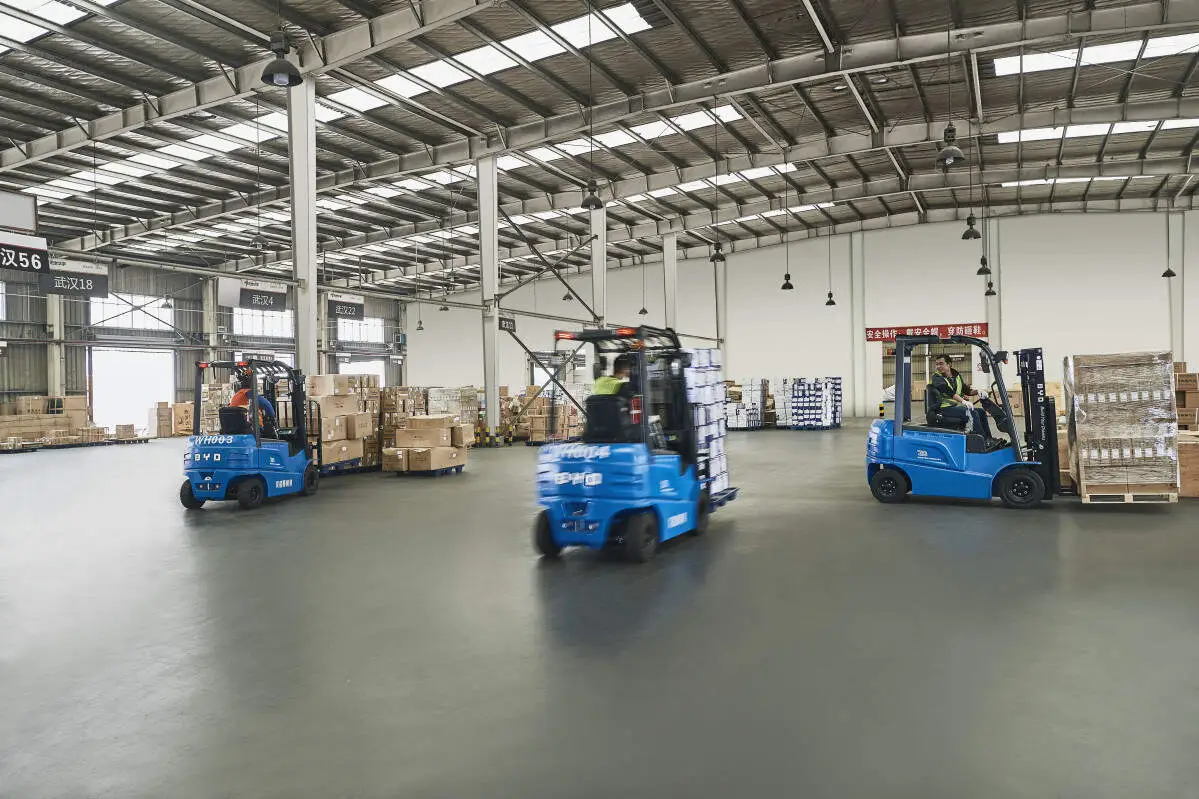
Heavy-duty workshops for machinery manufacturing often involve the handling of large materials such as heavy castings and steel structure parts. The operation intensity is high and the working conditions are complex, which requires extremely high stability, load capacity and adaptability of the handling equipment. Lithium-ion balance forklifts have become the preferred equipment for logistics upgrades in this type of workshop due to their environmentally friendly, efficient and powerful characteristics. Its targeted adaptation plan needs to be based on the actual needs of the workshop.
Accurately match load and operating conditions
The weight span of materials in the heavy-duty workshop of machinery manufacturing is relatively large, ranging from a few tons to more than ten tons. It is necessary to choose the corresponding load grade of lithium-ion balance forklift according to the maximum workpiece weight, lifting height and operation frequency of daily handling. At the same time, considering that there may be narrow passages and large-scale transfer steering needs in the workshop, the steering flexibility of the forklift also needs to be taken into account to avoid discomfort due to equipment size or steering radius, which will affect the operation fluency. At the same time, overload operations are strictly eliminated to ensure long-term stable operation of the equipment.
Optimize battery life and charging adaptation mechanism
Heavy-duty workshops usually have long operating hours and high demand for continuous handling, so they need to be equipped with large-capacity lithium batteries to ensure that the forklift can meet the needs of continuous operation for more than 8 hours. According to the production rhythm of the workshop, fast charging stations can be arranged in the rest area or idle corners, and quick replenishment can be completed by taking advantage of lunch breaks, shift changes, etc.; battery replacement mode can also be used to prepare fully charged batteries in advance to achieve uninterrupted operation of equipment and minimize the impact of downtime on production efficiency.
Enhanced environmental adaptation
The ground of the heavy-duty workshop of machinery manufacturing is prone to residual oil and metal debris, and the working environment is dusty. The lithium-ion balance forklift needs to be optimized and configured. Use non-slip and wear-resistant tires to improve the grip on the oily ground and prevent slippage; seal and protect the electrical system and battery compartment to avoid circuit failure or battery loss caused by dust and oil intrusion; the body adopts a corrosion-resistant coating to deal with acid and alkali mist that may exist in the workshop and prolong the service life of the equipment.
Improve the operation and maintenance system
In view of the characteristics of heavy-duty operations, special project training is required for operators to make them proficient in heavy-duty handling operation skills, load balancing methods and emergency treatment procedures to reduce operational safety hazards. Establish a regular maintenance system, focusing on checking battery performance, braking system, hydraulic system and other core components, timely cleaning equipment surface oil and debris, troubleshooting potential faults, to ensure that forklifts are always in good working condition.
Through the above multi-dimensional adaptation scheme, the lithium-ion counterbalanced forklift can effectively adapt to the complex needs of the heavy-duty workshop of mechanical manufacturing, improve material handling efficiency, reduce operating costs, and provide reliable support for the logistics of the workshop.


