
 简体中文
简体中文 繁体中文
繁体中文 Deutsch
 日本語
日本語 한국어
한국어 Tiếng Việt
 Русский
 ไทย
ไทย Bahasa Indonesia
 Bahasa Melayu
 Filipino
 لالعربية
 Français

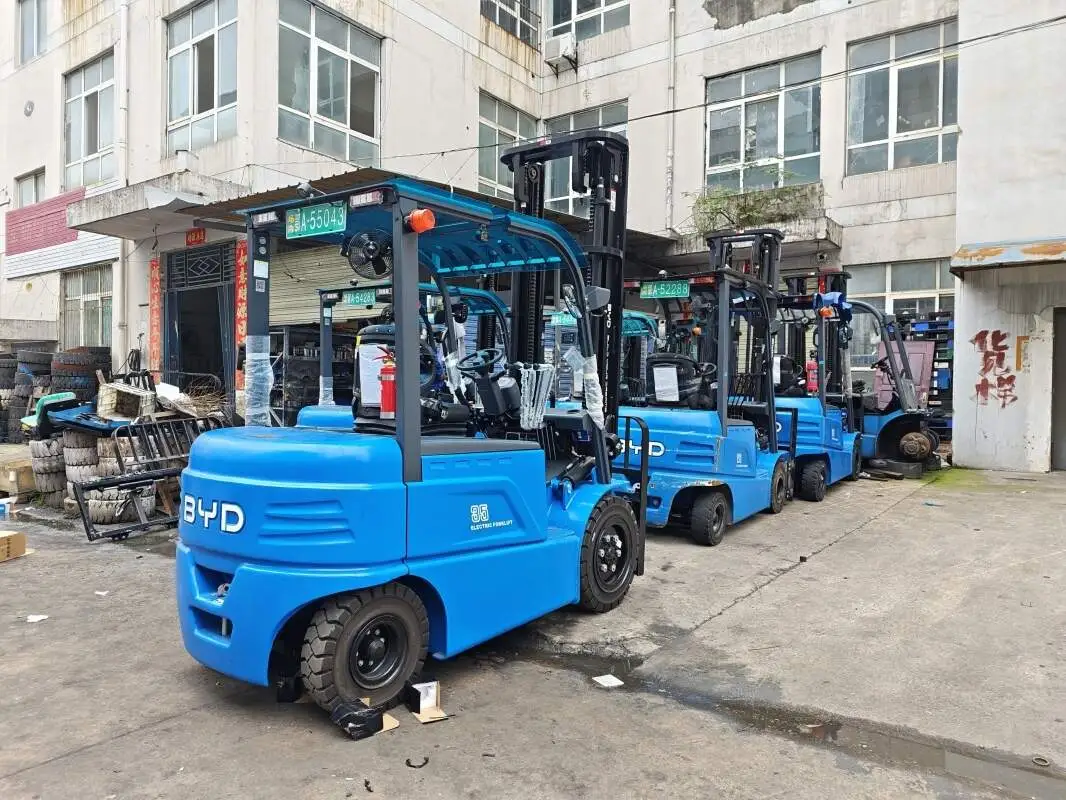
The production process of the food processing workshop involves raw material storage, process transfer, and finished product delivery, etc., which requires strict safety and cleanliness of the transfer equipment. Traditional fuel forklifts are difficult to meet standards due to problems such as exhaust gas and oil pollution. Lithium-electric forklifts have become an ideal choice for workshop transfer due to their adaptation characteristics.
Special requirements for transshipment equipment in food processing workshops
Food production requires strict hygiene standards, high air cleanliness and pollution prevention standards in the workshop, and the transfer equipment cannot produce exhaust gas, odor or oil pollution to avoid contaminating materials. Some workshops have low temperature and humid environments, and the equipment needs to have corrosion resistance to ensure long-term stable operation.
Adaptation Characteristics and Application Scenarios of Lithium Battery Forklifts
The lithium battery forklift is powered by lithium batteries, has no exhaust emissions, will not damage the air quality of the workshop, and meets the requirements of environmental protection. The body adopts a closed design, which is not easy to accumulate dust, easy to clean and disinfect, and can maintain the cleanliness of the equipment. The battery pack has good sealing performance and can adapt to special environments such as low temperature cold storage and humid workshops.
In terms of application scenarios, lithium-ion forklifts can undertake the transfer of raw materials after warehousing, and flexibly shuttle between cold storage and workshop to avoid bringing pollutants; smooth handling work in progress between production processes to improve turnover efficiency; when finished products leave the warehouse, cooperate with the warehousing system to efficiently complete loading and unloading and warehousing handling to ensure smooth shipments.
Precautions for daily use of lithium-ion forklifts
It is necessary to do a good job of daily maintenance, regularly clean and disinfect the body, and focus on cleaning the parts of the fork, gap and other parts that are prone to residual residues; maintain the lithium battery according to the standard, check the power, terminal status, and ensure stable battery life; the operator needs to undergo professional training, familiar with the workshop operation specifications, avoid collisions with equipment or raw materials, and ensure production safety.


