
 简体中文
简体中文 繁体中文
繁体中文 Deutsch
 日本語
日本語 한국어
한국어 Tiếng Việt
 Русский
 ไทย
ไทย Bahasa Indonesia
 Bahasa Melayu
 Filipino
 لالعربية
 Français

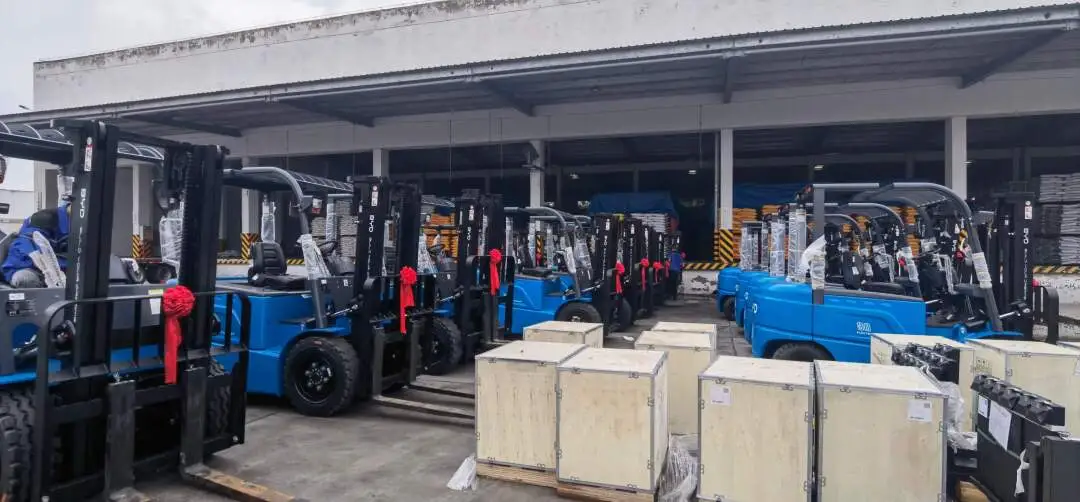
Lithium-ion forklifts are widely used in warehousing, logistics and other fields due to their environmentally friendly and efficient characteristics. Batteries are the core components, and their replacement and maintenance directly affect the operating efficiency and service life of the equipment.
The correct process for battery replacement
Preparation before replacement
Make sure the forklift is in a shutdown state, pull up the handbrake and turn off the power switch. Operators need to wear protective equipment such as insulating gloves and goggles, and prepare new batteries and special disassembly and assembly tools that meet the equipment specifications. Clean up the surrounding debris of the battery compartment in advance to avoid operation obstruction.
Change the operation steps
Remove the connecting wire of the old battery first, and pay attention to follow the order of first negative electrode and then positive electrode to prevent short circuit. Remove the old battery smoothly from the forklift battery compartment with the help of special lifting equipment to avoid bumping the battery shell during the process. Slowly put the new battery into the compartment, adjust it to the fixed position, and connect the connecting wire in the order of first positive electrode and then negative electrode to ensure that the connector is tight and not loose, so as to avoid false connection and heat generation.
Inspection work after replacement
Turn on the power switch of the forklift to test whether the basic functions such as starting, lifting, and walking are normal; check whether the battery connection part is heated or leaking, and confirm that the battery is firmly fixed and not displaced. After everything is normal, it can be put into daily operation.
Key points of after-sales maintenance
Daily regular inspection
Weekly inspection of the appearance of the battery to check for any abnormalities such as deformation, bulging, leakage, etc.; monthly inspection of whether the connector is oxidized or loose, timely cleaning of the connector oxide layer and tightening; regular measurement of battery voltage to ensure that it is within the normal range specified by the equipment.
Standardize charging operation
Use a dedicated charger that matches the battery, follow the principle of charging at any time to avoid overcharging or deep discharge; the charging environment should be kept ventilated and dry, away from flammable and explosive items, and avoid unattended during the charging process. If abnormal heat occurs, stop charging immediately.
Notes on idle storage
If the forklift is idle for a long time, it is necessary to charge the battery to 50% -70% and then power off, and place it in a cool, dry, and temperature-appropriate environment. Recharge the battery once a month to avoid battery loss and performance degradation. Before reuse, it is necessary to fully charge and check the status.
troubleshooting and handling
If there are any problems such as a sudden drop in battery life or an abnormally slow charging speed, first check whether the charger is normal and whether the cable is in poor contact. If it cannot be checked and solved by yourself, you should contact a professional maintenance personnel to deal with it. Do not disassemble the battery components without authorization to avoid potential safety hazards.
Standardized battery replacement operation and after-sales maintenance of the system can effectively prolong the service life of the lithium-ion forklift battery, reduce equipment operating costs, and ensure the safety and stability of the operation process.


