
 简体中文
简体中文 繁体中文
繁体中文 Deutsch
 日本語
日本語 한국어
한국어 Tiếng Việt
 Русский
 ไทย
ไทย Bahasa Indonesia
 Bahasa Melayu
 Filipino
 لالعربية
 Français

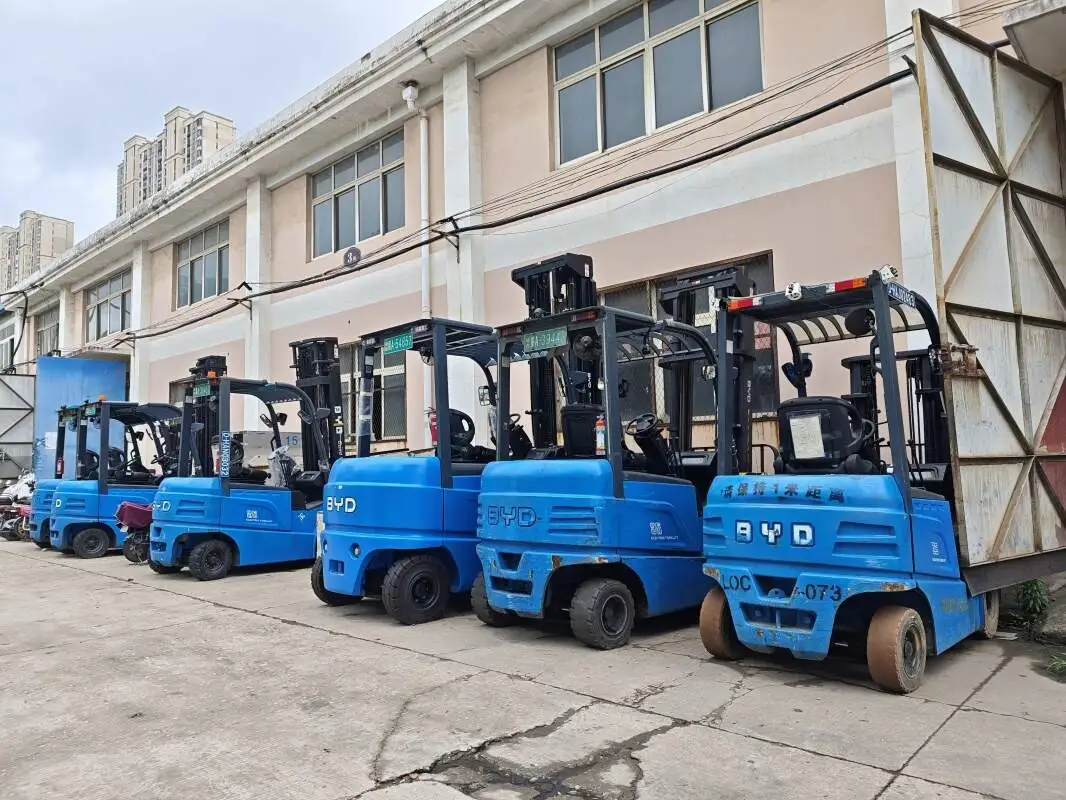
In the logistics warehousing, industrial production and other scenarios, the balance of heavy lithium forklift is an indispensable handling equipment, in the face of long-term use needs, the choice of leasing or procurement is a decision-making problem faced by many enterprises. Here are the advantages and disadvantages of both from multiple dimensions.
The advantages and disadvantages of long-term leasing
The core advantage of leasing lies in the low threshold and flexibility. Enterprises do not need to invest a large amount of money at one time, which can effectively relieve the pressure of working capital and give preferential treatment to the development of core business. At the same time, the depreciation risk of the equipment is borne by the lessor, and the daily maintenance is also mostly responsible for the other party, reducing the energy and cost of the enterprise in operation and maintenance. In addition, the leasing model can adjust the number or model of equipment according to the low and peak business seasons to adapt to the operation needs of different stages.
However, there are also obvious shortcomings in leasing. In the long run, the accumulated lease expenses may exceed the purchase cost, especially when the service life exceeds five years, the total cost disadvantage will gradually become apparent. Moreover, the company cannot own the equipment, cannot mortgage or dispose of it as a fixed asset, and the use process is also subject to the terms of the lease contract. Early termination or adjustment may incur additional costs.
The advantages and disadvantages of purchasing
The core advantage of the procurement model lies in asset ownership and long-term cost control. The enterprise owns the complete property rights of the equipment, which can be included in the fixed assets for subsequent asset mortgage or transfer disposal. From the perspective of long-term use, the average cost of use is much lower than that of leasing, avoiding the pressure of continuous payment of lease fees. In addition, the enterprise can also customize and adjust the equipment according to its own operation scenarios to adapt to special handling needs, and the equipment scheduling and use are also more autonomous.
However, the initial pressure of procurement is high, and large capital investment will occupy the working capital of enterprises, which is not friendly to enterprises with insufficient capital reserves. At the same time, enterprises need to bear the risk of performance degradation caused by equipment depreciation and aging, and they also need to bear the cost of daily maintenance and fault repair. If they are equipped with special maintenance personnel, it will also increase labor costs. In addition, the flexibility of equipment after procurement is insufficient. If the business scale is reduced, it is difficult to quickly monetize idle equipment, which is easy to cause waste of resources.
decision reference
Enterprises need to make choices based on their own operating conditions. If the business scale fluctuates greatly and the capital reserve is limited, and the pursuit of short-term flexible operation, long-term leasing is a more suitable choice; if the business is stable, there is a long-term fixed use demand, and the funds are sufficient, the procurement model is more cost-effective. In addition, factors such as the frequency of equipment use and its own maintenance capacity need to be considered, and the optimal plan will be determined after a comprehensive evaluation.


