
 简体中文
简体中文 繁体中文
繁体中文 Deutsch
 日本語
日本語 한국어
한국어 Tiếng Việt
 Русский
 ไทย
ไทย Bahasa Indonesia
 Bahasa Melayu
 Filipino
 لالعربية
 Français

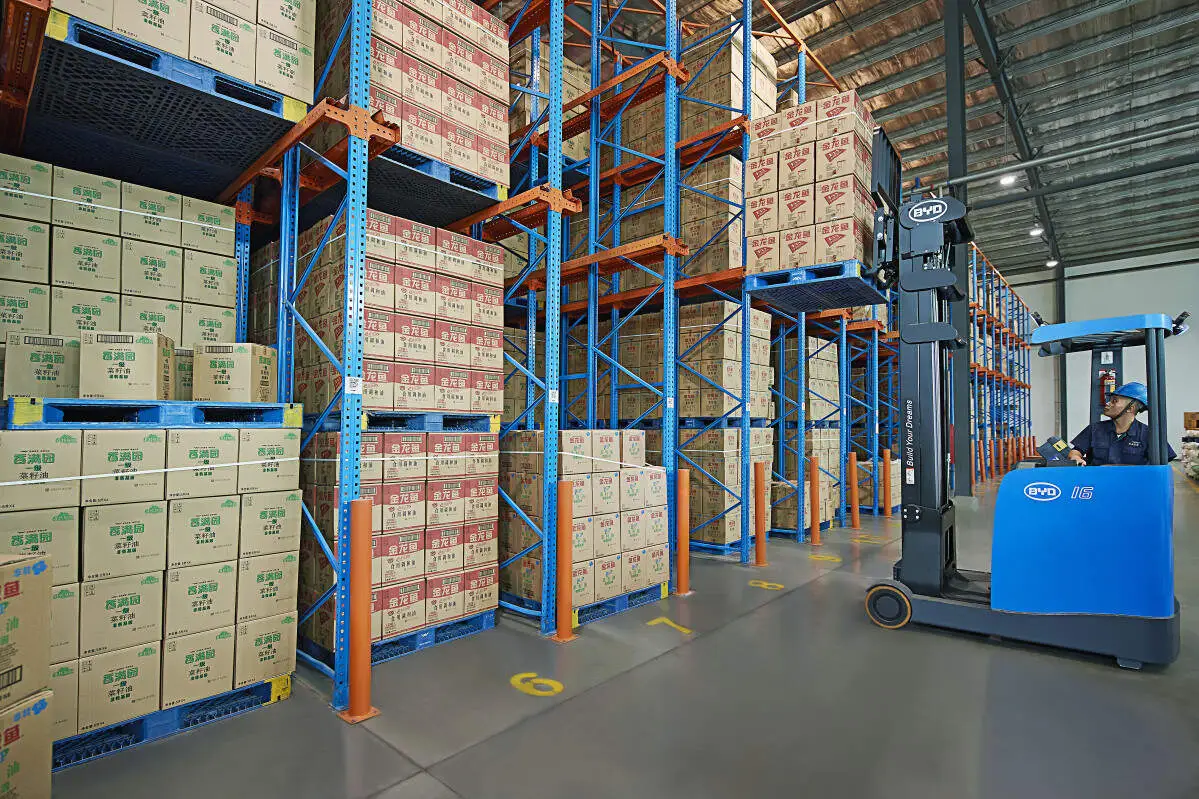
The unique requirements of supermarket warehouse operation scenarios
The demand for access to narrow spaces
Supermarket warehouses are usually located on the ground floor of the building or in affiliated areas, with compact internal passages, small shelf spacing, and personnel exchanges and temporary stacking during daily operations, which place higher demands on the flexibility of handling equipment. Traditional large-scale handling equipment is difficult to operate smoothly in this type of space, prone to problems such as blocked passage and scratched shelves, which affect the rhythm of operations.
Battery life requirements for high-frequency operations
Supermarkets have a high frequency of cargo turnover, especially during holiday promotions or daily replenishment periods, which requires handling equipment to operate continuously for a long time. Frequent charging will interrupt the operation process and delay the efficiency of cargo shelving and replenishment. Therefore, the stability and charging convenience of equipment are one of the key factors for warehouse management personnel to choose equipment.
The advantages of small lithium battery trucks
Flexible and compact body design
This small lithium battery truck features a compact body design, and its overall size is suitable for the narrow passages of the warehouse. It can easily shuttle between the shelves, even if it encounters temporary stacking of goods or personnel, it can also be flexibly steered to avoid, without the need for additional adjustment of the channel layout, adapting to the complex and changeable working environment in the warehouse, reducing unnecessary space transformation investment.
Long-lasting and stable lithium battery life
Equipped with a lithium-ion power system, the truck has a stable and reliable battery life. A single charge can support a long period of continuous operation, fully meeting the high-frequency cargo turnover needs of the supermarket. Lithium-ion equipment has a high charging efficiency and can be replenished during non-working hours without taking up normal operating time, ensuring the continuity of the operation process.
Performance improvement in practical applications
Improve the efficiency of goods turnover in the warehouse
In the replenishment and tally of supermarket warehouses, small lithium-ion trucks can quickly complete the transfer of goods from the storage area to the shelf area. Compared with manual handling or traditional equipment, they can greatly shorten the single operation time, especially when handling bulk goods. The advantages are more obvious, helping supermarkets complete shelf replenishment in a timely manner, ensuring the timeliness of product supply, and enhancing customer shopping experience.
Reasonable control of operating costs
The maintenance cost of lithium battery trucks is low, there is no need to change fuel frequently or perform complex maintenance operations, and the energy consumption is relatively stable, which can effectively reduce the comprehensive cost of warehousing operations after long-term use. At the same time, the noise of lithium battery equipment is low, which will not interfere with the internal environment of the supermarket or the surrounding personnel, improve the working comfort of the workers, and reduce the potential environmental impact problems.


