
 简体中文
简体中文 繁体中文
繁体中文 Deutsch
 日本語
日本語 한국어
한국어 Tiếng Việt
 Русский
 ไทย
ไทย Bahasa Indonesia
 Bahasa Melayu
 Filipino
 لالعربية
 Français

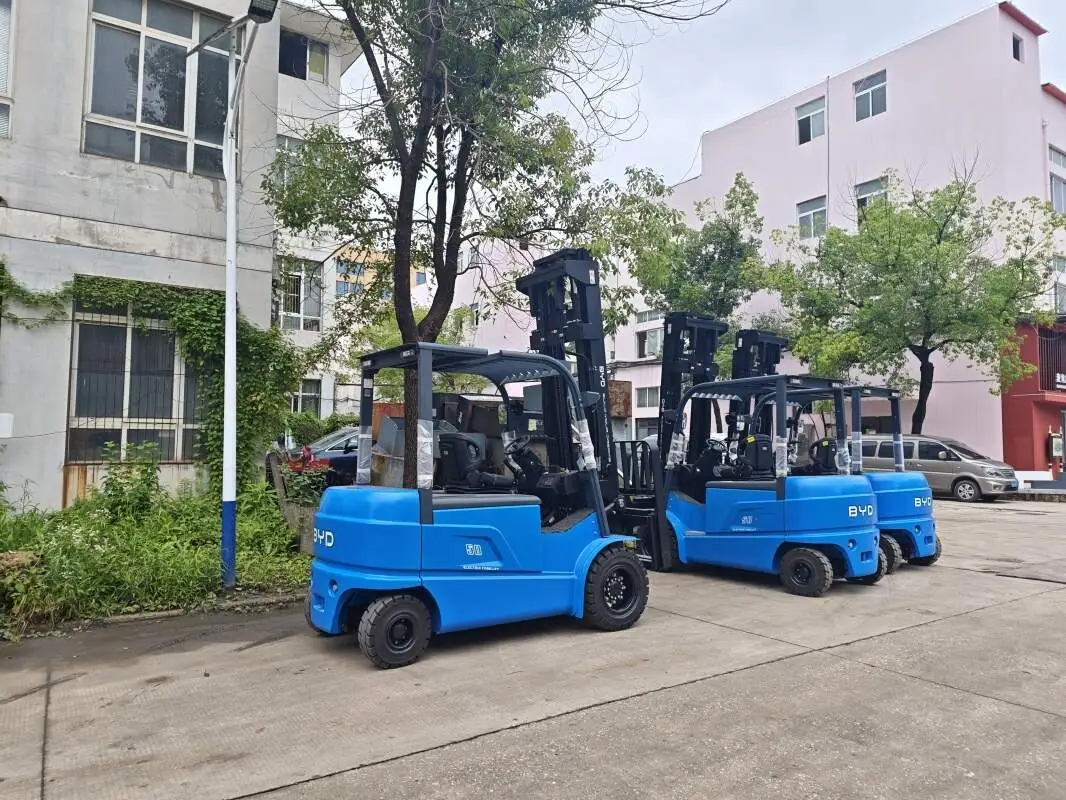
As a cargo distribution hub, the daily operation of the port involves the loading, unloading and transshipment of a large number of heavy-duty goods, which has high requirements on the power, stability and endurance of the operating equipment. Large-tonnage forklifts driven by high-voltage lithium batteries have gradually become an important choice for heavy-duty operations in ports due to their environmentally friendly and efficient characteristics.
Analysis of real job scenes
Container loading and unloading operation real shot
At the port container yard, a large-tonnage high-voltage lithium-ion forklift is completing the loading and unloading of 20-foot standard containers. The forklift smoothly approaches the container cargo space, and the fork is accurately inserted into the bottom fork groove. After slowly rising to the specified height, it is smoothly transferred to the container truck cargo platform. The whole process has uniform power output and no obvious shaking. It is suitable for the high-frequency and heavy-duty requirements of port container loading and unloading, effectively improving the efficiency of cargo turnover.
Large cargo transshipment operation real shot
In the large cargo stacking area in the port, the forklift takes on the task of transshipment of heavy machinery and equipment parts, and the weight of the goods is close to the upper limit of the rated load of the equipment. The forklift remains stable during the starting, driving and steering process, and can also adjust the direction flexibly in the narrow yard channel, successfully completing the cross-regional transfer of goods, showing good handling flexibility and load stability.
Equipment suitability performance
In terms of power and endurance, the high-voltage lithium battery system provides continuous and stable power output to meet the needs of long-term heavy-duty operations, without frequent downtime for charging, adapting to the continuous operation rhythm of port operations and reducing operation interruption time. At the site adaptation level, the body design of the forklift is adapted to the complex site environment of the port. Whether it is a hardened road surface or a slightly undulating yard ground, it can maintain good passability and avoid affecting the operation progress due to site restrictions. In terms of operation stability, during lifting, descending and driving under heavy load, the shock absorption and balance system of the equipment plays a role to effectively ensure the safety of goods and equipment and reduce operation risks.
In addition, during the actual shooting process, it can be seen that the forklift's operation response is timely, the driver's operation experience is smooth, which further enhances the operation efficiency and provides reliable equipment support for port heavy-duty operations.


