
 简体中文
简体中文 繁体中文
繁体中文 Deutsch
 日本語
日本語 한국어
한국어 Tiếng Việt
 Русский
 ไทย
ไทย Bahasa Indonesia
 Bahasa Melayu
 Filipino
 لالعربية
 Français

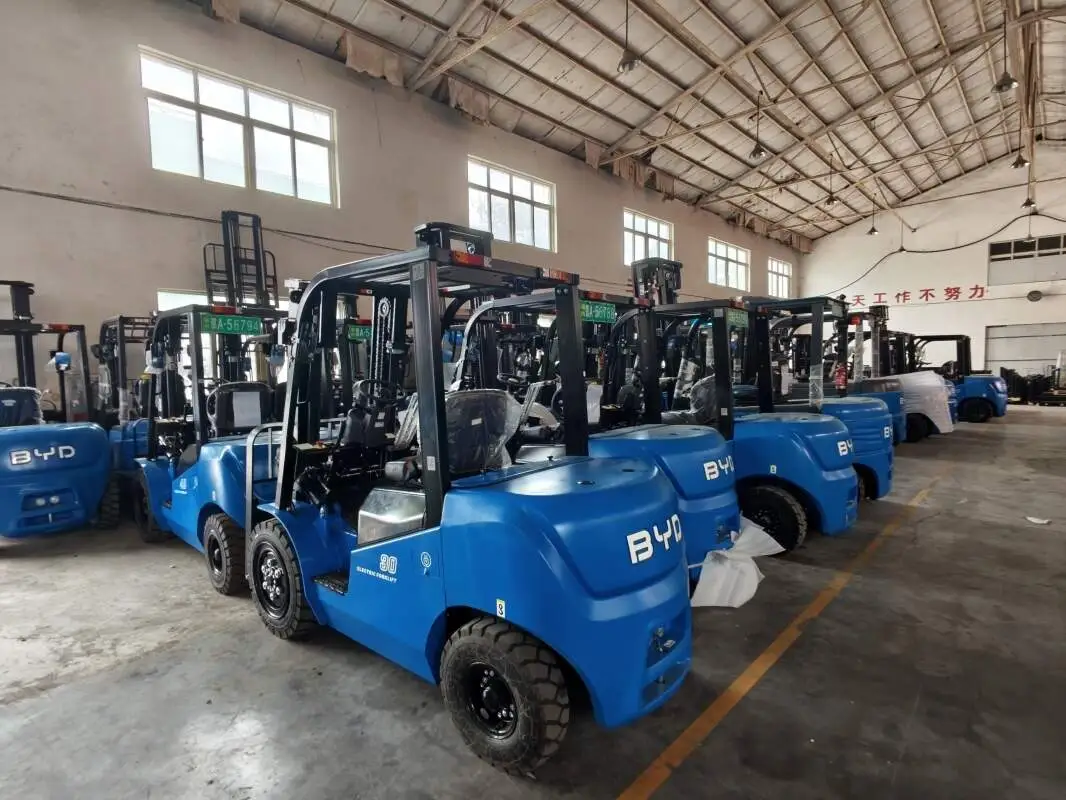
With the development of the warehousing industry towards high density and intelligence, the three-dimensional warehouse has become an important carrier to improve storage efficiency, and efficient stacking equipment is the core to ensure the operation of the three-dimensional warehouse. With its unique structure and performance, the ride-on forward forklift has become an ideal choice for the stacking operation of the three-dimensional warehouse. The following will analyze its targeted solutions from multiple dimensions.
Optimization of operation characteristics for three-dimensional warehouse
Channel adaptation and high-level operation capability
The three-dimensional warehouse often adopts a narrow channel design to improve space utilization. The ride-on forward forklift can accurately pick and place goods in the narrow channel by adjusting the forward distance of the fork, without the need for significant steering, effectively reducing the channel width requirements. At the same time, its high lifting capacity can adapt to the stacking needs of multi-layer shelves, meet the full range of operation coverage from the bottom to the high position of the three-dimensional warehouse, and reduce the blind spot of operation.
Operations strategies for maximizing space utilization
Dynamic Storage and Cargo Ordering
In view of the storage characteristics of the three-dimensional warehouse, the ride-on forward forklift can cooperate with the warehouse management system to realize the dynamic storage scheduling of goods, adjust the storage position according to the turnover rate of goods, and improve the efficiency of warehousing. In the stacking operation, through accurate fork positioning, ensure the orderly stacking of goods, avoid space waste caused by stacking skew, and further improve the storage capacity of the warehouse per unit area.
Operation and management optimization solutions
Operator skill adaptation and safety control
The operation interface of the ride-on forward forklift is designed to fit ergonomics, reducing the operator's work intensity. At the same time, through regular skills training, the operator's proficiency in controlling the equipment can be improved to ensure the accuracy of stacking operations. In addition, safety protection devices can be installed, such as fork anti-drop, surrounding obstacle detection and other functions, to reduce safety hazards during operation and ensure the safety of personnel and goods.
Supporting measures for job security
In order to ensure the continuous and stable operation of the ride-on forward forklift in the three-dimensional warehouse, it is necessary to establish a regular maintenance mechanism to check and maintain the core components such as the lifting system and steering system to avoid affecting the operation progress due to equipment failure. At the same time, according to the operation volume and type of goods in the warehouse, the number of forklifts should be reasonably allocated to optimize the operation schedule and ensure the efficient operation of warehouse stacking operations.


