
 简体中文
简体中文 繁体中文
繁体中文 Deutsch
 日本語
日本語 한국어
한국어 Tiếng Việt
 Русский
 ไทย
ไทย Bahasa Indonesia
 Bahasa Melayu
 Filipino
 لالعربية
 Français

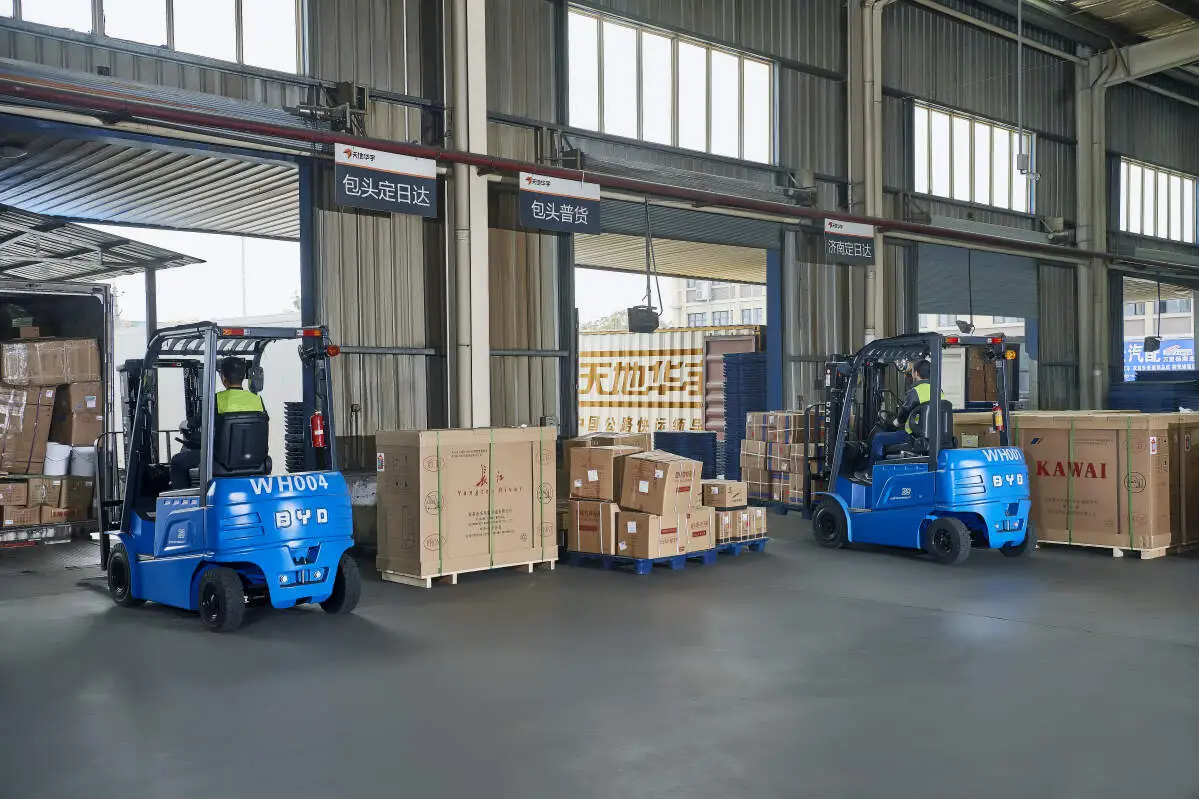
There are a large number of flammable, explosive and corrosive materials in chemical workshops, and the safety and efficiency of material transfer directly affect production and operation. Traditional transfer equipment is prone to safety hazards due to sparks, leaks and other issues, making it difficult to meet the strict requirements of chemical workshops. Explosion-proof lithium forklifts have become an ideal choice for material transfer in chemical workshops due to their adaptability and performance advantages.
Chemical workshop adaptability of explosion-proof lithium forklift truck
Explosion-proof design meets workshop safety standards
The chemical workshop belongs to a flammable and explosive dangerous environment. The explosion-proof lithium forklift adopts a series of explosion-proof designs, including flameproof electrical components, sealed battery compartments, anti-static material components, etc., which can effectively avoid risks such as electrical sparks and static electricity accumulation. It meets the safety requirements of chemical sites and reduces the probability of safety accidents from the root cause.
The environmental protection and battery life advantages of lithium battery power
Compared with traditional internal combustion forklifts, explosion-proof lithium-ion forklifts use lithium batteries as the power source, and have no exhaust emissions during operation, which will not cause pollution to the air environment in the workshop, meeting the environmental protection requirements of the chemical workshop. At the same time, lithium batteries have stable battery life, which can meet the needs of long-term continuous operation in the chemical workshop and reduce the interruption of operation caused by frequent charging.
Specific application scheme of material transfer in chemical workshop
Transshipment Strategy of Barreled Chemicals
For barrels of flammable, explosive or corrosive chemicals, explosion-proof lithium forklifts can be equipped with special clamping attachments to achieve smooth clamping and transfer of barrel materials. During operation, the principle of fixed-point pickup and fixed-path driving should be followed to avoid material collision and leakage, and at the same time maintain a uniform speed during transportation to ensure the stability of materials.
Bulk material transfer optimization
For bulk chemical materials, explosion-proof lithium forklifts can be equipped with forks or hopper attachments to adjust the operation mode according to the material characteristics. In the loading and unloading process, it is necessary to strictly control the fork height and driving speed to avoid material leakage. At the same time, cooperate with the storage system to achieve accurate docking of materials and improve transfer efficiency.
Operation, Maintenance and Safety Management of Explosion-proof Lithium Battery Forklift
Regular explosion-proof performance testing
In order to ensure that the explosion-proof lithium forklift continues to meet safety standards, it is necessary to regularly conduct professional inspections of its explosion-proof components and electrical systems, promptly check potential hidden dangers, and replace aging or damaged components to ensure the stability and reliability of the equipment's explosion-proof performance.
Battery operation and maintenance and personnel training
The daily maintenance of lithium batteries needs to follow the standard process, regularly check the battery status, avoid overcharging and discharging, and prolong the battery life. At the same time, professional training is required for operators to master the operation specifications and emergency handling procedures of explosion-proof lithium forklifts, and improve the safety awareness and operation skills of operators.
The application of explosion-proof lithium forklifts in material transfer in chemical workshops not only meets strict safety requirements, but also improves transfer efficiency, providing reliable equipment support for the production and operation of chemical enterprises. Through reasonable application solutions and perfect operation and maintenance management, safety risks can be effectively reduced, and the standardization and efficiency of material transfer in chemical workshops can be promoted.


