
 简体中文
简体中文 繁体中文
繁体中文 Deutsch
 日本語
日本語 한국어
한국어 Tiếng Việt
 Русский
 ไทย
ไทย Bahasa Indonesia
 Bahasa Melayu
 Filipino
 لالعربية
 Français

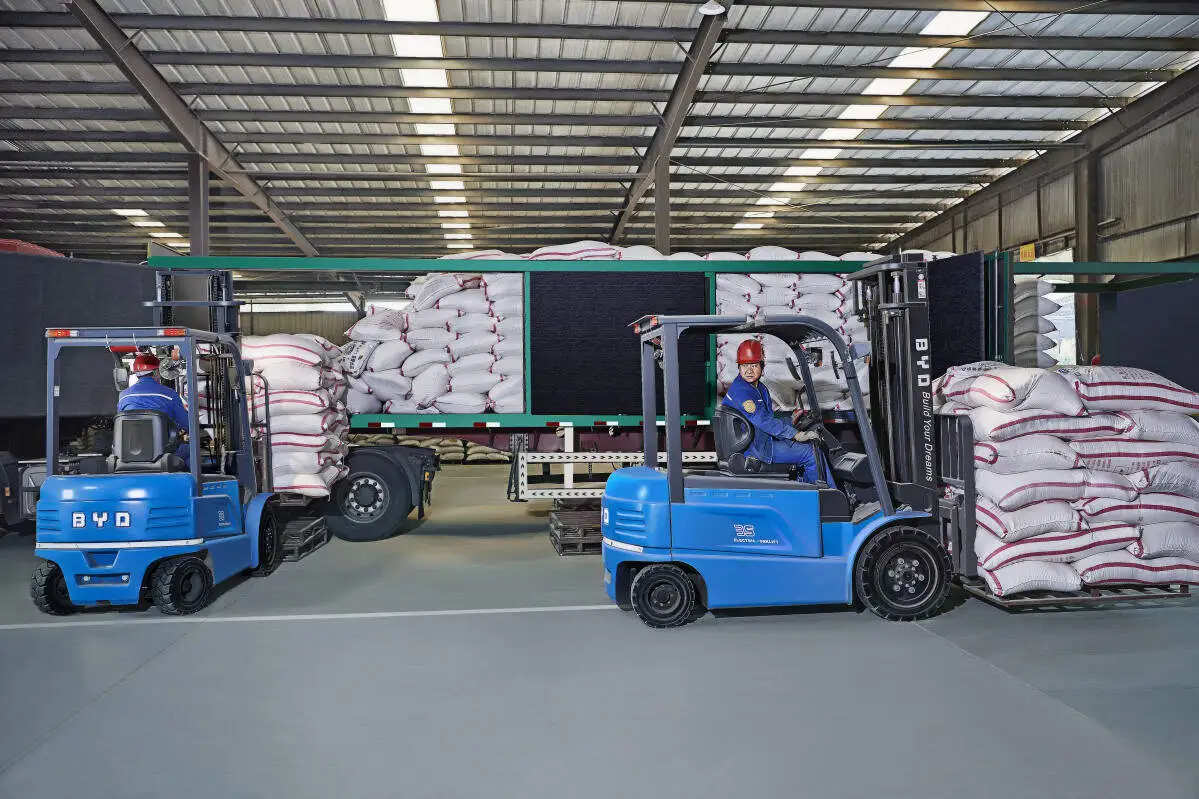
In industrial production, logistics, warehousing, and other scenarios that require medium and heavy handling, a forklift with a rated load of 5 tons is one of the commonly used equipment. In recent years, with the tightening of environmental protection policies and the development of lithium battery technology, the use of 5-ton lithium battery forklifts and traditional 5-ton internal combustion forklifts has gradually increased. Compared with the daily comprehensive use cost of the two, it has become an important consideration for many enterprises before choosing a vehicle
The comparison of daily energy consumption costs is the core link of the cost difference between the two types of forklifts. At present, the mainstream 5-ton internal combustion forklifts commonly use diesel as fuel, while 5-ton lithium-ion forklifts rely on electric energy to supplement. The unit energy cost gap between the two is obvious. Taking the average energy price in some industrial areas in China as an example, the energy consumption cost of diesel forklifts with the same load and the same operating hours under the same working conditions is usually several times that of lithium-ion forklifts. However, it should be noted that the initial charging equipment investment of 5-ton lithium-ion forklifts needs to be taken into account, but the savings in energy consumption costs after long-term use can gradually cover this part of the expenditure
The maintenance cost is also a difference between the two types of forklifts that cannot be ignored. The structure of the traditional 5-ton internal combustion forklift is relatively complex, including multiple components that need regular maintenance such as the engine gearbox, fuel system, exhaust system, etc. The maintenance cycle of such components is short, and the consumables and labor costs for single maintenance are high. At the same time, the carbon deposits generated by diesel combustion will accelerate engine wear and need to be cleaned up. The core components of the 5-ton electric lithium forklift are lithium batteries and motors. The structure is relatively simple. There is no fuel system, exhaust system, and other complex components. Daily maintenance only needs to check the battery status, motor operation, and conventional mechanical components of the forklift. The maintenance cycle is long, and the single
There are also differences in other auxiliary use costs. The vibration and noise of the 5-ton internal combustion forklift are relatively large. Long-term operation may affect the comfort of the operator, which in turn has a certain impact on the efficiency of continuous operation. At the same time, some areas with higher environmental protection requirements will limit the use time or area of the internal combustion forklift. Additional adjustments to the operation arrangement may be required to increase the time cost. The vibration and noise of the 5-ton lithium-ion forklift are smaller. The operator experience is better and meets the environmental protection requirements of most areas. There are no additional emission restrictions
Overall, the long-term daily comprehensive use cost of a 5-ton lithium-ion forklift is usually lower than that of a traditional 5-ton internal combustion forklift, but the initial purchase cost is relatively high. Enterprises need to consider and choose suitable equipment based on factors such as their own operating hours, energy supply, and budget


