
 简体中文
简体中文 繁体中文
繁体中文 Deutsch
 日本語
日本語 한국어
한국어 Tiếng Việt
 Русский
 ไทย
ไทย Bahasa Indonesia
 Bahasa Melayu
 Filipino
 لالعربية
 Français

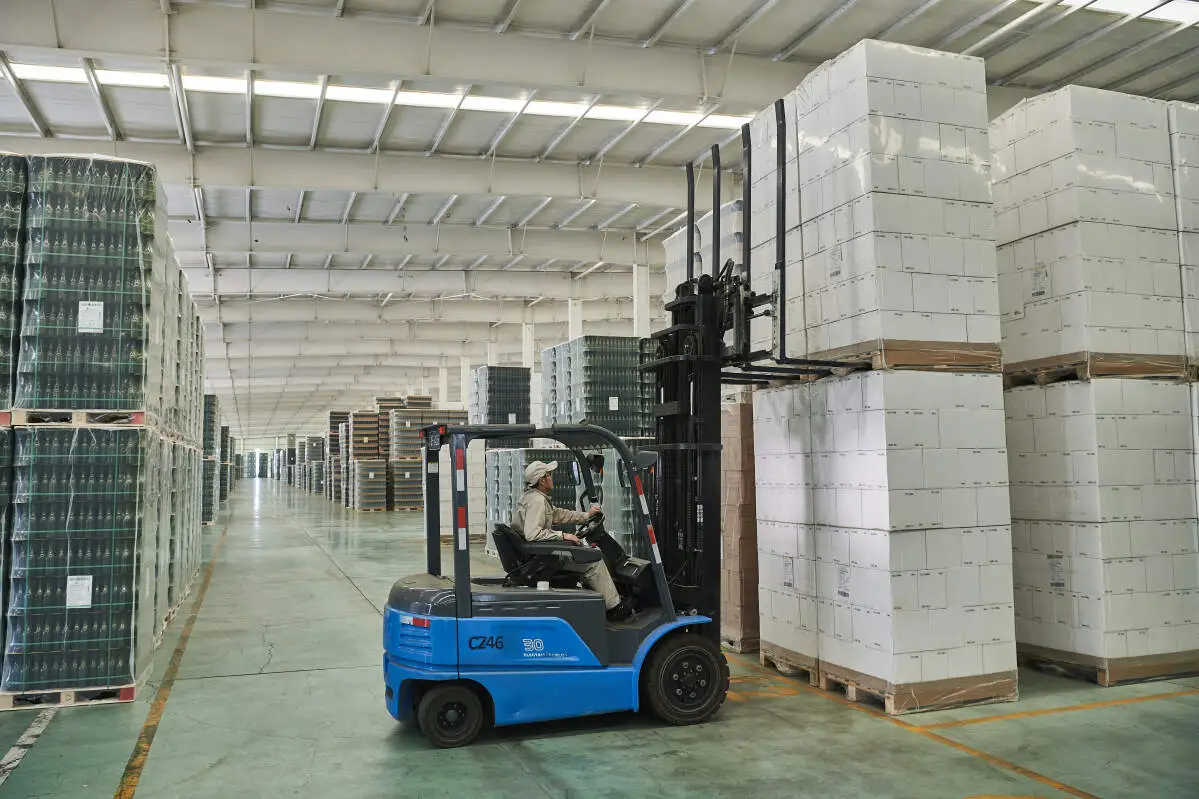
Precision docking of early demand
Sort out the working conditions of enterprises
Before starting the batch procurement cooperation of multiple counterbalanced heavy lithium battery forklifts, enterprises need to complete the internal working conditions. Combined with daily operation scenarios, such as warehouse space layout, average load of goods, daily operation time, etc., determine the approximate number of forklifts required. At the same time, the particularity of the operating environment should also be considered, such as whether cold chain storage is involved, outdoor open-air operations, etc. These factors will affect the configuration requirements such as forklift protection level and battery life.
Clarify core parameter standards
After sorting out the completion status, it is necessary to further clarify the core parameters of the forklift. Including rated load, lifting height, cruising range, charging time, etc., to ensure that the parameters match the actual operation needs. In addition, auxiliary features such as automatic parking, anti-collision warning, etc. can also be proposed, so that the supplier can provide a more suitable cooperation plan.
The cooperation plan is finalised in detail
Negotiate the core terms of the contract
When the two parties enter the negotiation stage of the cooperation plan, they need to focus on negotiating the core terms of the contract. Including the unit price, total amount, delivery cycle, payment method, etc. of bulk procurement, and at the same time clarify the acceptance criteria, liability for breach of contract, etc., to protect the rights and interests of both parties. Special needs for bulk procurement, such as batch delivery, on-site training, etc., also need to be clarified one by one in the contract.
Confirm customized service support
If the company has special working conditions, it can communicate with the supplier for customized services. For example, adjust the turning radius of the forklift for the narrow working space, or optimize the battery life configuration according to the working time. Suppliers need to combine their own capabilities to provide feasible adjustment solutions to ensure that the final delivered forklift can be adapted to the company's operating scenarios.
Delivery and strict acceptance
on-site bulk delivery verification
When the supplier completes the production of the forklift, it will be delivered in batches as agreed. The enterprise needs to arrange a special person to be on site for verification, check the appearance integrity of each forklift one by one, and check whether the product logo is consistent with the contract parameters. At the same time, it is necessary to confirm whether the supporting charging equipment, maintenance tools, etc. are complete.
Conduct on-site performance testing
After verifying the appearance, the performance test needs to be carried out on site. Load test, lift test, steering flexibility test, etc. are carried out for each forklift to verify whether the actual working ability of the forklift meets the requirements. In addition, the initial battery life, charging speed, etc. are also tested to ensure the normal operation of the core functions.
Long-term guarantee of later service
Daily maintenance and technical support
After the bulk procurement cooperation is completed, the supplier needs to provide perfect after-sales maintenance services. Including regular on-site inspections, battery maintenance guidance, quick response to faults, etc. The company also needs to establish an internal forklift maintenance ledger to record the usage and maintenance records of each forklift to prolong the service life of the equipment.
Building a long-term cooperation mechanism
For enterprises with continuous procurement needs, a long-term cooperation mechanism can be established with suppliers. For example, priority supply rights and preferential policies for bulk procurement are agreed, which is convenient for more efficient docking in subsequent supplementary purchases. At the same time, the two sides can regularly communicate operational feedback to optimize the configuration and service of forklifts and improve cooperation efficiency.


