
 简体中文
简体中文 繁体中文
繁体中文 Deutsch
 日本語
日本語 한국어
한국어 Tiếng Việt
 Русский
 ไทย
ไทย Bahasa Indonesia
 Bahasa Melayu
 Filipino
 لالعربية
 Français

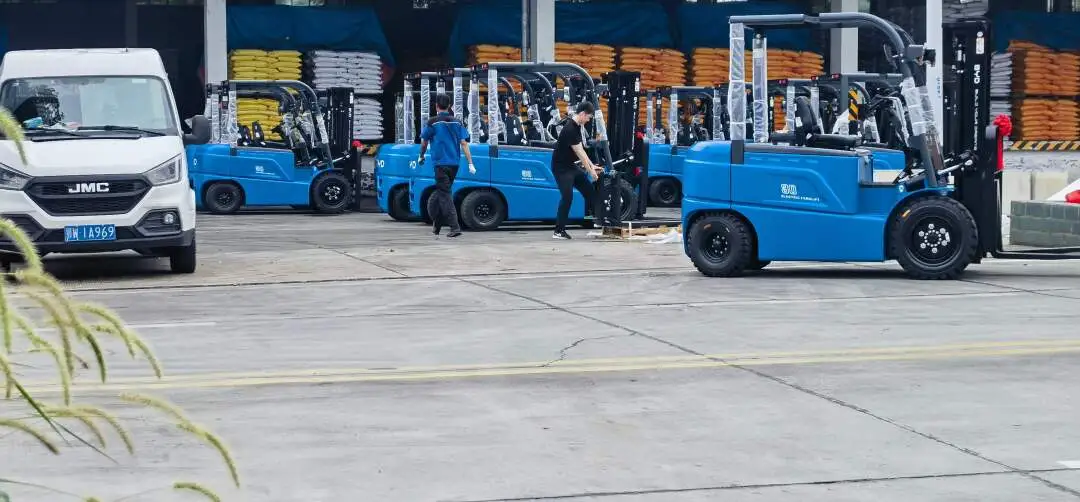
With the upgrading of factory handling needs, traditional handling equipment is gradually difficult to adapt to efficient and environmentally friendly operation requirements. Balanced heavy-duty lithium-ion forklifts have become the first choice for many enterprises to update their equipment due to their environmentally friendly, efficient and low-maintenance characteristics. However, the purchase of such forklifts requires scientific planning based on actual needs in order to select suitable equipment.
First clarify the core requirements of the factory operation
Sorting out the daily handling scene is the first step in procurement. If indoor storage operations are the main ones, you need to pay attention to the dustproof and silent characteristics of the forklift; if outdoor yard operations are involved, you need to consider the waterproof and anti-corrosion capabilities of the equipment, as well as the anti-skid and wear resistance of the tires. At the same time, count the weight and volume of the conventional handling goods, and determine the load range of the forklift. It is recommended to be slightly higher than the maximum daily handling weight, and reserve a safety margin. In addition, it is also necessary to evaluate the daily operation time and charging conditions, and choose the battery capacity that matches the battery life to avoid power outages affecting the operation rhythm in the middle.
Focusing equipment core performance parameters
Battery life is one of the core indicators of lithium-ion forklifts. It is necessary to choose the appropriate battery capacity according to the operation time and charging facilities. At the same time, pay attention to the charging speed. Equipment that supports fast charging can effectively shorten the downtime. Maneuverability cannot be ignored. Flexible steering design and simple operation interface can reduce the operation difficulty of employees and improve operation efficiency. In addition, the stability of the equipment is crucial. A reasonable counterweight design can ensure that the forklift is not easy to roll over when handling heavy objects, ensuring the safety of the operation.
Comprehensive accounting of life cycle costs
When purchasing, you can't just focus on the initial purchase cost, but comprehensively consider the cost input of the whole life cycle. The daily maintenance cost of a balanced heavy lithium forklift is relatively low, but you should pay attention to the service life and replacement cost of the battery, as well as the convenience of daily maintenance. Compared with the energy consumption, the energy consumption of a lithium forklift is usually lower than that of a traditional fuel forklift, and long-term use can save a lot of energy costs. At the same time, knowing the residual value rate of the equipment can reduce asset losses when the equipment is updated in the future.
Pay attention to after-sales and service guarantee
A sound after-sales system is the guarantee for the stable operation of equipment. When selecting a supplier, it is necessary to confirm whether it can provide timely maintenance services, sufficient supply of parts, and professional operation training. Timely after-sales maintenance can reduce the loss of production suspension caused by equipment failure, and professional training can help employees quickly master equipment operation skills and improve operation standardization and safety.
Overall, when updating the balance of heavy-duty lithium-ion forklifts in the factory, it is necessary to comprehensively consider the demand, performance, cost, and after-sales in order to select equipment suitable for their own scenarios, effectively improve handling efficiency, and help enterprises achieve the goal of reducing costs and increasing efficiency.


