
 简体中文
简体中文 繁体中文
繁体中文 Deutsch
 日本語
日本語 한국어
한국어 Tiếng Việt
 Русский
 ไทย
ไทย Bahasa Indonesia
 Bahasa Melayu
 Filipino
 لالعربية
 Français

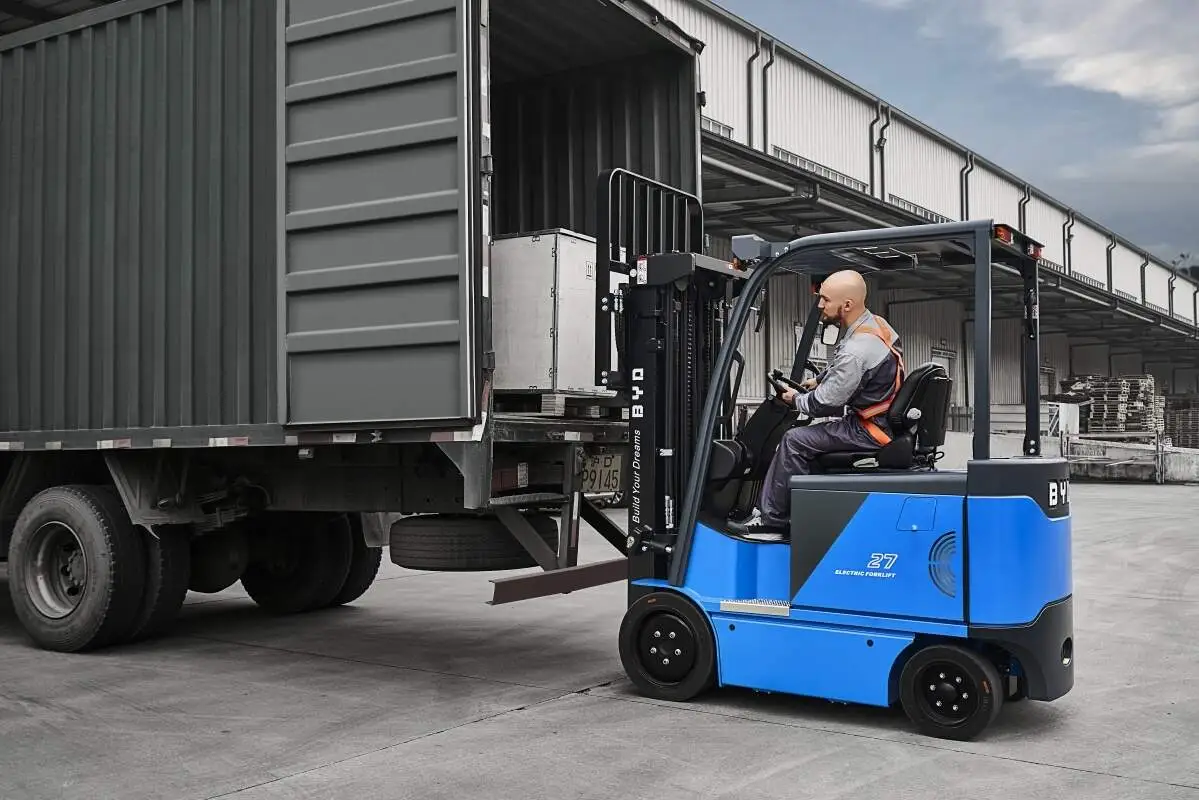
For enterprises with limited warehouse space and flexible and narrow aisle operations, the three-point lithium forklift is one of the more suitable handling equipment. However, the initial purchase price of this type of equipment is not low, and many companies will consider renting and purchasing models to obtain it. Next, we objectively analyze the cost of this model from several core dimensions.
First of all, look at the initial capital investment. To directly purchase a three-point lithium-ion forklift, you need to pay the full amount of equipment at one time, and you may also need to purchase ancillary items such as charging cabinets and maintenance tools. This expenditure will occupy a large liquidity pool of the enterprise. In the rental purchasing model, enterprises usually only need to pay a small amount of the first cost, such as as as low as 10 to 20% of the total price of the equipment, and then pay the agreed fixed rent every month to obtain the right to use the equipment immediately. The first financial pressure will be much smaller.
Then analyze the long-term cost. If you purchase directly, in addition to the equipment, the follow-up battery maintenance, replacement of wearing parts, replacement and maintenance costs, etc., need to be borne by the enterprise. Among them, the core component battery of the three-point lithium-ion forklift, although the service life is longer than that of the lead-acid battery, may still need to be replaced after a few years of use. This replacement cost is higher, which will bring unexpected capital expenditure. Under the rental purchasing model, many rental service providers will include the cost of battery maintenance and wearing parts that are not artificially damaged into the rental package. The company only needs to pay a fixed amount as agreed, which can cover these daily expenses. The long-term cost is more controllable, and there is no need to reserve a large amount of equipment maintenance and replacement funds in advance.
Looking at the flexibility of funds, enterprises keep the funds originally used for one-time purchases, which can be used to expand production scale, optimize supply chain, carry out marketing activities and other more core business links, which helps to improve the efficiency of capital use and market competitiveness of enterprises. In addition, the rent payment method of rent purchasing is usually more flexible, and enterprises can negotiate the payment amount of the rent payment cycle with the leasing service provider according to their own cash flow situation to adapt to the business rhythm of the enterprise.
Finally, we must also consider the risk of equipment obsolescence. With the development of technology, the performance of handling equipment will continue to improve. If enterprises purchase equipment directly, they may face the situation that the performance of the equipment cannot keep up with business needs but the residual value is not high after a few years of use. In the rental purchasing model, after the lease period ends, enterprises can choose to pay a small amount of the balance to buy out the equipment according to their own business conditions, or directly return the equipment and replace it with new equipment with better performance, avoiding the loss of assets caused by equipment obsolescence.
Of course, when choosing a rental purchasing model, enterprises should also read the terms of the contract carefully, clarify the rental amount, maintenance responsibility, and payment method of the balance, etc., to avoid subsequent disputes.


