
 简体中文
简体中文 繁体中文
繁体中文 Deutsch
 日本語
日本語 한국어
한국어 Tiếng Việt
 Русский
 ไทย
ไทย Bahasa Indonesia
 Bahasa Melayu
 Filipino
 لالعربية
 Français

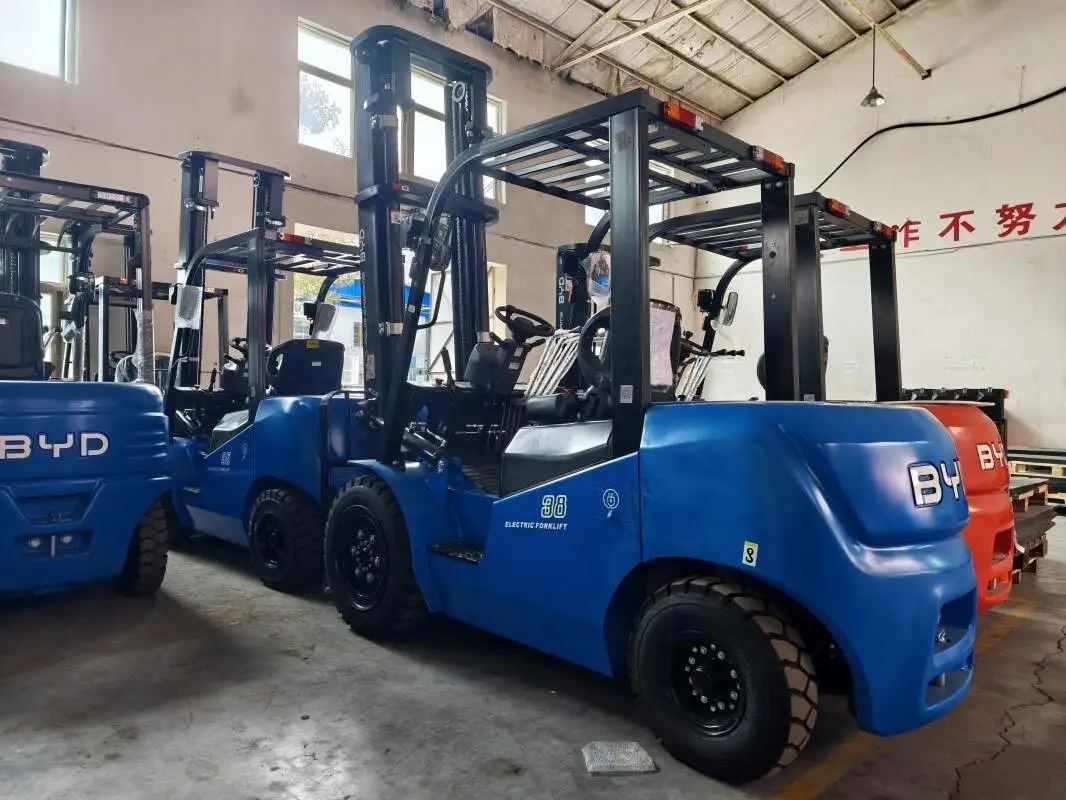
As a key equipment in the field of warehousing and logistics, three-way stacking forklifts are directly related to operation efficiency and equipment service life. For BYD RTR20i three-way stacking forklifts, following the standard maintenance cycle and maintenance points can effectively reduce the failure rate and ensure the stable operation of the equipment.
Rational planning of daily maintenance cycle
Daily routine inspection: Before daily operation, a basic inspection of the forklift is required to check whether the appearance is damaged by bumps, whether the battery power meets the needs of the day's operation, whether the tire pressure is within the normal range, and whether the safety components such as the emergency brake button and seat belt can work normally.
Weekly maintenance items: After completing the operation every week, clean the dust and debris on the surface of the forklift and the heat dissipation parts, check whether the liquid level of the hydraulic oil meets the standards, and clean the dust on the surface of the air filter element. If the filter element is blocked, it needs to be cleaned or replaced in time. At the same time, check whether the appearance of the lifting chain is worn or loose.
Monthly in-depth maintenance: Monthly in-depth inspections of forklifts should be carried out, focusing on checking the sensitivity of the braking system, fastening the connectors in various parts of the body, checking the flexibility of the steering mechanism, checking the hydraulic cylinder for signs of oil leakage, and cleaning the battery terminals to prevent oxidation from affecting the power supply performance.
Quarterly comprehensive investigation: comprehensive maintenance work needs to be carried out every quarter to check the charging and discharging performance of the battery, and balanced charging if necessary; replace the hydraulic oil filter element and conduct a comprehensive inspection of the hydraulic system; check the running status of the walking motor and the lifting motor to ensure that there is no abnormal noise or overheating.
Key points of core component maintenance
Power system maintenance: The power system is the core of forklift operation. It is necessary to pay attention to the daily use of the battery to avoid overcharging, over-discharging or long-term power loss. When charging, ensure that the environment is well ventilated, and regularly check the battery electrolyte level (if it is a lead-acid battery). When missing, it is necessary to replenish the special electrolyte in time.
Walking and steering system maintenance: regularly check the wear degree of tires, and replace them in time if they are seriously worn or cracked; check the wear of steering rods and steering gears to ensure smooth steering operation without jams; regularly clean up the debris of the walking mechanism to prevent foreign objects from entering and affecting the operation.
Lifting system maintenance: pay attention to the tension of the lifting chain. If the chain is too loose, it needs to be adjusted in time to avoid the risk of chain breakage during operation. Check the seals of the lifting hydraulic cylinder. If there is an oil leak, replace the seals in time. Lubricate the chain and pulley regularly to reduce component wear.
Electrical system maintenance: Keep electrical circuits dry and tidy to avoid being soaked in water or covered by debris; regularly check the connection lines of controllers and sensors to ensure that they are not loose or damaged; turn off the power supply in time after operation to prevent electrical components from being powered on for a long time.
Safety parts inspection: In addition to daily inspections, safety parts such as seat belts, emergency braking devices, and fork limit devices need to be tested every month to ensure that they can function normally in emergencies. At the same time, check the operating status of warning lights, horns, and other devices to ensure safety during operation.
Overall, the daily maintenance and maintenance of BYD RTR20i three-way stacking forklifts requires strict adherence to the standard cycle and targeted maintenance for the characteristics of different components in order to effectively extend the service life of the equipment and improve the safety and efficiency of warehousing operations.


