
 简体中文
简体中文 繁体中文
繁体中文 Deutsch
 日本語
日本語 한국어
한국어 Tiếng Việt
 Русский
 ไทย
ไทย Bahasa Indonesia
 Bahasa Melayu
 Filipino
 لالعربية
 Français

Core Pain Points of Storage Space Utilization in Narrow Alley
Intensive demand for storage space
As the cost of storage land continues to rise, most enterprises tend to adopt narrow roadway layouts to improve space utilization, but traditional forklifts are limited by parameters such as turning radius and body width, making it difficult to operate flexibly in a small space, which not only results in excessive shelf spacing. It is also prone to problems such as job cards and cargo collisions, which restricts the improvement of storage efficiency.
Analysis of Practical Operation Data of RTR Series Electric Forklift
Narrow lane traffic adaptation data
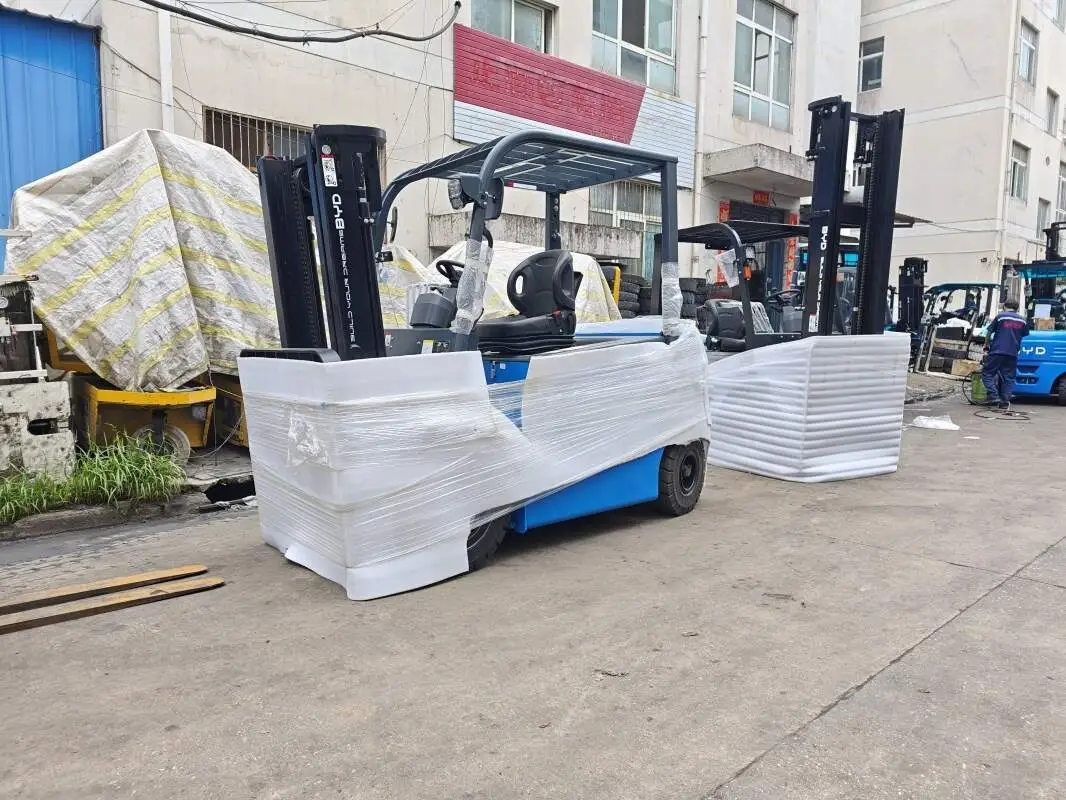
In the actual operation scenario, for a standard narrow lane with a width of 1.8 meters, the minimum turning radius of this series of electric forklifts is only 1.2 meters, which is about 0.3 meters smaller than that of traditional congeneric products. This parameter optimization allows the shelf spacing to be adjusted from the traditional 2.2 meters to 2.0 meters, which directly drives the overall storage space utilization rate to increase by 12% -15%, effectively releasing storage capacity.
Operational efficiency and accuracy
The actual operation data shows that this series of forklifts completes the whole process of picking up, handling and returning goods in a narrow lane, which takes about 10 seconds shorter than that of traditional forklifts, and the average daily operation volume is increased by about 8%. At the same time, the alignment error when forking goods can be controlled within 5 cm, which greatly reduces the collision loss of goods and reduces the additional cost in warehousing operations.
The Enlightenment of Practical Data to Warehouse Optimization
Based on the above practical data, enterprises can combine their own storage layout characteristics, rationally adjust the shelf spacing, and fully tap the space potential of narrow lanes. At the same time, choosing the appropriate electric forklift for operation can not only improve space utilization, but also optimize operation efficiency, and achieve cost reduction and efficiency of storage operations.


