
 简体中文
简体中文 繁体中文
繁体中文 Deutsch
 日本語
日本語 한국어
한국어 Tiếng Việt
 Русский
 ไทย
ไทย Bahasa Indonesia
 Bahasa Melayu
 Filipino
 لالعربية
 Français

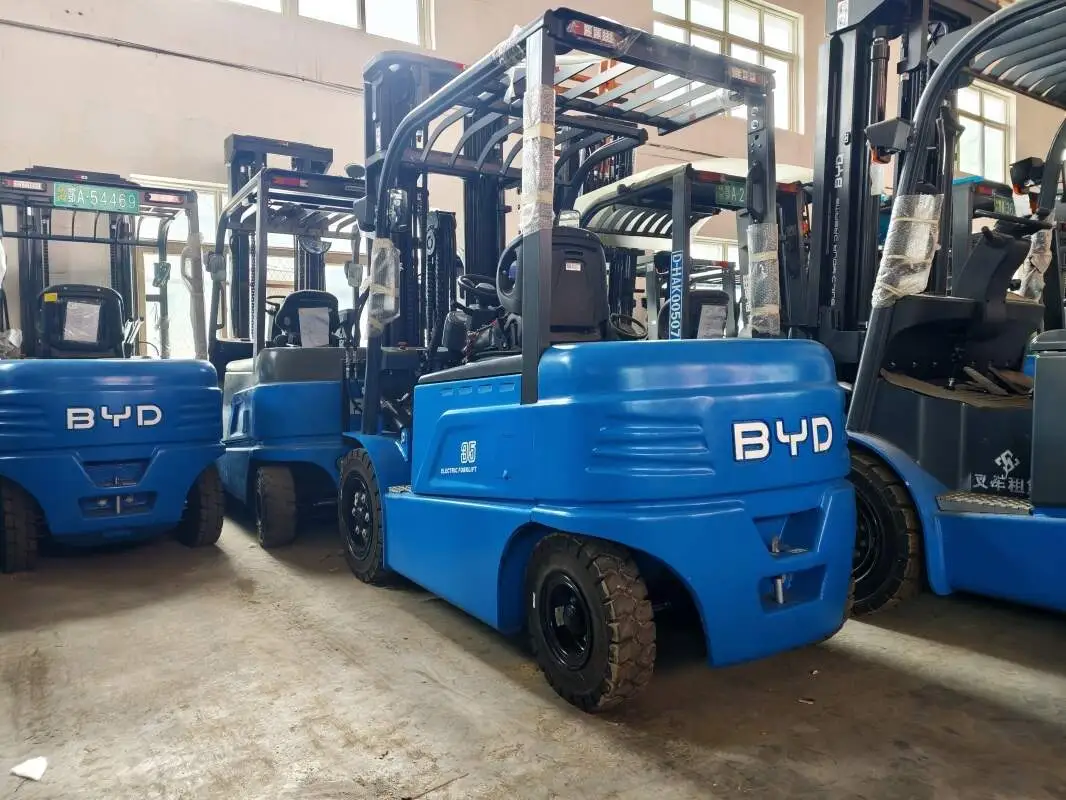
In warehousing and logistics operations, the efficient operation of a three-way stacker is inseparable from a precise guidance system. Laser guidance, as a commonly used intelligent guidance method, can improve the operation accuracy and efficiency of the stacker. The following will explain in detail the laser guidance options and usage methods of the BYD RTR16i three-way stacker.
Option
applicable scenario matching
There are differences in the demand for laser guidance in different storage environments, and it is necessary to confirm the layout characteristics of the storage site before selection. If the storage channel is narrow and the shelf layout is dense, priority should be given to adapting laser guidance components with accurate positioning in a small range; if the operation area is open and the cargo space is scattered, a wider coverage configuration can be selected to ensure that the stacker can operate stably in various scenarios.
Guide component configuration
The laser guidance system is mainly composed of a laser scanner, a reflector and a control module. When selecting, the laser scanner of the corresponding specification should be selected according to the working load and running speed of the stacker to ensure that the scanning accuracy and response speed meet the needs of the operation. The number and installation position of the reflectors need to be combined with the actual planning of the site, usually at the corners of the channel and the key nodes of the cargo space to ensure the stable reception of the laser signal.
Adaptation parameter confirmation
After completing the selection of components, the parameters of the guidance system need to be adapted and set, including scanning frequency, positioning accuracy threshold, etc. Parameter settings need to be in line with the actual needs of warehousing operations. For example, in the storage and access process with high accuracy requirements, the scanning frequency and positioning accuracy can be appropriately improved; in the long-distance transfer process, the parameters can be adjusted to improve operation efficiency.
Instructions for use
Key points of early debugging
Before it is put into use, it is necessary to complete the debugging of the laser guidance system. First, confirm the installation firmness and position accuracy of the reflection plate to avoid positioning errors caused by the deviation of the reflection plate; secondly, carry out empty car practice running to detect the positioning accuracy of the stacker in different areas. If there is a deviation, it is necessary to adjust the parameters or the position of the reflection plate in time; finally simulate the actual operation scene to verify the operation stability of the system under load.
Daily operation process
In daily use, the operator needs to start the laser guidance system first, and then start the stacker after the system completes the self-test and shows normal. During the operation, pay attention to the positioning prompts of the system. If there is a signal interruption or abnormal positioning, stop the operation immediately and check the problem. After completing the operation, turn off the laser guidance system to ensure that the equipment is in standby state.
Maintenance precautions
Regular maintenance is the key to ensure the stable operation of the laser guidance system. Check the cleanliness of the laser scanner every week to avoid dust or debris blocking the laser signal; check the reflector every month to confirm that its surface is not worn and its position is not offset; calibrate the system parameters every quarter to ensure that the positioning accuracy meets the operation requirements. At the same time, avoid placing reflective objects near the laser scanner to prevent interference with signal reception.


