
 简体中文
简体中文 繁体中文
繁体中文 Deutsch
 日本語
日本語 한국어
한국어 Tiếng Việt
 Русский
 ไทย
ไทย Bahasa Indonesia
 Bahasa Melayu
 Filipino
 لالعربية
 Français

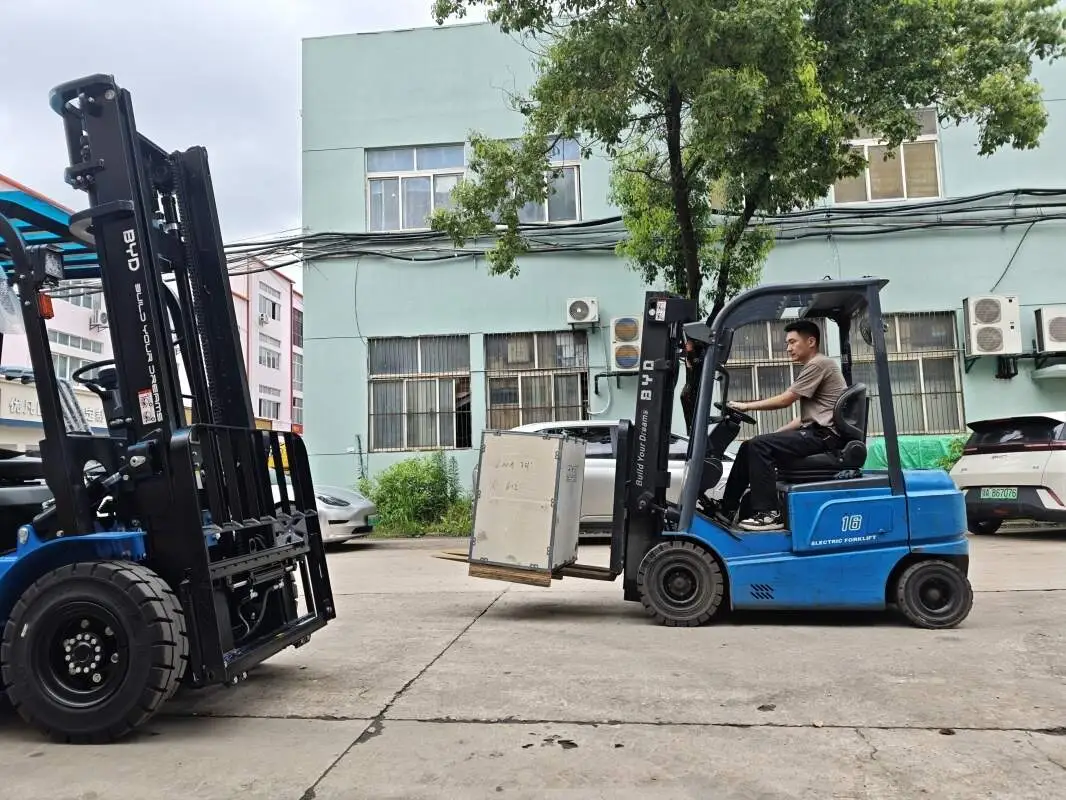
Core points of low-loss operation of lithium battery forklift
Scientific charging management
In the daily use of lithium battery forklifts, scientific charging is a key link to reduce battery loss. Standardized charging time and voltage standards should be followed to avoid overcharging or undercharging. At the same time, try to start the charging process when the remaining battery power is about 20% to reduce battery cycle loss. In addition, the charging environment should be kept ventilated and dry to avoid high or low temperature environment affecting battery performance, which helps to prolong the service life cycle of the battery.
reasonable load control
Maintaining long-term operation within the rated load range is an important measure to reduce the overall loss of forklifts. In daily operations, the appropriate forklift model should be selected according to the weight of the goods to avoid additional losses of motors, tires and hydraulic systems caused by overload operation. At the same time, smooth lifting and lowering of goods, reducing damage to components caused by instantaneous impact force, can effectively reduce the probability of failure in long-term use.
Regular maintenance
Regular all-round inspection and maintenance of forklifts can detect potential loss points and deal with them in time. Focus on the cleaning and tightening of battery connection terminals to prevent power loss caused by poor contact; check tire wear and replace excessively worn tires in time to avoid increased running resistance; regularly check the hydraulic system to ensure that the hydraulic oil is clean and the amount of oil is sufficient to reduce internal wear of the system.
Core features of long-term use of three-way stacking models
Battery life is stable and long-lasting
The lithium battery system equipped with the RTR20i three-way stacking forklift shows stable battery life in long-term use. Its battery capacity is adapted to the high-frequency requirements of storage operations. It can complete multi-shift tasks without frequent charging in daily operations, and with the increase of use time, the battery attenuation rate is within a reasonable range, which can maintain a stable power supply capacity for a long period of time.
Excellent structural loss control
The structural design of this model fully takes into account the wear and tear control requirements of long-term operation. The materials of the fork frame and the door frame are selected to balance strength and lightweight, reducing the wear of the components caused by their own loads; the components of the steering and walking system have been optimized and adjusted, and the friction loss during operation is lower. It can still maintain good operating flexibility after long-term use.
Strong operation adaptability
The RTR20i three-way stacking forklift has a strong adaptability to the operation design of the warehouse narrow passage. Its compact body and flexible steering system can complete efficient stacking operations in a limited space, reducing additional losses caused by limited operation. At the same time, the user-friendly operation interface reduces the learning cost of the operator, and the standardized operation further reduces the damage caused by misoperation.


