
 简体中文
简体中文 繁体中文
繁体中文 Deutsch
 日本語
日本語 한국어
한국어 Tiếng Việt
 Русский
 ไทย
ไทย Bahasa Indonesia
 Bahasa Melayu
 Filipino
 لالعربية
 Français

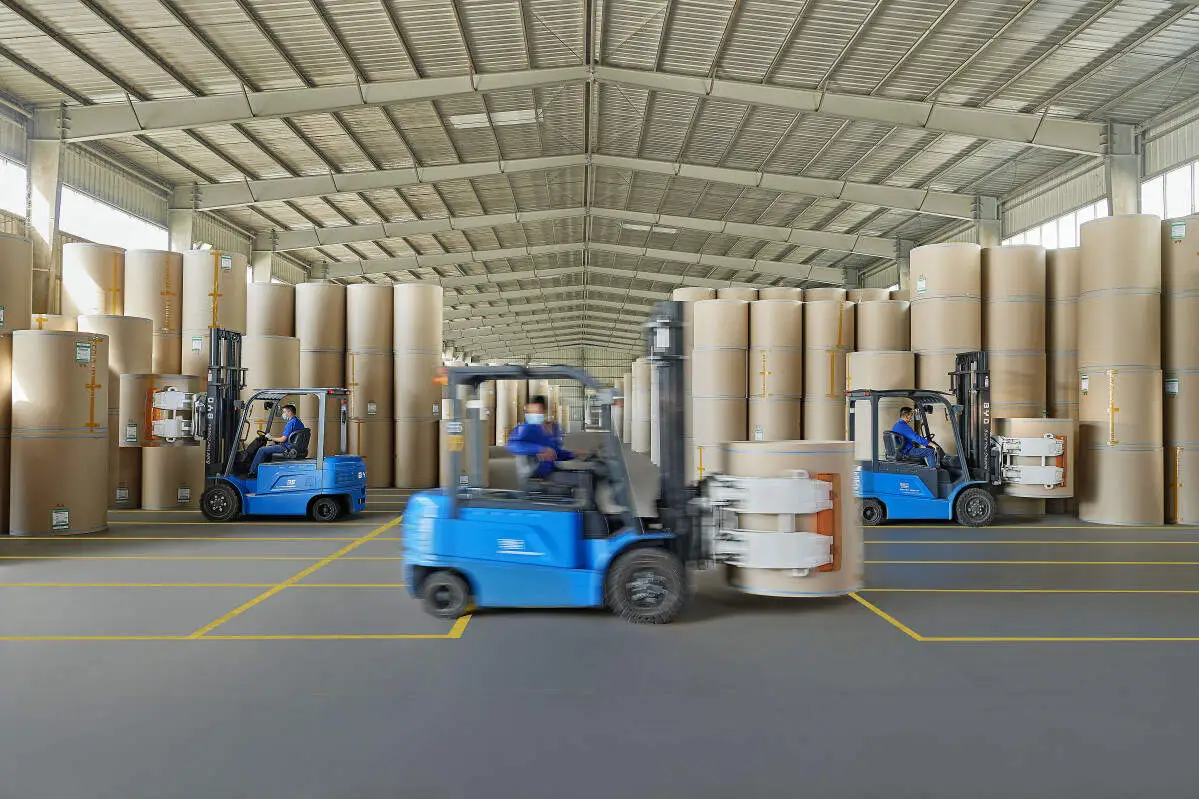
As a medium and light storage and logistics equipment, the 1.5-ton lithium-ion forklift truck is widely used in flat-floor warehouse sorting, short-distance inversion and transfer, workshop material turnover and other scenarios with its flexible operation and good carrying capacity. In actual use, the battery life and fast charging efficiency directly affect the operation continuity of the equipment, which is the focus of user selection and use.
In terms of battery life performance, the endurance of a 1.5-ton lithium-ion forklift truck is usually related to factors such as battery capacity, operating conditions, load conditions, and ambient temperature. At present, the mainstream models of this type on the market are equipped with a standard battery capacity between 100 amp hours and 200 amp hours. Under the condition of flat layer light load, no more than 2 single handling pallets, and regular daily operation time, the standard battery can meet the continuous operation needs of 6 to 10 hours. If it is a medium and light load combined with a small amount of climbing or handling heavy pallets, the battery life will be shortened, roughly between 4 and 7 hours. If the ambient temperature is too low or too high, it will also have a certain impact on the battery performance. For example, in the low temperature environment in winter, the battery activity is reduced, and the battery life may be reduced by 10% to 20%. During the high temperature in summer, it is necessary to avoid immediate operation after prolonged exposure to the sun to prevent the battery from overheating and affecting the performance.
Regarding the fast charging function, most of the 1.5-ton lithium-ion forklifts support the fast charging mode. The fast charging interface usually adopts a design that conforms to the general specifications of the industry and is suitable for common fast charging charging piles. Under normal circumstances, charging from about 20% of the remaining power to about 80% generally takes between 1 and 3 hours. The specific time will vary depending on the battery capacity and charging pile power. It should be noted that although the fast charging function designed by compliance will not cause irreversible serious damage to the battery, it is recommended that users do not use fast charging at high frequency for a long time. Daily slow charging is mainly used, supplemented by fast charging, which is more conducive to prolonging the service life of the battery. Slow charging generally takes 8 to 12 hours and is suitable for non-working hours at night.


