
 简体中文
简体中文 繁体中文
繁体中文 Deutsch
 日本語
日本語 한국어
한국어 Tiếng Việt
 Русский
 ไทย
ไทย Bahasa Indonesia
 Bahasa Melayu
 Filipino
 لالعربية
 Français

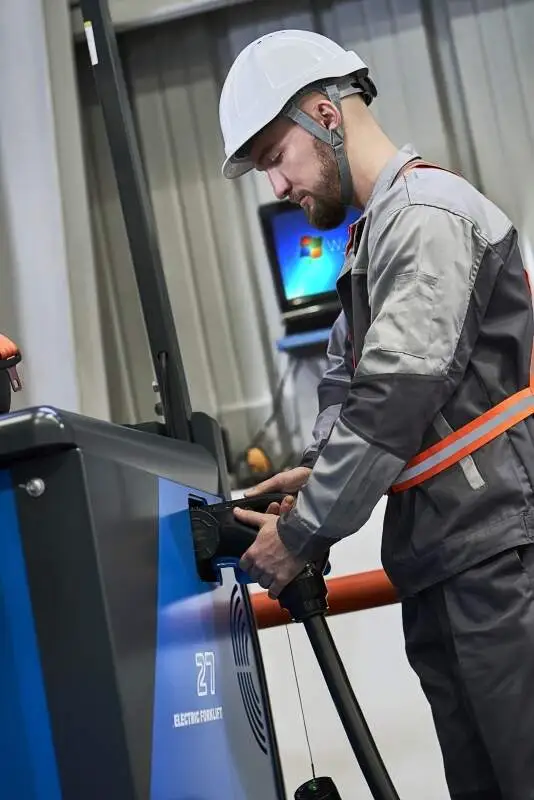
In warehousing logistics and manufacturing handling operations, 2-ton electric forklifts are commonly used small and medium-sized tonnage equipment. Reasonable planning of turning radius and supporting working space can improve handling efficiency, avoid equipment collisions, and reduce site loss. The turning radius of electric forklifts is usually divided into two types, namely, the minimum turning radius and the minimum right-angle stacking channel width, which are the core reference indicators for planning the operation site.
The minimum turning radius refers to the track circle radius of the farthest point outside the vehicle body when the forklift hits the steering wheel or steering handle to the bottom under no load or rated load, and travels at the slowest stable speed. The minimum turning radius of a 2-ton electric forklift is greatly affected by its own structure, such as the length of the wheelbase, the type of steering system, etc. Generally, the shorter the wheelbase, the smaller the minimum turning radius, and the more suitable it is for working in a relatively compact site. When calculating or understanding this parameter, it is necessary to pay attention to distinguish between no load and rated load. Due to changes in the body counterweight and the center of gravity of the goods, the minimum turning radius may increase slightly during the rated load.
The minimum right-angle stacking channel width refers to the minimum channel width that the forklift can safely stack the pallet goods after turning at a right angle, which is the key basis for warehouse channel planning. This parameter is not only related to the minimum turning radius, but also related to factors such as pallet size, cargo length, forklift front suspension distance, and fork length. When determining the channel width, it is usually necessary to reserve a certain safety margin on the basis of theoretical calculation values, and the margin is generally not less than 200 mm to deal with driver operation errors, slight deviation of goods, etc.
Different handling scenarios have different requirements for the working space of 2-ton electric forklifts. When transporting goods in ordinary flat warehouses, the influence of the minimum turning radius is mainly considered, and the channel width can only accommodate the smooth turning of the forklift. In warehouses that need to be stacked, especially three-dimensional warehouses or high-density storage areas, it is necessary to plan strictly according to the minimum right-angle stacking channel width, and also pay attention to the spacing between shelves and the height of obstacles above the channel to ensure that the goods do not collide with shelves or other objects during stacking.
For sites that have been built but have limited space, you can choose the appropriate steering type of 2-ton electric forklift according to the existing space, such as some models with flexible steering, which can reduce the requirement for working space to a certain extent. However, when choosing a model, you need to consider various factors such as handling efficiency, operation convenience, and maintenance costs, and you can't just focus on the operating space.


