
 简体中文
简体中文 繁体中文
繁体中文 Deutsch
 日本語
日本語 한국어
한국어 Tiếng Việt
 Русский
 ไทย
ไทย Bahasa Indonesia
 Bahasa Melayu
 Filipino
 لالعربية
 Français

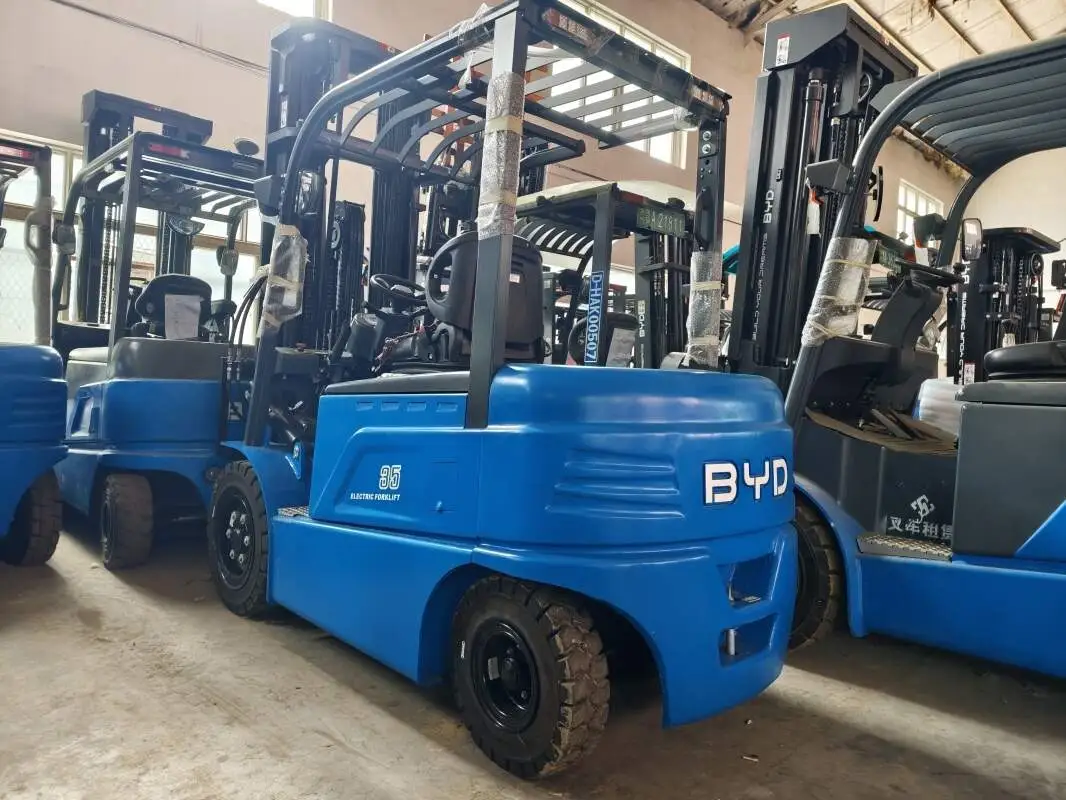
In the field of warehousing, logistics and industrial handling, the selection of electric forklifts directly affects operation efficiency and operating costs. Narrow-channel lithium-ion forklifts and counterweight electric forklifts are two widely used models. There are obvious differences between the two in terms of usage scenarios, performance, etc. The following are sorted out from multiple dimensions.
Application scenario difference
Applicable Scenarios of Narrow Channel Lithium Battery Forklifts
This type of forklift is designed for space-constrained environments and is suitable for indoor warehouses with dense shelf layouts, such as e-commerce sorting warehouses, cold chain storage warehouses, small and medium-sized three-dimensional warehouses, etc. It usually requires a channel width of 1.5 meters to 2.5 meters. It can complete shelf access operations in narrow passages and maximize the use of vertical storage space in warehouses.
Application Scenarios of Counterbalance Electric Forklift
It is more suitable for open work sites, such as outdoor loading and unloading areas in large logistics parks, factory raw material yards, open-air freight yards, etc. The width of these sites is generally more than 3 meters, allowing vehicles to complete long-distance cargo transfer, heavy cargo loading and unloading, etc., without space constraints.
Operational flexibility and differences in space requirements
Operational flexibility of narrow-channel lithium-ion forklifts
The body design is compact, the steering radius is small, and some models are equipped with side-shifting attachments, which can flexibly steer and translate in narrow passages, easily cope with the accurate access of multi-layer shelves, and are especially suitable for warehouse internal operations where frequent switching of operation points does not require too much steering space.
Operational flexibility of counterweight electric forklifts
Due to the body's own balance weight, the overall size is relatively large, and the steering radius is correspondingly large. It is difficult to operate in a narrow space, and it is better at handling long distances in a straight line. Adequate turnover space is required during operation to avoid steering obstruction affecting efficiency.
Load capacity and job stability differences
Load and Stability of Narrow Channel Lithium Battery Forklift
The load capacity is usually between 1 ton and 3 tons, mainly focusing on the access of medium and light cargo. It relies on the compact structure of the body and the precise steering system to maintain the stability of the operation. When operating on high-rise shelves, it is necessary to strictly control the load weight to ensure the balance of the vehicle in the elevated state.
Load and stability of counterweight electric forklift
The load range is wider, from 3 tons to 10 tons or even higher, with the counterweight of the tail to offset the weight of the goods, even when handling heavy goods, it can maintain good stability, suitable for heavy cargo handling and transshipment operations on ground or low shelves.
Energy consumption and maintenance differences
Energy Consumption and Maintenance of Narrow Channel Lithium Battery Forklift
The equipped lithium battery has strong battery life and is suitable for long-term continuous indoor operation. Maintenance focuses on precision components such as steering systems and side-shifting attachments. It is necessary to regularly check the wear of components to ensure operation accuracy.
Energy consumption and maintenance of counterweight electric forklift
Lithium batteries also have good battery life, but due to the large body weight, the tire wear rate is faster, and daily maintenance requires attention to tire wear, balance weight structural tightening, and the operating status of the hydraulic system to ensure the reliability of heavy-duty operations.
When selecting a model, enterprises need to consider factors such as their own workplace space, cargo weight, and operation frequency, and choose a narrow-channel lithium-ion forklift or a counterweight electric forklift reasonably to improve handling efficiency and reduce operating costs.


