
 简体中文
简体中文 繁体中文
繁体中文 Deutsch
 日本語
日本語 한국어
한국어 Tiếng Việt
 Русский
 ไทย
ไทย Bahasa Indonesia
 Bahasa Melayu
 Filipino
 لالعربية
 Français

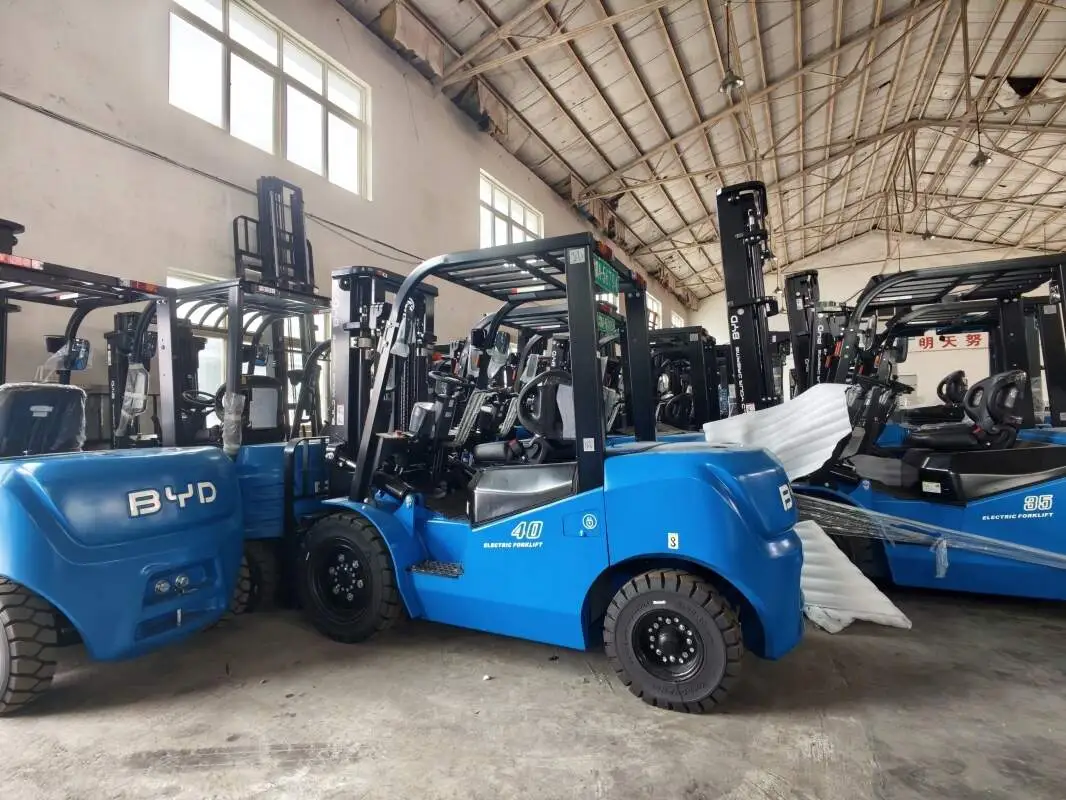
With its compact body design and efficient lithium-ion power system, narrow-channel lithium-ion forklifts have become important equipment for improving the utilization rate of storage space. There are differences in operating capacity and adaptation scenarios for models of different tonnages, and enterprises need to choose a reasonable model based on their own warehouse area.
Small tonnage (1.5 tons and below) adaptation scenario
This type of forklift has a small and flexible body and a small turning radius, making it suitable for small warehouses with an area of less than 500 square meters, such as community e-commerce front warehouses and small retail store warehouses. This type of warehouse usually has a compact shelf layout and a narrow channel width. Small-tonnage forklifts can be easily shuttled to complete the storage and handling of goods, which can meet the storage needs of small batches and multiple frequencies, and will not cause space waste due to the large body. In addition, this type of forklift has low energy consumption and is suitable for daily lightweight operations in small warehouses, which can effectively control operating costs.
Medium tonnage (2-3 tons) Suitable scene
The 2 to 3 ton narrow-channel lithium-ion forklift has a stronger carrying capacity and is suitable for medium-sized warehouses with an area of 500 to 3,000 square meters, such as regional distribution centers and medium-sized production enterprises' raw material warehouses. This type of warehouse has a larger storage volume of goods and requires forklifts to complete the handling of medium and large batches of goods in relatively regular narrow channels. Medium-sized tonnage models can not only ensure operation efficiency, but also adapt to the space scale of the warehouse to avoid insufficient carrying capacity affecting the rhythm of operations or restricting traffic due to excessive body size. At the same time, the battery life of lithium-ion power can meet the needs of medium-sized warehouses for a long time of continuous operation, reducing the waiting time for midway charging.
Large tonnage (more than 3 tons) suitable for scenarios
Narrow-channel lithium-ion forklifts with more than 3 tons have stronger load capacity and are suitable for large storage centers with an area of more than 3,000 square meters, such as urban logistics hub warehouses and large-scale production enterprise finished product warehouses. The goods stored in such warehouses are mostly heavy or large-volume goods, and the channel width is more regular and has a certain margin compared to medium-sized warehouses. Large-tonnage forklifts can efficiently complete the access of heavy goods, adapt to the large-space operation requirements of warehouses, and improve the overall storage circulation efficiency. In addition, the stability of such forklifts is better, which can ensure the safety of cargo handling in large-space operation environments.
Supplementary considerations for selection
In addition to warehouse area, enterprises need to consider factors such as warehouse shelf layout, channel width, and cargo weight when selecting a model. For example, warehouses with high shelf levels need to pay attention to the lifting height of forklifts; in scenes where goods are mainly heavy, priority should be given to matching the load-bearing tonnage of forklifts to ensure operation safety and efficiency. Comprehensive selection of various factors can make narrow-channel electric lithium forklifts better serve warehousing operations.


