
 简体中文
简体中文 繁体中文
繁体中文 Deutsch
 日本語
日本語 한국어
한국어 Tiếng Việt
 Русский
 ไทย
ไทย Bahasa Indonesia
 Bahasa Melayu
 Filipino
 لالعربية
 Français

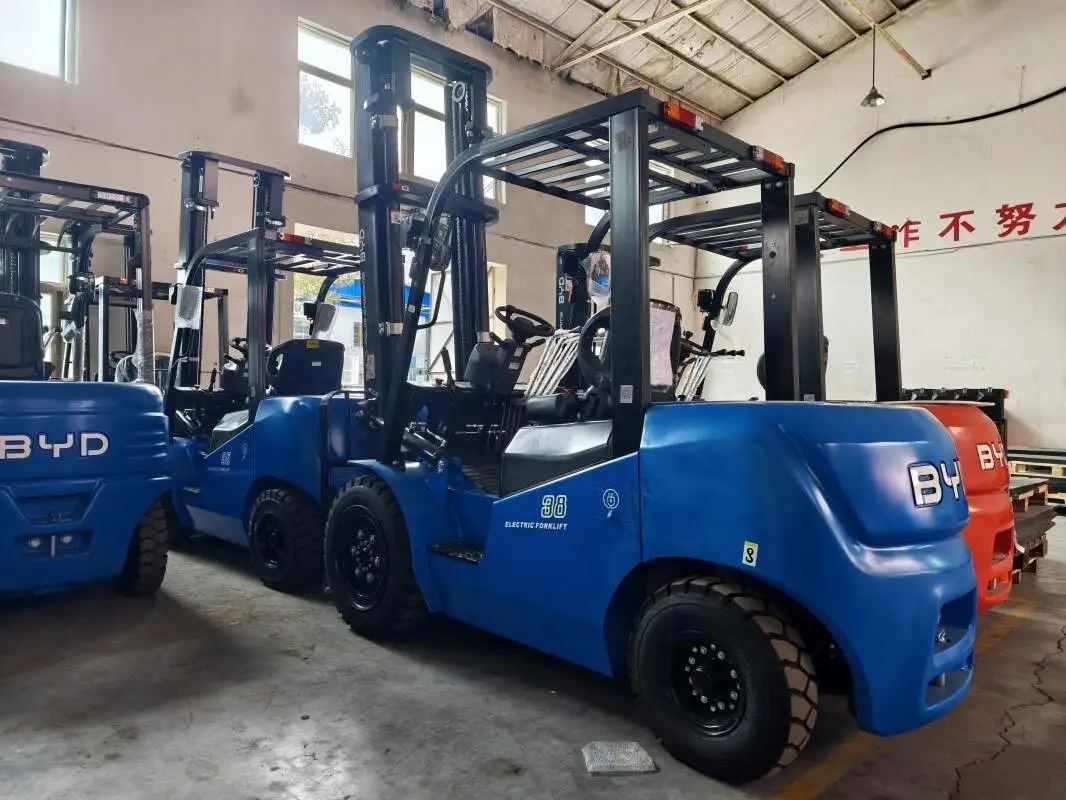
With the rapid development of the domestic warehousing and logistics industry, lithium-ion battery handling equipment has gradually become one of the core equipment of warehousing operations due to its environmental protection and high efficiency. Its market situation has also attracted the attention of practitioners.
Demand-side growth drivers
The continuous expansion of the domestic e-commerce industry has driven the demand for high-frequency operations in warehousing and logistics. The zero-emission and low-noise characteristics of lithium-ion handling equipment are suitable for the indoor operating environment of e-commerce warehouses. At the same time, the standardized development of cold chain warehousing, pharmaceutical warehousing and other sub-sectors has put forward higher requirements for the stability and temperature control adaptability of handling equipment. The technical characteristics of lithium-ion equipment just meet the needs of such scenarios, promoting a steady increase in market demand.
The current state of technology iteration
The current technical iteration of domestic storage lithium battery handling equipment mainly focuses on battery life and intelligent operation. In terms of battery life, the improvement of battery energy density prolongs the single operation time of the equipment and reduces the frequency of charging in the middle; at the intelligent level, the application of functions such as automatic navigation and load sensing reduces the intensity of manual operation and improves operation efficiency. However, technological upgrades also pose challenges to the cost control of equipment, and some small and medium-sized warehousing enterprises are still weighing cost performance.
Market competition landscape
The domestic warehouse lithium battery handling equipment market is showing a trend of diversified competition. Local enterprises have advantages in product adaptability and after-sales response by virtue of their accurate grasp of domestic market demand. At the same time, the increasing number of technical exchanges and cooperation in the industry has promoted the improvement of overall product quality, but it has also intensified price competition in the market, prompting enterprises to continuously optimize product structure and focus on customized services for sub-scenarios.
Overall, the domestic warehousing lithium battery handling equipment market is still in a growth stage, and the continuous release of demand and the continuous iteration of technology will jointly promote the healthy development of the market. Practitioners can combine their own warehousing scene needs, pay attention to technological upgrades and market dynamics, and choose suitable handling equipment to improve operational efficiency.


