
 简体中文
简体中文 繁体中文
繁体中文 Deutsch
 日本語
日本語 한국어
한국어 Tiếng Việt
 Русский
 ไทย
ไทย Bahasa Indonesia
 Bahasa Melayu
 Filipino
 لالعربية
 Français

Common pain points of high-density shelf operations in e-commerce
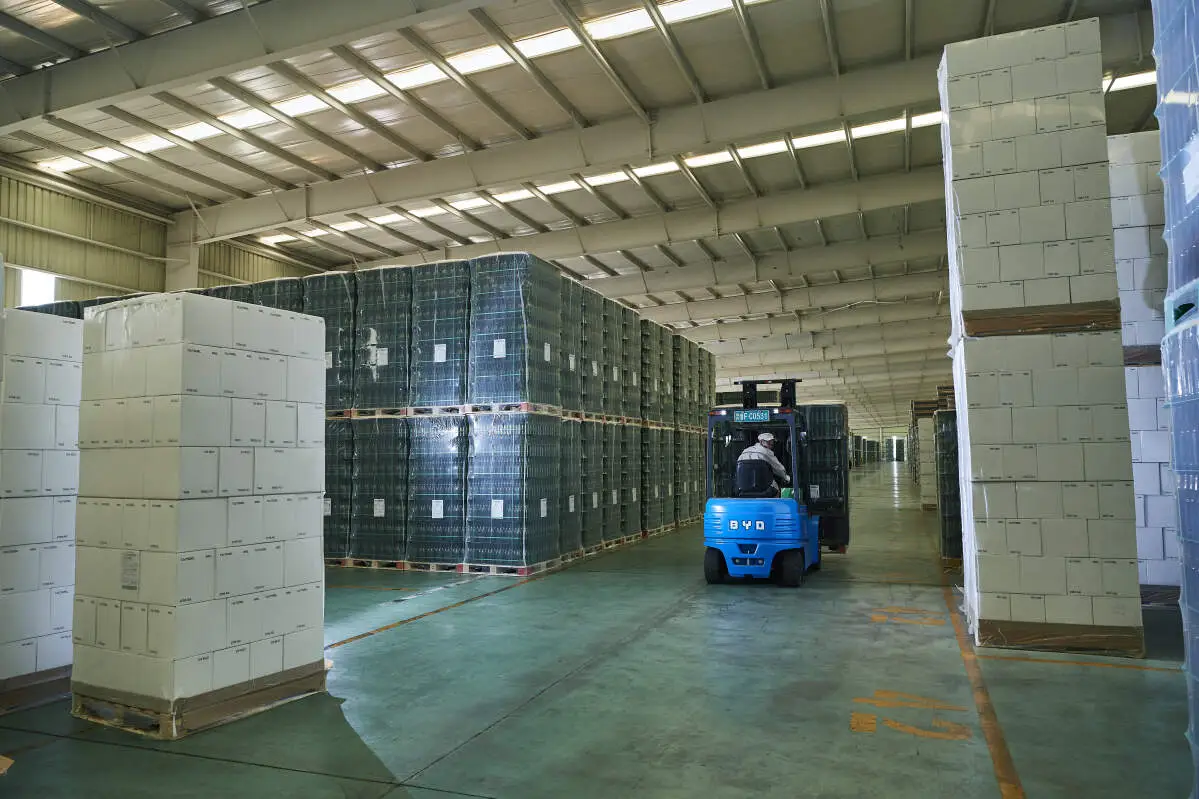
With the rapid development of the e-commerce industry, the storage demand of warehouses continues to increase, and high-density shelves have become the choice of many e-commerce warehouses. Such shelves can greatly increase the storage capacity per unit area, but they also bring problems such as narrow working space, small channel turning radius requirements, and high frequency of goods access. If paired with traditional fuel forklifts or counterweight forklifts, there are often difficult turning and large space occupied by passages that affect storage efficiency. Some fuel forklifts also have the problem of exhaust emissions polluting the warehouse environment.
The adaptation advantages of three-point lithium-ion forklifts
The structure design of the three-pivot lithium-ion forklift is relatively compact. Compared with the counterbalanced forklift, its turning radius is smaller, which can adapt to the narrow channel operation scenario between high-density shelves. It can pass and access goods smoothly without greatly widening the channel, effectively ensuring the high-density storage effect of the warehouse. This type of forklift uses lithium batteries as the power source, and the charging time is short, which can meet the needs of multiple batches and high-frequency operations in e-commerce warehouses. The lithium batteries have no exhaust emissions during use, making them suitable for closed or semi-closed warehouse environments. In addition, the operation of the three-pivot lithium-ion forklift is relatively flexible, which makes it easy for the operator to quickly adjust the direction and position in a narrow space and improve the fluency of the operation.
Implementation points of the matching plan
When implementing the operation plan of e-commerce high-density shelves with three-point lithium-ion forklifts, it is first necessary to accurately calculate and reserve the appropriate channel width according to the actual layout of the warehouse and the size parameters of the shelves to ensure that the forklift can pass and operate safely and smoothly. Secondly, according to the weight, volume and access height of the goods, choose the three-point lithium-ion forklift with suitable load and lifting height to avoid the mismatch of equipment parameters affecting the operation efficiency or causing safety hazards. At the same time, it is necessary to regularly maintain the forklift, check the power and health status of the lithium battery, and clean up the dust and debris on the equipment in time to ensure the normal operation and service life of the equipment.


