
 简体中文
简体中文 繁体中文
繁体中文 Deutsch
 日本語
日本語 한국어
한국어 Tiếng Việt
 Русский
 ไทย
ไทย Bahasa Indonesia
 Bahasa Melayu
 Filipino
 لالعربية
 Français

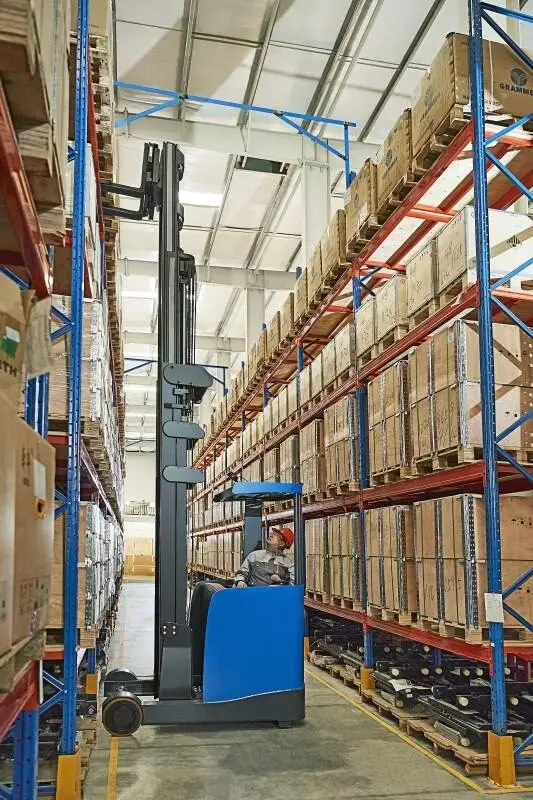
Hello everyone, today as a senior practitioner in the electric forklift industry, combined with the characteristics of compact indoor space in small electronic factories and fragile or precision components such as electronic components that are mostly palletized, I would like to share with you the practical experience of the first phase of the three-point lithium forklift.
The first thing to note is that in the pre-operation preparation process, this step is directly related to the safety and efficiency of subsequent operations. Before entering the factory building, first check the appearance of the vehicle around the car to confirm that the body, tires, and forks are not obviously damaged or loose, and whether the tire pressure is stable; then turn on the vehicle power supply to check whether the power, steering, braking, lifting and other functions displayed on the dashboard are normal. It is best to keep the power at least two-thirds to avoid no power affecting the production rhythm; in addition, check whether the operation channel is smooth, and whether the channel width meets the turning radius requirements of the vehicle. Small electronic factory channels are usually narrow, which is particularly critical. Finally, confirm the integrity of the cargo pallet, confirm whether the load-bearing capacity of the pallet matches the rated load of the vehicle, and whether the precision or fragile parts are well protected, such as whether they are wrapped in bubble film or whether anti-collision strips are added to the edge of the pallet.
Next is the core of the indoor practical operation points. The first is the starting and steering operation. Before starting, honk the horn to signal the surrounding personnel to pay attention to avoid, release the parking brake, slowly step on the accelerator pedal, start smoothly, and avoid stepping on the accelerator. When steering, anticipate the channel corner in advance, slow down the speed, and take advantage of the small turning radius of the three-point model to rotate the steering wheel smoothly to avoid urgent stops, prevent the goods from shaking or even sliding, and avoid hitting the equipment, shelves or walls in the factory. The second is the operation of picking up and unloading goods. Before picking up the goods, adjust the fork to a suitable width, just enough to insert into the fork hole of the tray. The depth of the fork hole should reach more than two-thirds of the thickness of the tray. When lifting the fork, tilt the door frame slightly to ensure that the goods are stable and then back up slightly. When moving, keep the door frame tilted forward as much as possible, and keep the bottom of the goods ten to fifteen centimeters away from the ground. When placing the goods, stop the vehicle first, then lift the fork, tilt the door frame slightly, slowly lower the fork, and then pull out the fork after confirming that the goods are stable. The third is the operation of driving and avoidance. When driving, take a special channel, do not stop in the middle of the channel, slow down and honk in advance when encountering personnel or other equipment, and stop and give way if necessary.
Finally, add some special precautions for small electronic factories. The first is the control of cargo protection and the height of the door frame. The ceiling in the factory building usually has ventilation ducts or lighting equipment, and the height of the door frame should be lower than the lowest point of these equipment; the second is the control of the turning radius. Although the turning radius of the three-point model is small, it is also necessary to reserve a certain amount of space, not too close to the wall or shelf; the last is the operation after parking. After the operation is completed, the vehicle should be parked in the designated parking area, pull up the parking brake, lower the fork, turn off the power supply, and pull out the key.


