
 简体中文
简体中文 繁体中文
繁体中文 Deutsch
 日本語
日本語 한국어
한국어 Tiếng Việt
 Русский
 ไทย
ไทย Bahasa Indonesia
 Bahasa Melayu
 Filipino
 لالعربية
 Français

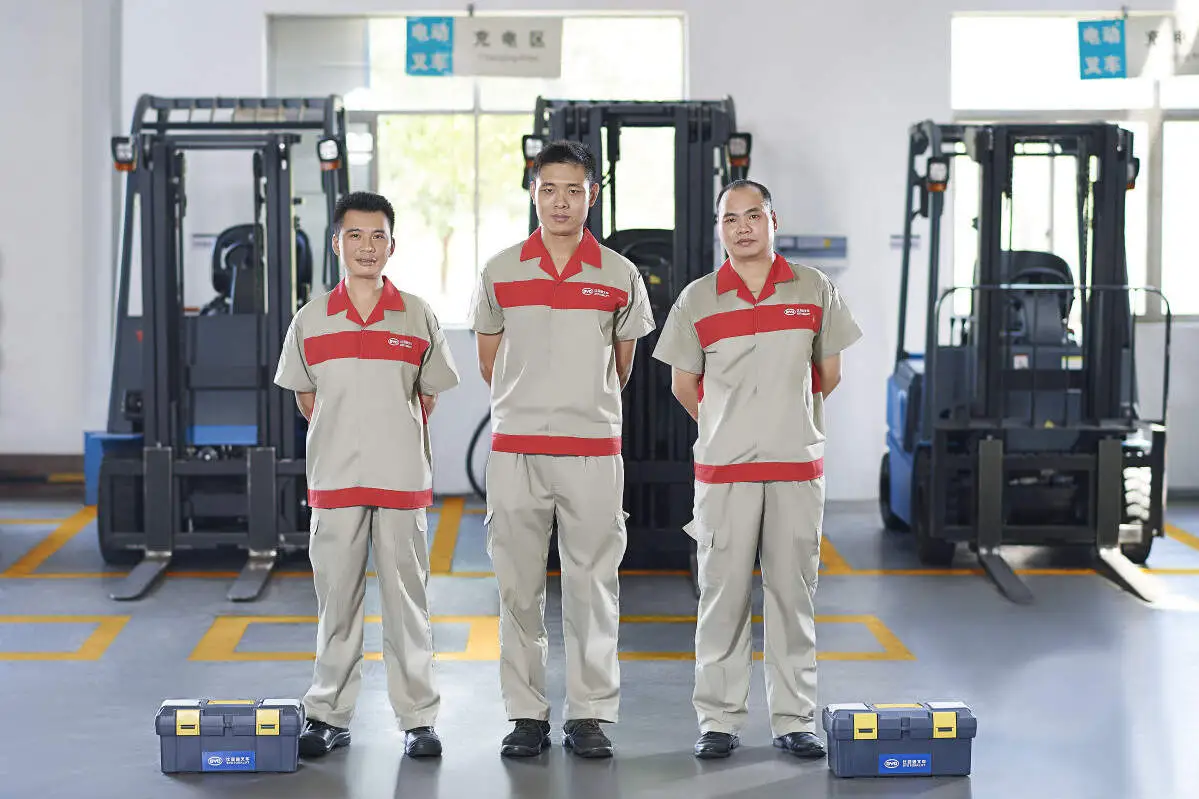
In modern industrial warehousing and logistics, heavy-duty 5-ton lithium-ion forklifts have gradually become one of the core equipment for handling large and heavy objects due to their characteristics of stable battery life, zero emission pollution, and convenient charging. Correctly understanding and observing the standard parameters of its climbing and load can not only ensure operation safety, but also prolong the service life of the equipment.
First of all, understand the load standard of heavy-duty 5-ton lithium battery forklift. Here, 5 tons refers to the rated lifting weight. It is not able to lift 5 tons of goods under any conditions, but has clear premise constraints. The core constraint is the height of the load center of gravity. Usually, the standard load center of gravity of this type of equipment is 500 mm, that is, when the horizontal distance from the center of gravity of the goods to the front end of the fork is within the specified value, and the height of the center of gravity does not exceed 500 mm, the rated weight of 5 tons can be safely lifted. If the center of gravity of the goods is moved forward or raised, the maximum allowable lifting weight will be reduced accordingly. For specific values, please refer to the instructions attached to the equipment. In addition, the way the goods are placed will also affect the actual safety load, and they need to be placed evenly and smoothly to avoid the occurrence of partial
Then look at the climbing standards of heavy-duty 5-ton lithium-ion forklifts. Safe climbing degree is the core indicator to measure the climbing ability of equipment, which is divided into two situations: no-load climbing degree and full-load climbing degree. Generally speaking, the no-load safe climbing degree of this type of equipment can reach a higher value, but when full load is concentrated in the front end, the safe climbing degree will be significantly reduced. When operating, you need to drive strictly according to the marked safe climbing degree. When going downhill, you should pay more attention to controlling the speed, avoid sudden braking or sharp turns, and prevent the goods from slipping or the equipment from overturning. At the same time, check the road surface condition before climbing to ensure that the road surface is smooth, non-slip, and free of obstacles, so as to ensure the stability and safety of the climbing process.


