
 简体中文
简体中文 繁体中文
繁体中文 Deutsch
 日本語
日本語 한국어
한국어 Tiếng Việt
 Русский
 ไทย
ไทย Bahasa Indonesia
 Bahasa Melayu
 Filipino
 لالعربية
 Français

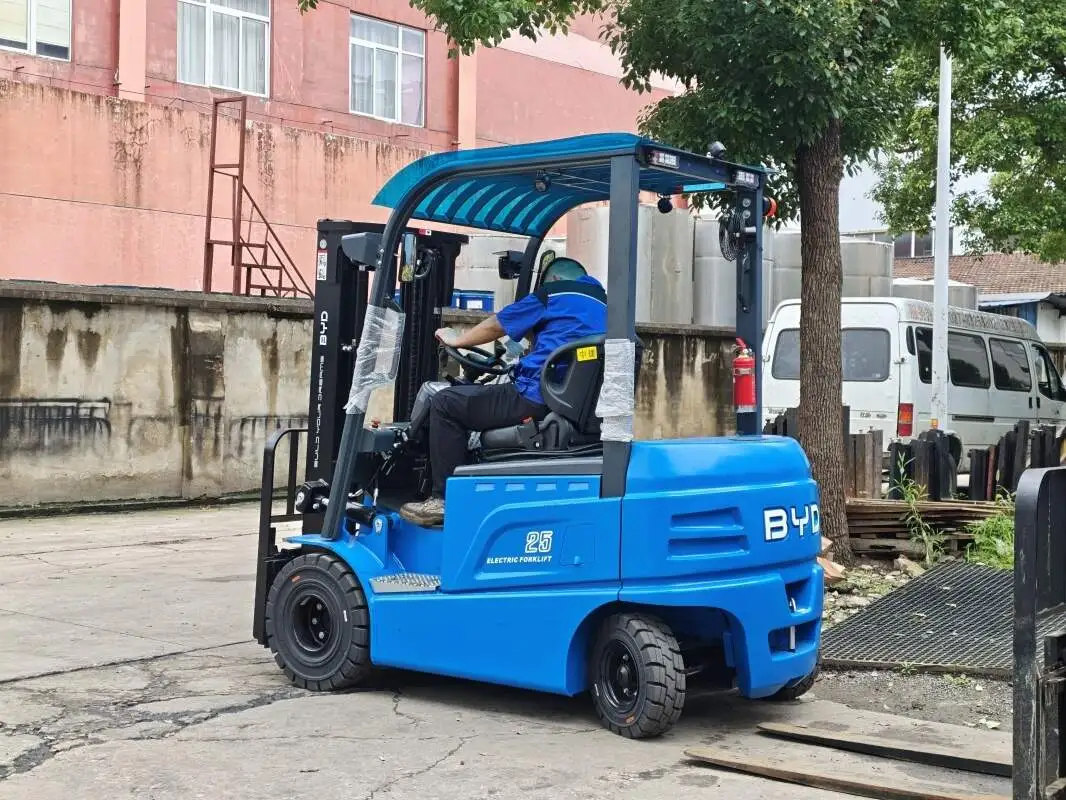
In the fields of warehousing, logistics, and industrial production, electric forklifts have become the core equipment for material handling. Among them, lithium-ion forklifts and lead-acid electric forklifts are currently the mainstream types. There are obvious differences in performance, cost, and adaptation scenarios between the two. Enterprises need to choose reasonably according to their own operational needs.
High-frequency and high-intensity operation scenarios: prioritize lithium-ion forklifts
For logistics hubs, e-commerce warehousing and other scenarios that require multi-shift continuous operation, the operation intensity is high and the battery life demand is large. Lithium forklifts support fast charging, usually 1-2 hours can replenish 80% of the power, without long-term downtime to change the battery, which can effectively improve the operation efficiency. At the same time, the cycle life of lithium forklifts is longer, and the comprehensive use cost under high-frequency operations is more advantageous, which is suitable for enterprises that pursue efficient production capacity.
Low-cost rigid demand operation scenario: optional lead-acid electric forklift
For scenarios such as small and medium-sized warehouses and small processing plants with low operating frequency and short single operation time, cost control is the core requirement. The procurement cost of lead-acid electric forklifts is relatively low, the initial investment pressure is small, and the maintenance technical threshold is low, and the daily maintenance cost is relatively close to the people. If the enterprise's operation rhythm is flat and there is no need for continuous high-intensity operation, lead-acid electric forklifts can meet the basic handling needs.
Low temperature operation scenario: more suitable for lithium battery forklifts
In low temperature environments such as cold storage and cold chain storage, the activity of lead-acid batteries will be affected by low temperature, and the battery life and charging efficiency will be greatly reduced, making it difficult to operate stably. The battery of a lithium battery forklift has a smaller performance attenuation in a low temperature environment, which can maintain better power output and battery life performance, making it more suitable for such special operating environments.
Space-constrained operation scenarios: Priority is given to lithium-ion forklifts
In narrow workshops, small warehouses and other space-constrained scenarios, the flexibility of forklifts is higher. The overall structure of lithium-ion forklifts is more compact, the turning radius is smaller, the operation is more flexible, and it can easily shuttle through narrow passages to improve space utilization. However, lead-acid electric forklifts are slightly less convenient to operate in narrow spaces due to their large battery size and wide overall size.
When selecting an electric forklift, enterprises need to consider factors such as operating intensity, cost budget, operating environment, and space conditions, and make adaptation choices based on the characteristics of the two forklifts in order to maximize equipment efficiency and reduce operating costs.


