
 简体中文
简体中文 繁体中文
繁体中文 Deutsch
 日本語
日本語 한국어
한국어 Tiếng Việt
 Русский
 ไทย
ไทย Bahasa Indonesia
 Bahasa Melayu
 Filipino
 لالعربية
 Français

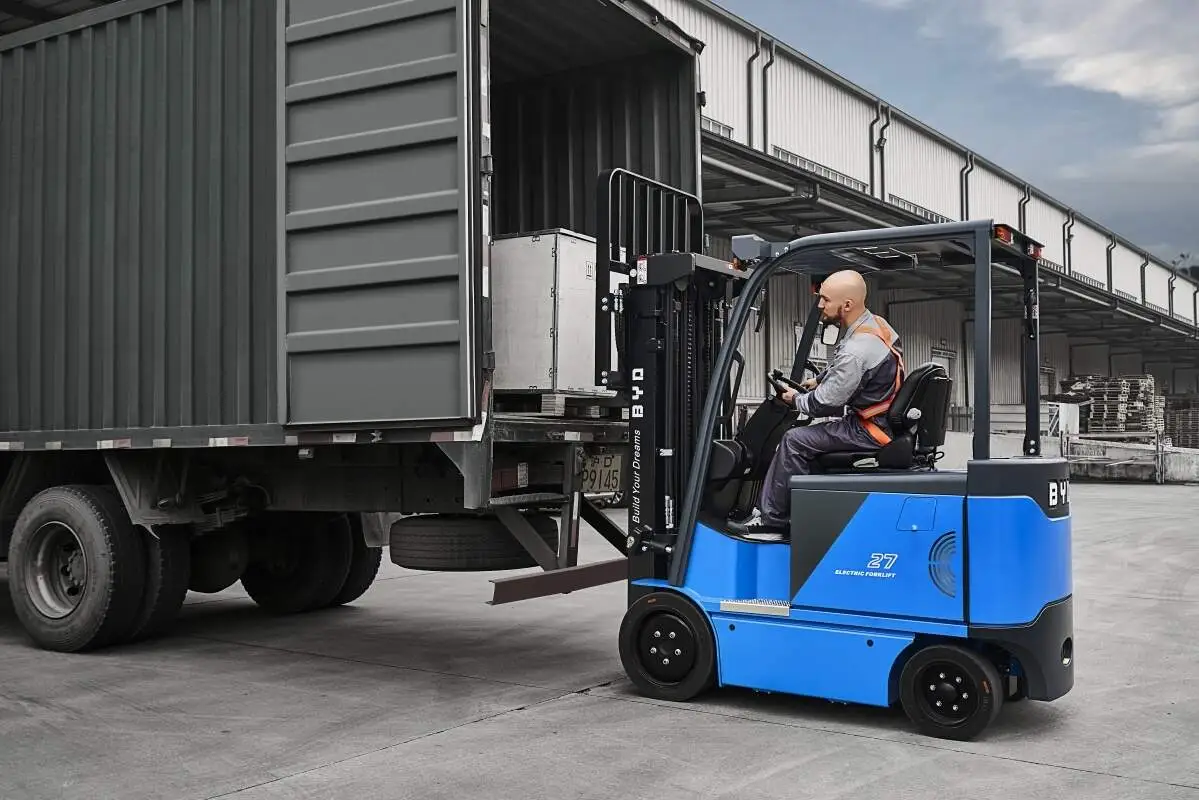
In the modern warehousing and logistics system, electric forklifts have become the core equipment of warehousing and handling in various industries due to their characteristics of environmental protection, flexibility, and energy conservation. There are differences in warehousing scenarios in different industries, and the adaptation advantages of electric forklifts also have different focuses. The following is an analysis of several typical industries one by one.
Warehousing and handling in the e-commerce industry: flexible and efficient adaptation to high-frequency operations
The e-commerce industry orders have the characteristics of multiple batches and small batches. The utilization rate of storage space is high, and the turnover speed of goods is fast. The electric forklift is small in size and flexible in steering. It can pass smoothly in narrow storage channels, and is suitable for intensive shelf operations. At the same time, the electric forklift starts quickly and responds in a timely manner. It can meet the needs of high-frequency operations such as sorting and shelves, and improve the efficiency of cargo turnover. In addition, the electric forklift has low noise during operation, which will not interfere with the communication of sorting personnel in the warehouse, creating a relatively quiet working environment.
Manufacturing warehousing and handling: stable load-bearing adaptation to heavy materials
Manufacturing warehousing is mainly based on heavy raw materials, work in progress and finished products, with large weight and diverse specifications. Electric forklifts have stable bearing capacity and can be adapted to material handling needs of different weight grades. Whether it is heavy parts or finished products in boxes, they can safely complete loading, unloading and transshipment operations. At the same time, the power output of electric forklifts is stable, and it is not easy to shake when handling heavy materials, reducing the risk of cargo loss. In addition, electric forklifts do not require fuel and do not produce exhaust gas. They are suitable for operation in closed or semi-closed production workshops and warehouses to avoid pollution to the production environment.
Cold chain industry storage and handling: strong weather resistance, suitable for low temperature environment
Cold chain warehousing mainly involves fresh, frozen food and other goods, and the operating environment is mostly low temperature or even ultra-low temperature. The electric forklift has been specially designed to have good low temperature resistance. The battery and core components can operate stably in a low temperature environment, and there will be no power attenuation or failure due to low temperature. At the same time, the electric forklift has no exhaust emissions, which will not affect the air quality in the cold chain warehouse, avoid the goods from odor pollution, and meet the hygiene requirements of cold chain warehousing.
Warehousing and handling in the pharmaceutical industry: special requirements for clean and environmentally friendly adaptation
Warehousing in the pharmaceutical industry requires extremely high environmental cleanliness, and most of the goods are sensitive items such as medicines and medical apparatus. There is no exhaust gas or dust emission during the operation of the electric forklift, which will not pollute the storage environment and meet the cleanliness standards of the pharmaceutical industry. In addition, the operation of the electric forklift is accurate, which can realize the smooth handling of goods, avoid damage to the drug packaging or equipment damage due to shaking, and ensure the safety of the goods.
Overall, electric forklifts can play a corresponding adaptation advantage according to the storage and handling needs of different industries, help enterprises improve the efficiency of warehousing operations, reduce operating costs, and are an indispensable handling equipment in modern warehousing and logistics.


