
 简体中文
简体中文 繁体中文
繁体中文 Deutsch
 日本語
日本語 한국어
한국어 Tiếng Việt
 Русский
 ไทย
ไทย Bahasa Indonesia
 Bahasa Melayu
 Filipino
 لالعربية
 Français

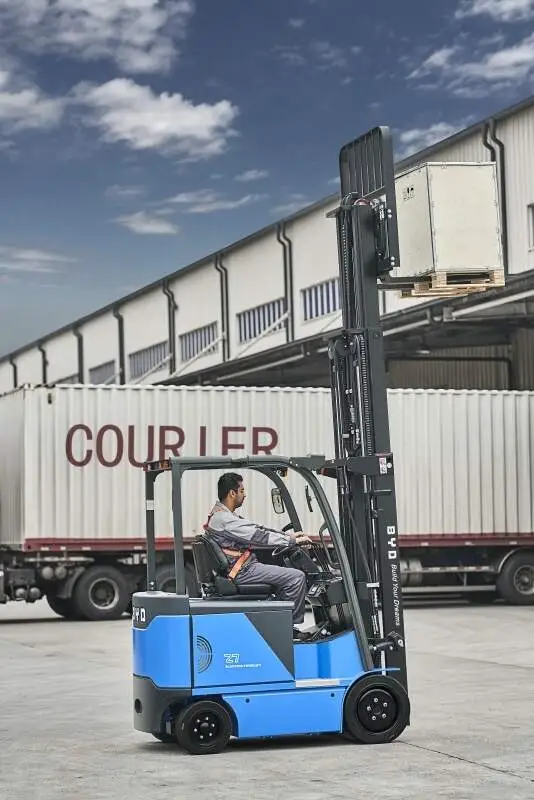
Many production plants and large-scale warehousing operators with heavy-duty handling requirements often struggle with the selection of two products of the same tonnage when selecting 4.5-ton electric forklift products. Blind purchase is prone to equipment and actual working conditions that do not match, but reduce the overall operating efficiency. Next, the actual differences between the two are dismantled from multiple practical dimensions to provide a clear reference for everyone's selection.
The difference in suitable working conditions of the two products
Conventional stacking transfer scene adaptation
CPD45 is a counterweight model, with a more stable wheel track design, suitable for hardened road surfaces with general outdoor flatness. At the same time, it has a wider range of adaptations for lifting heights. It is more reliable to use in scenarios such as cross-regional material transfer in the park and high-level access to goods in large warehouses. It can cope with diverse outdoor operation needs and will not be limited to special road sections where the body structure cannot pass.
Narrow channel job scene adaptation
The body width of the ECB45 has been specifically optimized and adjusted, the overall turning radius is smaller, and there is no need to reserve too wide passage during operation. It is especially suitable for indoor storage scenarios with high-density shelf layout. It can effectively improve the utilization rate of storage space and reduce the wasted warehouse area occupied by the passage. Under the same area, more shelves can be placed to store goods, enhancing the overall revenue of the warehouse.
Differences in operation and maintenance costs for daily use
Differences in energy performance
Both products are equipped with mature battery systems, but they have made exclusive energy consumption strategy optimization for different operation scenarios. Under the working conditions of long-distance cross-regional transportation, the former's energy consumption performance is better, and the battery life can better match the needs of all-day operations. Under the scenarios of short-distance, high-frequency and narrow-channel switching operations, the latter's energy consumption control performance is better, and the working time after a single replenishment can meet the needs of the corresponding scene.
Consumable parts replacement cost
The core power components of the two are highly versatile, but the specifications of the walking wheel and steering components are different. When purchasing, you can judge by considering the existing parts reserves of your own maintenance team. You can also reduce the comprehensive cost of long-term use without adding too many additional accessories.
Practical selection reference suggestions
If the daily operation covers multiple needs such as outdoor factory transshipment and high-level stacking, the former can be preferred. If the entire operation scene is concentrated in indoor narrow-channel storage, there is not much outdoor long-distance driving demand. Choosing the latter can further enhance the smoothness of the operation.


