
 简体中文
简体中文 繁体中文
繁体中文 Deutsch
 日本語
日本語 한국어
한국어 Tiếng Việt
 Русский
 ไทย
ไทย Bahasa Indonesia
 Bahasa Melayu
 Filipino
 لالعربية
 Français

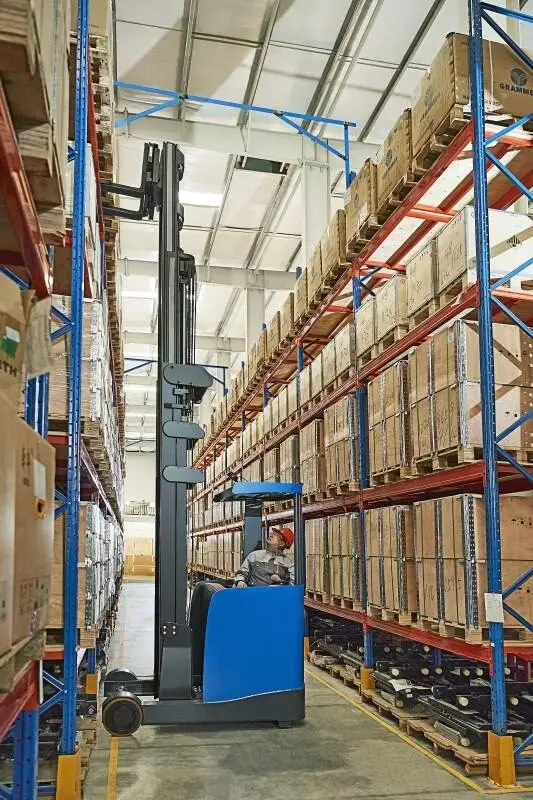
In warehousing and logistics scenarios, stackers are the key equipment to improve the efficiency of cargo handling. BYD S series stackers have attracted the attention of many warehousing practitioners due to their stable operating performance. Among them, S14PS, S14JW, and S20PS models are often compared by users. If you want to choose a model that suits your own needs, you need to analyze them one by one in combination with core parameters and operating scenarios.
Identify the core requirements before purchasing
Before selecting a stacker, it is necessary to clarify your own operating requirements: the rated load range of daily handling goods, the width of the warehouse passage, the height of the goods to be lifted, and the length of daily continuous operation. These factors are the core basis for selecting a vehicle.
Comparison of core parameters of three models
Load capacity difference
The S14PS and S14JW are both rated at 1.4 tons, suitable for the handling and stacking of small and medium-sized packaged goods and light pallets; the S20PS is rated at 2.0 tons, capable of handling heavier goods, such as large industrial goods and high-density pallet stacking scenarios.
Lift height adaptation
The maximum lifting height of the three models has its own emphasis. The lifting height of the S14PS can be adapted to most standard storage shelves to meet the needs of conventional medium and low stacking. The S14JW not only guarantees the lifting height, but also takes into account the flexibility of narrow channel operation. The S20PS can maintain a stable working condition while adapting the lifting height to medium and high shelves due to its larger load.
Workspace adaptation
The body design of the S14JW is more compact, with a smaller turning radius, making it ideal for scenarios with narrow warehouse passages, allowing for flexible turnover in limited space and reducing space waste. The body size of the S14PS and S20PS is moderate, suitable for conventional-width storage passages, resulting in a balanced performance of passability and stability during operation.
Power performance
All three models use an electric drive mode, with a battery life that can meet the daily needs of 8 hours of continuous operation. For scenarios that require long-term operation, you can choose a model that matches the battery capacity according to your own charging conditions.
Car selection based on job scenarios
If the warehouse aisle is narrow and the daily handling weight of goods is less than 1.4 tons, the S14JW is a more flexible choice; if the width of the warehouse aisle is conventional and the handling of small and medium-sized goods is the main one, the balanced performance of the S14PS can meet the demand; if it is necessary to handle about 2.0 tons of heavier goods, and the working space is sufficient, the S20PS is more suitable.
Overall, when purchasing a BYD S-series stacker, first sort out your core operating requirements, and then match the parameters and characteristics of the three models to find the most suitable one to improve the efficiency and stability of warehousing operations.


