
 简体中文
简体中文 繁体中文
繁体中文 Deutsch
 日本語
日本語 한국어
한국어 Tiếng Việt
 Русский
 ไทย
ไทย Bahasa Indonesia
 Bahasa Melayu
 Filipino
 لالعربية
 Français

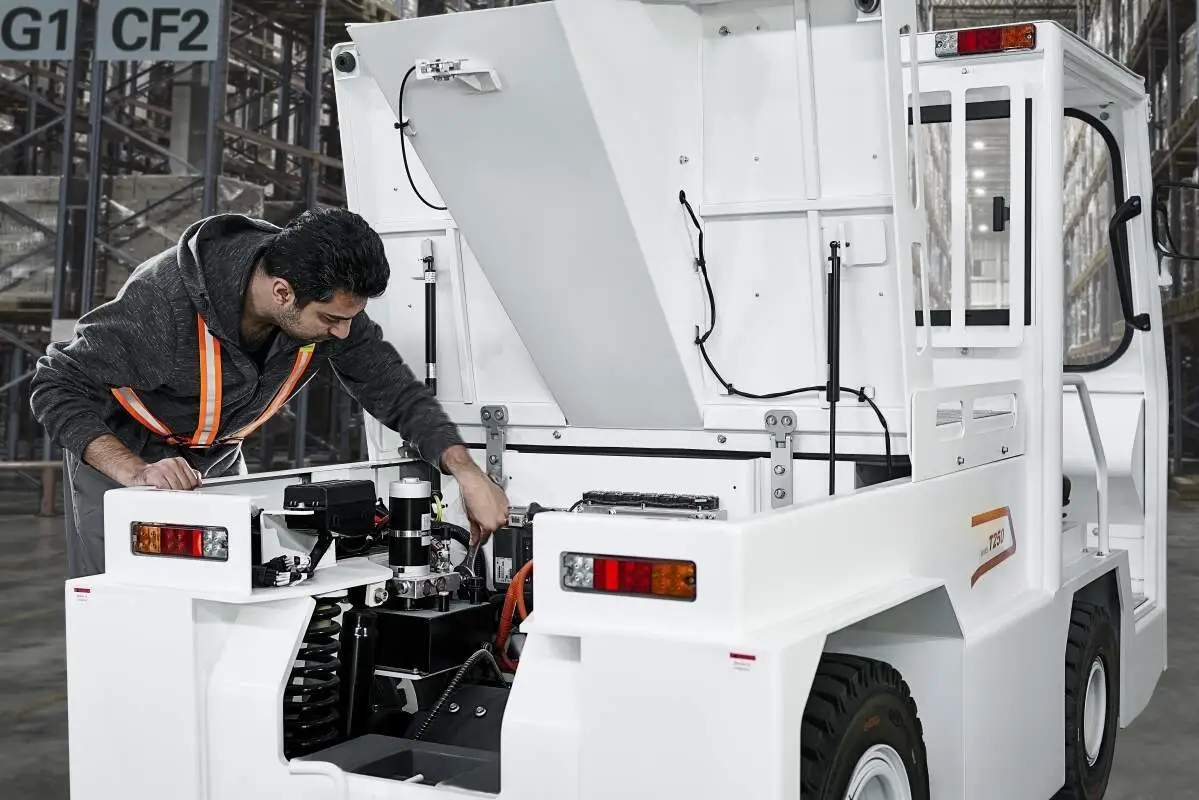
With the continuous improvement of the industrial logistics system and the continuous strengthening of domestic environmental protection supervision, the field of industrial handling equipment is ushering in a new round of updates and upgrades. Electric forklifts and fuel forklifts are two core categories in the market, and the difference in their development trends has become an important reference for many enterprises when selecting equipment.
Differences in environmental compliance determine market fit scenarios
In scenarios such as closed warehouses and indoor production workshops, the exhaust emissions of fuel forklifts can easily lead to a decrease in air quality, which does not meet the current requirements of green production. Some areas have clearly restricted the entry of fuel forklifts. Electric forklifts, on the other hand, use electricity as a power source and have no exhaust emissions during operation, which can meet the needs of indoor and environmentally sensitive areas, and is in line with the national policy orientation for carbon reduction and emission reduction in the industrial sector.
Operating cost comparison affects long-term choice tendency
From the perspective of initial investment, the procurement cost of electric forklifts is usually slightly higher than that of fuel forklifts of the same specification, but in the long-term operation stage, the advantages of electric forklifts gradually emerge. The cost of electricity is much lower than that of fuel, and the structure of electric forklifts is relatively simple, without complex components such as engines and gearboxes. Daily maintenance and repair costs are lower, and the failure rate is relatively small. Long-term use can save a lot of money for enterprises.
Technological iteration promotes the differentiated development of the two
The current technology iteration speed of electric forklifts is relatively fast, battery life and charging efficiency are constantly improving, and some products have been equipped with intelligent navigation, automatic obstacle avoidance and other functions to adapt to the development needs of unmanned warehousing and logistics. Fuel forklifts, on the other hand, are more focused on outdoor heavy-duty handling, remote without charging facilities and other special scenarios, and may be optimized towards customization and high load in the future to meet the rigid needs of specific fields.
Overall, the update trend of industrial handling equipment shows that electric forklifts are gradually expanding their market share, and fuel forklifts are focusing on segmented scenarios. When selecting handling equipment, enterprises should make appropriate decisions based on their own usage scenarios, cost budgets, and environmental protection requirements.


