
 简体中文
简体中文 繁体中文
繁体中文 Deutsch
 日本語
日本語 한국어
한국어 Tiếng Việt
 Русский
 ไทย
ไทย Bahasa Indonesia
 Bahasa Melayu
 Filipino
 لالعربية
 Français

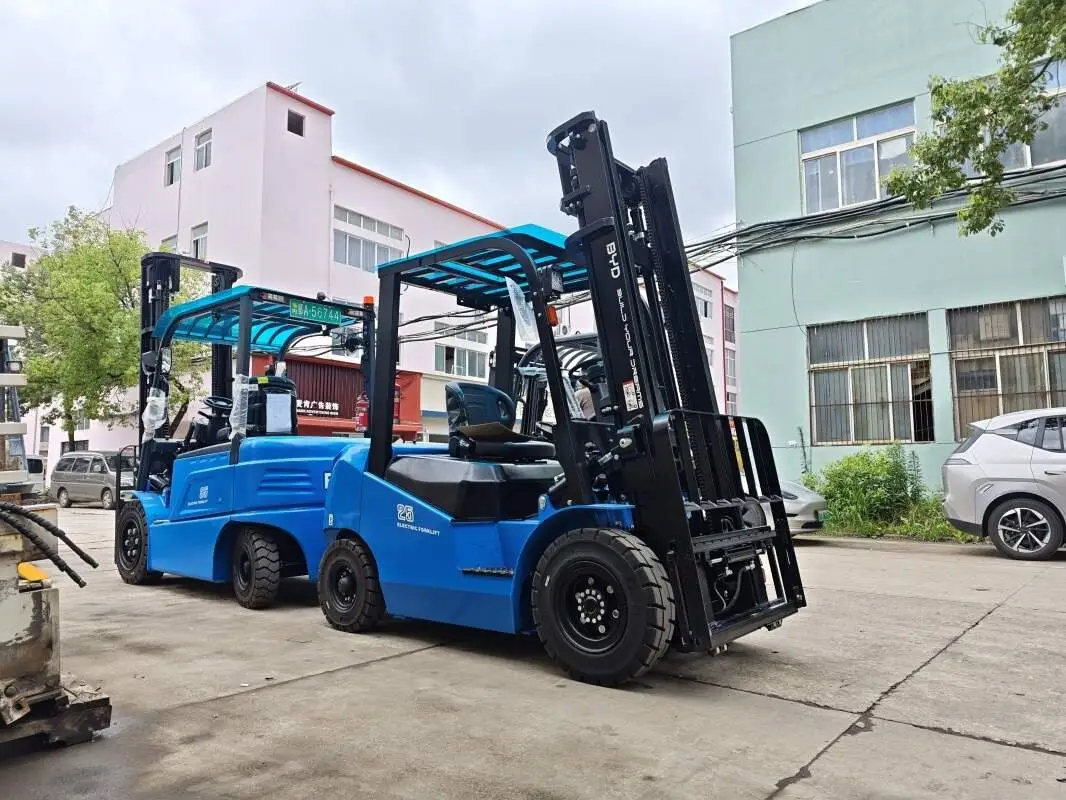
In modern warehouse logistics operations, balance heavy lithium forklifts have become the first choice of handling equipment for many enterprises due to their environmentally friendly and efficient characteristics. However, in the face of different tonnage products, many warehouse purchasers are often caught in the dilemma of choice. If they choose small ones, they cannot meet the load demand, and if they choose large ones, they will cause waste of resources. The following will provide practical reference from the two aspects of tonnage selection logic and procurement core points.
Determine the basic tonnage according to the weight of the daily handled goods
The weight of daily handled goods is the core basis for determining the tonnage of forklifts. When purchasing, it is necessary to count the maximum weight of goods handled in the warehouse at a single time, and reserve a 10% -20% margin on this basis to avoid the forklift being in full load operation for a long time and affecting the service life of the equipment. At the same time, the average handling weight should also be considered. If the weight of most goods is much lower than the maximum load, it is more economical to choose a tonnage that adapts to the average weight and can cover the peak demand.
Adjust tonnage in combination with warehouse operating space
The layout of the working space of the warehouse will also affect the tonnage selection. If the warehouse channel is narrow and the stacking area space is limited, it may be difficult for forklifts with too large tonnage to steer and operate flexibly. At this time, it is more suitable to choose a small tonnage balance heavy lithium electric forklift to improve operation efficiency. For large open warehouses that need to handle heavy goods, large tonnage forklifts can better meet the demand.
Matching handling frequency and work intensity
The frequency of handling and the intensity of the operation cannot be ignored either. If the warehouse has heavy daily handling tasks and frequent cargo turnover, it is necessary to ensure that the tonnage of the forklift can stably carry the load of continuous operation. If the operation intensity is low and only heavy goods are occasionally handled, equipment with moderate tonnage can be selected, taking into account practicality and cost.
Other core points for warehouse procurement of balance heavy lithium battery forklifts
Pay attention to battery life and charging efficiency
In addition to tonnage, battery life and charging efficiency are key considerations for lithium-ion forklifts. According to the daily operating hours of the warehouse, choose a forklift with matching battery life to avoid power outages affecting the operation progress. At the same time, pay attention to the charging speed. Models that support fast charging can replenish energy in a short time, which is more suitable for warehouses with multiple shifts.
Consider the handling flexibility of the forklift
Warehouse operation scenarios are complex, and the flexibility of forklift control directly affects operation efficiency. Pay attention to the turning radius, lifting speed and other parameters of the forklift to ensure smooth operation in the stacking area, passage and other areas of the warehouse, especially for warehouses with high stacking needs, flexible control can improve operation safety and efficiency.
Evaluate maintenance costs and after-sales support
Finally, it is necessary to evaluate the maintenance cost and after-sales support of the equipment. The maintenance of the balance heavy lithium battery forklift is relatively simple, but it is still necessary to understand the content and cost of daily maintenance. At the same time, choose a service provider with timely after-sales response to ensure that equipment problems can be solved quickly and reduce the impact on warehouse operations.


