
 简体中文
简体中文 繁体中文
繁体中文 Deutsch
 日本語
日本語 한국어
한국어 Tiếng Việt
 Русский
 ไทย
ไทย Bahasa Indonesia
 Bahasa Melayu
 Filipino
 لالعربية
 Français

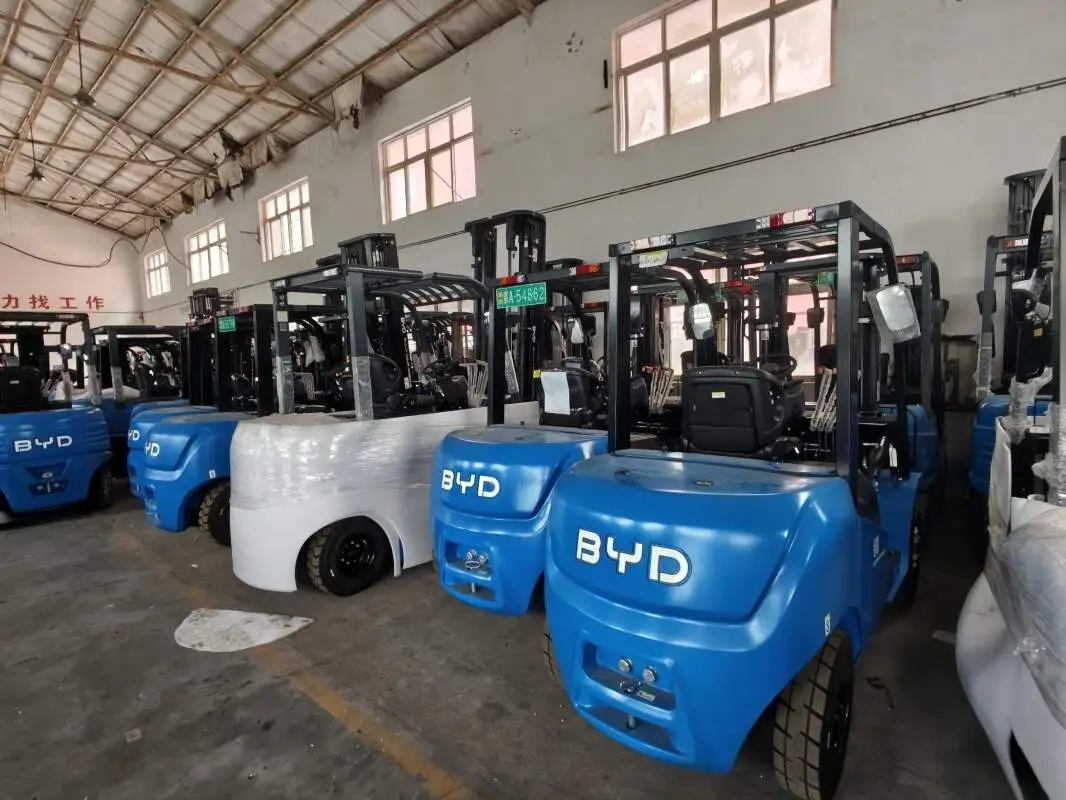
In the context of continuously fluctuating oil prices, companies that rely on forklift operations, such as logistics, warehousing, and manufacturing, are increasingly concerned about the alternative value of electric forklifts to fuel forklifts, with the payback cycle being one of the core indicators for decision-making.
The core dimensions that affect the current cycle
Energy cost difference
The energy consumption of a fuel forklift is directly linked to the oil price, and every fluctuation in the oil price will directly affect its operating costs. Taking a conventional forklift that operates for an average of 8 hours a day as an example, the average daily energy consumption cost of a fuel forklift is usually in the range of 150 to 200 yuan. If the oil price rises sharply, the cost will rise. Electric forklifts use electricity as energy, and the electricity price is relatively stable. Some companies can further reduce energy consumption through the peak-valley electricity price policy. The average daily energy consumption cost is only about 50 to 80 yuan. The cost difference between the two will become more obvious as the oil price increases.
Maintenance cost variance
The fuel forklift is equipped with a complex internal combustion engine system, and the daily maintenance involves oil replacement, filter element replacement, engine overhaul and other items, and the annual maintenance cost is relatively high. In contrast, the electric forklift has a relatively simple structure, and the core maintenance is concentrated on the battery, motor and electronic control system, without frequent maintenance and replacement of mechanical parts. The annual maintenance cost is only 30% to 50% of the fuel forklift, which can save a lot of money for the enterprise in the long run.
Initial investment and residual value impact
The initial purchase cost of electric forklifts is usually higher than that of fuel forklifts, but with the maturity of industry technology, the price gap between the two is gradually narrowing. At the same time, the second-hand residual value rate of electric forklifts is relatively stable and less affected by market fluctuations; while fuel forklifts are not only affected by vehicle conditions, but also face the risk of rapid decline in residual value due to the update of emission policies, which will also indirectly affect the overall recovery cycle.
Industry reference scope for this cycle
Based on the above factors, under the current market oil price level, the payback period for electric forklifts to replace fuel forklifts is usually about 2 to 3 years. If the oil price continues to operate at a high level, the payback period may be shortened to 1.5 to 2 years; if enterprises can make reasonable use of peak and valley electricity prices and optimize the operation process of forklifts, they can further speed up the payback speed. It should be noted that the above data is only a general reference value in the industry. The actual payback period will vary depending on the specific factors such as the operation intensity, usage scenarios, and local energy prices of enterprises. Enterprises need to make accurate calculations based on their own operating data.
When making alternative plans, enterprises can not only focus on the return cycle, but also take into account the environmental benefits of long-term operations and related policy dividends, so as to make choices that better meet their own development needs.


