
 简体中文
简体中文 繁体中文
繁体中文 Deutsch
 日本語
日本語 한국어
한국어 Tiếng Việt
 Русский
 ไทย
ไทย Bahasa Indonesia
 Bahasa Melayu
 Filipino
 لالعربية
 Français

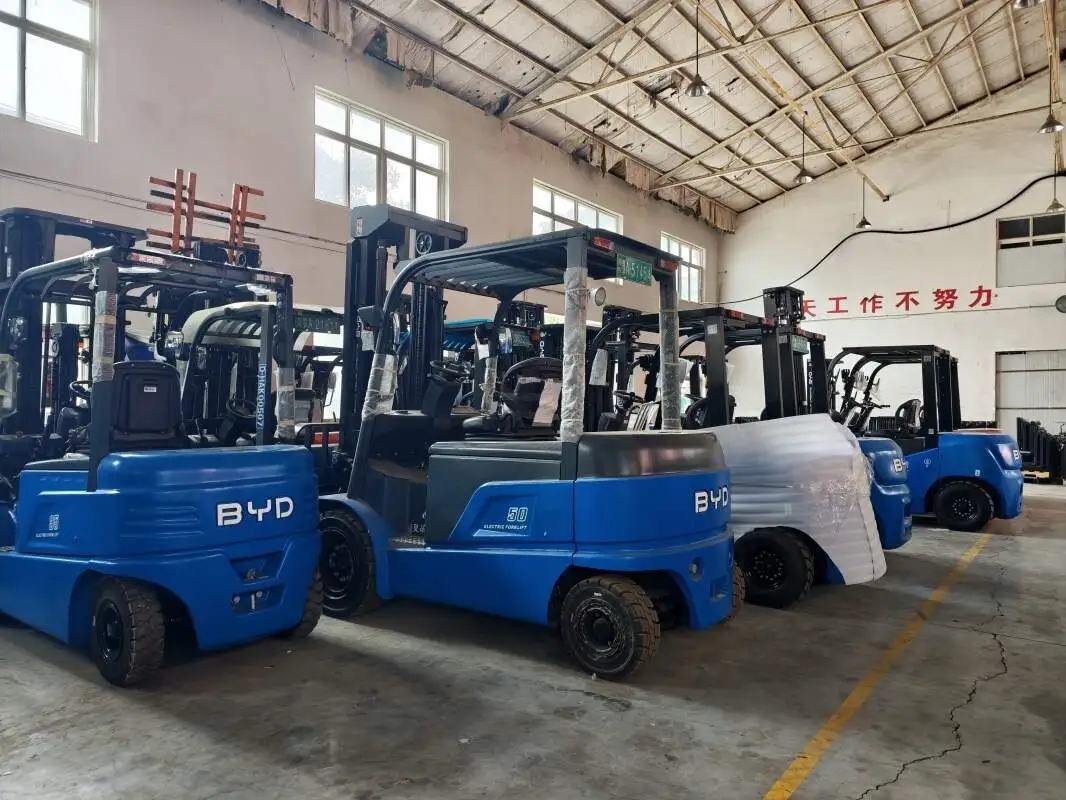
Indoor storage workshops usually have the characteristics of closed and narrow space, large flow of personnel, and frequent turnover of goods, which have strict requirements on the adaptability of handling equipment. Electric forklifts and fuel forklifts, as two types of mainstream storage and handling tools, have obvious differences in the performance of indoor scenes. Enterprises need to choose reasonably according to their own needs.
The advantages of electric forklifts in indoor storage workshops are more prominent. The first is the adaptation of environmental protection performance. Electric forklifts rely on electric power to drive, and no exhaust emissions will be generated during operation, which can effectively avoid the decline of air quality in indoor spaces and meet the environmental protection and health requirements of closed environments. The second is noise control adaptation. Electric forklifts operate with much lower noise than fuel forklifts, which will not cause too much interference to the staff in the workshop and help to maintain a relatively quiet working environment. In addition, most electric forklifts are small in size and flexible in steering. They can pass smoothly in narrow storage passages and adapt to the dense shelf layout and limited working space in the workshop. In addition, the maintenance cost of electric forklifts is relatively low, requiring only regular inspections of batteries, circuits, and other components on a daily basis, without the need for complex fuel system maintenance. It is more suitable for long-term stable operation indoors.
There are many limitations to the suitability of fuel forklifts in indoor storage scenarios. The first is environmental protection and health issues. When fuel forklifts operate, they emit carbon monoxide, nitrogen oxides and other exhaust gases, which are difficult to spread rapidly in a closed indoor space, easily causing staff physical discomfort and even potential safety hazards. Secondly, noise pollution, the high noise generated by the fuel engine during operation, will interfere with the communication and operation efficiency in the workshop, which does not meet the noise reduction requirements of the indoor environment. Furthermore, there is a lack of space flexibility. Some fuel forklifts are large in size and have a large turning radius. They are limited in operation in narrow storage passages, making it difficult to adapt to the operation requirements of dense shelves. In addition, the maintenance of fuel forklifts is relatively cumbersome, requiring regular replacement of oil, filter elements, and other components. Fuel leakage may also occur, contaminating the storage floor and cargo.
In terms of equipment selection in indoor storage workshops, electric forklifts are a more suitable choice if light and medium load handling, frequent shuttling through narrow passages, and attention to environmental protection and working environment comfort are the needs. If the workshop has good ventilation conditions and there are occasional heavy load handling needs, fuel forklifts can be considered in specific areas, but exhaust emissions and noise control measures need to be taken. Enterprises should comprehensively evaluate the suitability of the two types of forklifts in combination with their own storage environment, operation needs and cost budget, so as to select the most suitable handling equipment.


