
 简体中文
简体中文 繁体中文
繁体中文 Deutsch
 日本語
日本語 한국어
한국어 Tiếng Việt
 Русский
 ไทย
ไทย Bahasa Indonesia
 Bahasa Melayu
 Filipino
 لالعربية
 Français

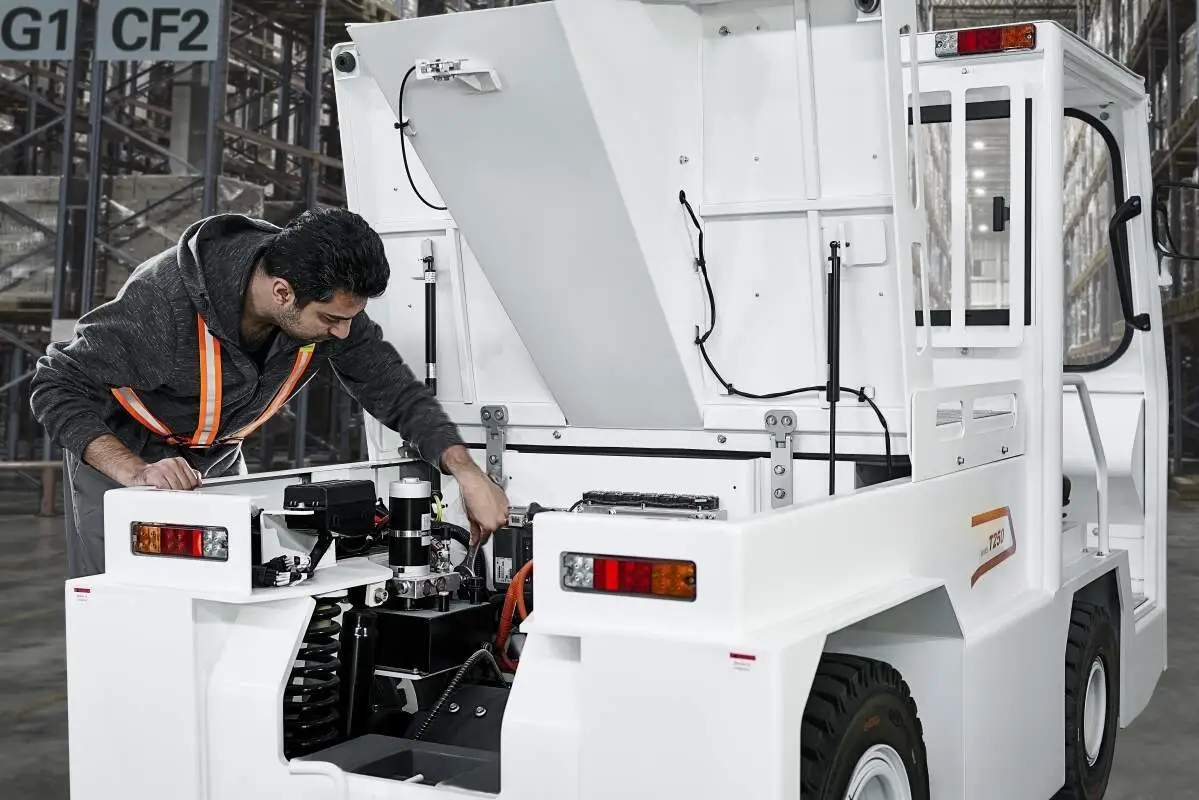
Nowadays, many heavy-duty processing and manufacturing, warehousing and logistics factories use 3.5-ton high-voltage lithium-ion forklifts as important handling equipment. By properly interpreting and matching the power parameters of such forklifts, they can help factories complete daily cargo transportation tasks more efficiently.
First pay attention to the key parameters of the core power source high-voltage lithium battery. The voltage level of this type of forklift is usually higher than that of ordinary low-voltage lithium batteries, which can provide greater power under the same current conditions, and can better adapt to heavy load scenarios such as instantaneous start of heavy load and long ramp driving with load. Capacity parameters directly determine the battery life of the forklift. The factory area can choose according to the daily average handling total, single operation distance, and daily working hours. If there is a shift system demand, priority can be given to the model that supports fast charging, and the charging time can be set reasonably.
Next, look at the power parameters related to the driving of the whole vehicle. The rated power is the power output of the vehicle continuously and stably, which is suitable for long-distance continuous handling scenarios; the peak power is the maximum output that the vehicle can achieve in a short period of time, which is used to meet the temporary high load requirements such as heavy load uphill and fast steering after acceleration. The ratio of peak power to rated power needs to be controlled within a reasonable range. The maximum climbing degree is also an important reference for heavy-load factories. It is necessary to pay attention to distinguish the parameters under no load and rated load. The maximum climbing degree under rated load of common models can be adapted to the fixed ramp requirements in most factories.


