
 简体中文
简体中文 繁体中文
繁体中文 Deutsch
 日本語
日本語 한국어
한국어 Tiếng Việt
 Русский
 ไทย
ไทย Bahasa Indonesia
 Bahasa Melayu
 Filipino
 لالعربية
 Français

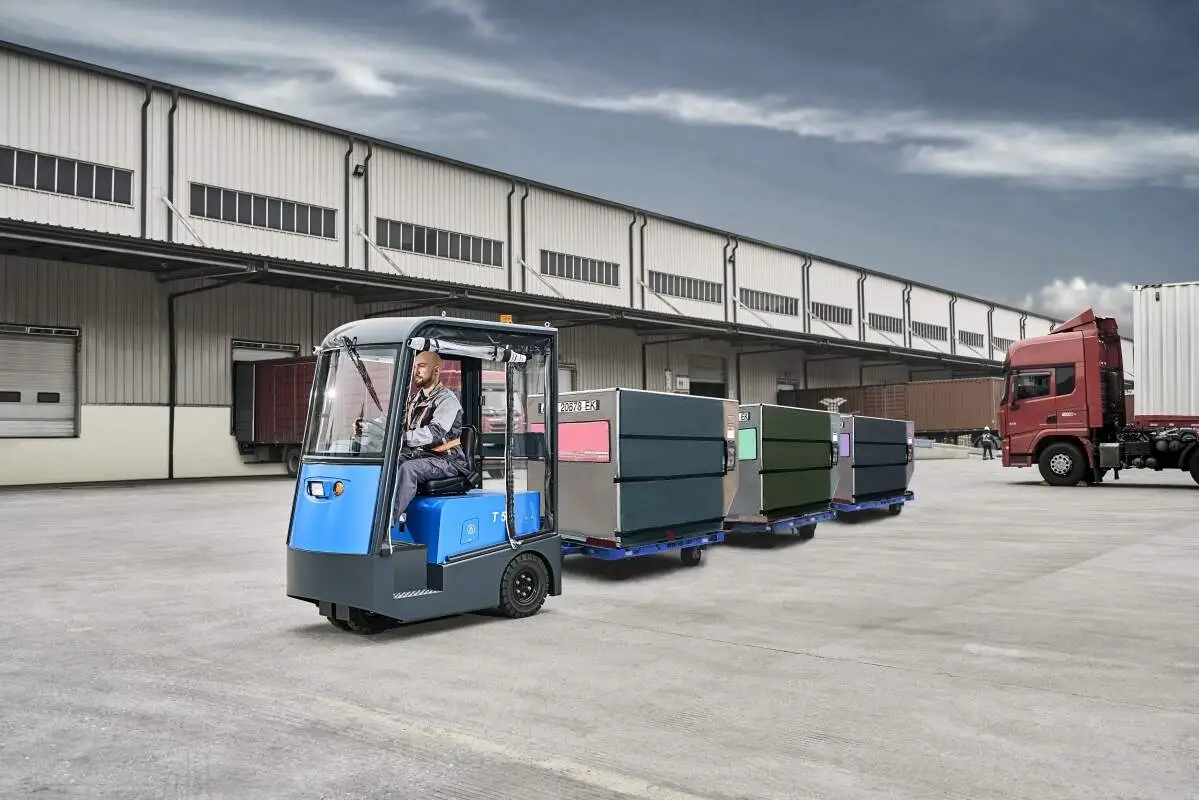
Logistics transfer stations daily have a large number of express parcels and cargo pallets for transshipment, which requires high battery life, load stability, and channel adaptability of handling equipment. The 3.5-ton lithium-ion forklift is one of the commonly used models in such scenarios.
From the perspective of battery life performance, the battery life of such models is related to the usage scenarios and operating habits. Under the condition of moderate weight of the goods and relatively fixed operation route, it can generally meet the continuous operation of a standard shift, and there is no need to change power or charge halfway. Some models are equipped with fast charging interfaces, which can continue to be used after a short time of replenishment, and can cope with the temporary increase in operation volume.
Looking at the load stability, the rated load of 3.5 tons can cover the cargo pallet requirements of most logistics transfer stations. When driving without load or full load, the center of gravity of the body is low, and under the premise of reasonable control of the speed, there will be no obvious roll or skid when passing through the turning or slightly sloping channel. When loading and unloading goods, the lifting and leaning back and forth of the gantry are relatively smooth, which can reduce the shaking of goods and reduce the risk of damage.
In terms of channel adaptability, this type of model has a relatively small turning radius, which can complete U-turns, steering and other operations in the narrow channels common to logistics transfer stations, which can improve space utilization. Some models are also equipped with a small-range movement function, which can accurately adjust the body position when loading and unloading goods, improving loading and unloading efficiency.
Convenience of operation is also a feature of this type of model. The cab space is moderate, the field of vision is good, and the operator can clearly observe the surrounding environment and the condition of the goods. The layout of the operation lever or button is reasonable, ergonomic design, and it is not easy to cause fatigue after long-term operation. Some models are also equipped with some auxiliary features, which can help the operator to complete the work more safely and efficiently.
In terms of daily maintenance, lithium-ion forklifts have a simpler maintenance process and lower maintenance costs than traditional fuel or lead-acid battery forklifts. Just regularly check the battery status, tire wear and body structure. There is no need to replace oil, spark plugs and other parts, and there is no need to replenish lead-acid batteries and other maintenance operations.


