
 简体中文
简体中文 繁体中文
繁体中文 Deutsch
 日本語
日本語 한국어
한국어 Tiếng Việt
 Русский
 ไทย
ไทย Bahasa Indonesia
 Bahasa Melayu
 Filipino
 لالعربية
 Français

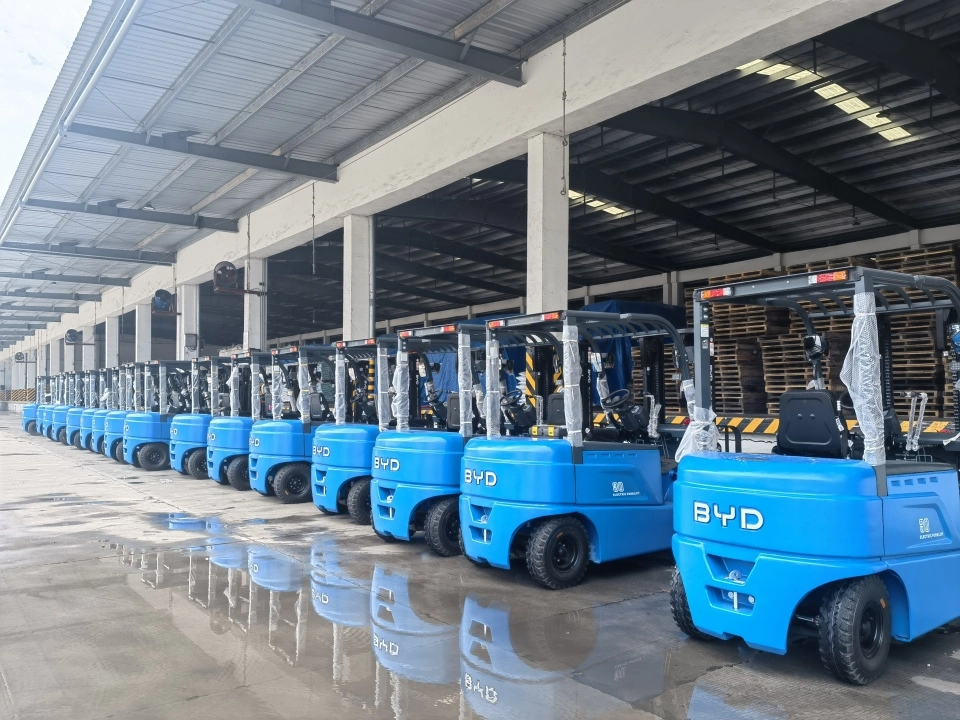
The 3.5-ton lithium-ion forklift is a commonly used handling equipment in warehousing and logistics. Doing a good job of daily maintenance and battery maintenance can ensure the stable operation of the equipment and reduce the risk of failure.
The daily maintenance steps of a 3.5-ton lithium battery forklift can start from the appearance, walking system, operating system, etc. The first is to clean the appearance. After each use, wipe the surface of the body with a soft dry cloth or a wet cloth that wrings out the moisture. Clean up the tire gaps, debris and oil stains at the bottom of the fork, and avoid debris affecting the heat dissipation of the equipment or tire rotation. Next is the tire condition inspection to see if the tire has obvious wear, cracks, bulging, and whether the tire pressure meets the requirements of the equipment manual. Too high or too low air pressure will affect the driving stability and tire life. Then there is a simple test of the walking and operating system. After starting the vehicle, press the brake pedal to observe the brake sensitivity, turn the steering wheel to check whether the steering is smooth and free of cards, and operate the joystick of the fork lift and tilt forward and backward to confirm that the action is smooth and there is no abnormal sound. Also check whether the lights and horns of the vehicle are working normally to ensure that the warning function during driving and operation is effective.
The maintenance of 3.5 tons of lithium battery is the focus of daily maintenance, and scientific methods need to be followed. In terms of charging, use a charger that matches the battery, avoid mixing equipment of different specifications, and try to charge the battery between 20% and 80% of the remaining power for each charge. Do not over-discharge or store it at full charge for a long time. The storage environment is also very important. The battery should be placed in a dry, ventilated and cool room to avoid direct sunlight, rain or close to high temperature heat sources. The storage temperature is recommended to be controlled between 10 ° C and 30 ° C. If it is stored for a long time, it needs to be replenished once a month to keep the power at about 50%. In daily use, it is necessary to avoid the battery from being violently collided or squeezed. Regularly check the appearance of the battery and the connection port, clean up the dust or oxide at the port, and ensure that the connection is firm and in good contact. If any abnormal conditions such as damage or leakage are found in the battery case, it is necessary to contact a professional in time to deal with it. Do not disassemble and repair it yourself.
In addition, it is also necessary to regularly record the vehicle's usage time, charging times, and battery status, so as to detect potential problems in a timely manner and arrange for more in-depth professional inspections.


