
 简体中文
简体中文 繁体中文
繁体中文 Deutsch
 日本語
日本語 한국어
한국어 Tiếng Việt
 Русский
 ไทย
ไทย Bahasa Indonesia
 Bahasa Melayu
 Filipino
 لالعربية
 Français

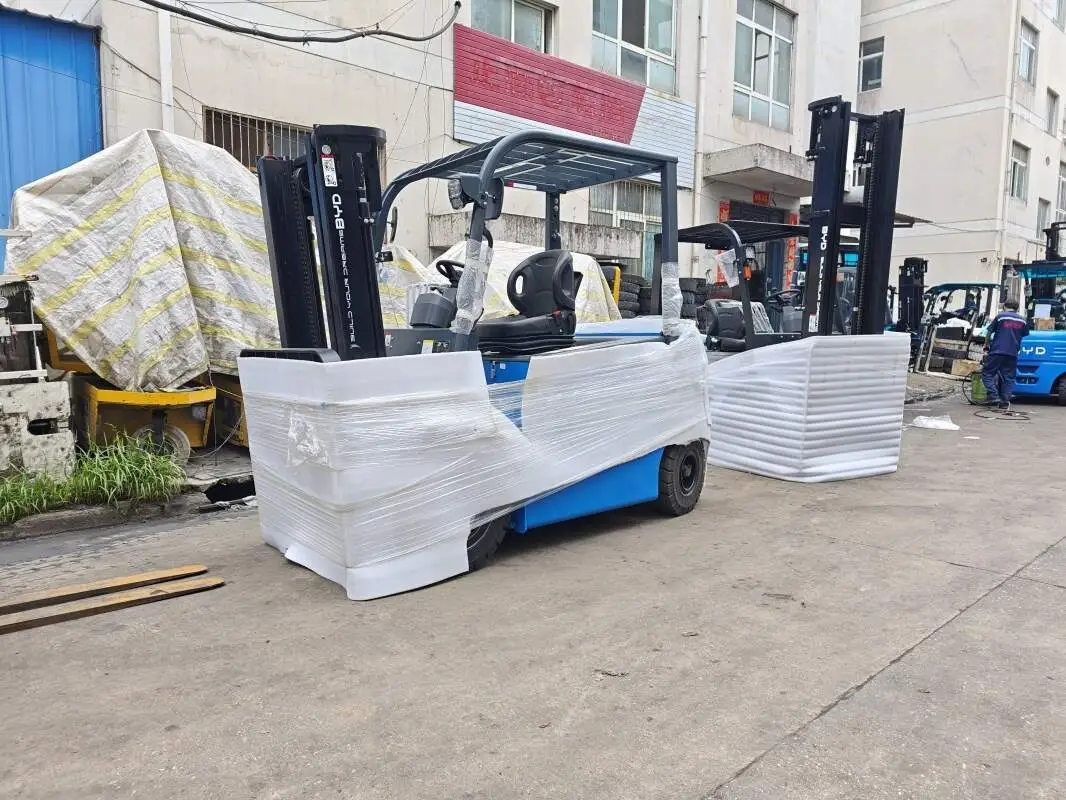
In the field of warehousing and logistics, the uninterrupted handling of warehouses is a key link to ensure the efficient operation of the supply chain, and forklifts, as the core handling equipment, have a direct impact on the continuity of operations. Lithium-ion forklifts have become the mainstream choice due to their environmentally friendly and efficient characteristics, and the fast charging and power changing mode has emerged as an adaptation plan for the uninterrupted handling needs of warehouses.
The core requirement of uninterrupted warehouse handling
High-load continuous operation requirements
The daily handling of warehouses often involves multiple links such as batch goods turnover and order sorting, which require forklifts to operate continuously for a long time. The traditional energy replenishment mode has the problem of replenishing energy consumption for a long time, which can easily lead to operation interruption and cannot match the continuous operation rhythm of high load.
The pace of work is tight
Warehouse operation time is closely tied to the order timeliness. From the warehousing of goods to the sorting and outbound, all links are interconnected. The replenishment process needs to be compressed as much as possible to avoid equipment downtime affecting the overall operation process and slowing down the delivery efficiency of orders.
Adaptation Logic of Fast Charge Switching Mode of Lithium Battery Forklift
Energy replenishment efficiency matches homework rhythm
The fast charging mode can replenish the forklift with sufficient power in a short time, and the power exchange mode can realize the rapid switching of the battery. The combination of the two modes allows the forklift to stop for a long time and wait for replenishment. The forklift can use the working gap to complete the replenishment, effectively ensuring the continuity of the operation and adapting to the needs of the warehouse for uninterrupted handling.
Strong scene adaptability
A special power exchange area or fast charging point can be planned in the warehouse, and the rational layout is combined with the operation route, which will not occupy too much storage space or interfere with the normal development of other operation links. Whether it is a large storage center or a small and medium-sized warehouse, it can adjust the layout according to its own situation to achieve the coordination of supplementary energy and operation.
Practical Points of Guaranteeing Uninterrupted Handling in Fast Charge and Power Exchange Mode
Rational planning of energy replenishment points
According to the distribution of the warehouse operation area and the daily driving route of the forklift, an appropriate number of fast charging piles or power stations are set up to ensure that the forklift can quickly reach the replenishment point during the operation gap, reducing travel time and improving the replenishment efficiency.
Establish a battery management mechanism
Carry out daily maintenance and power monitoring of the spare battery, and regularly check the battery performance status to ensure that the battery is in a good usable state when changing power, so as to avoid interruption of operation due to battery failure.
Personnel operation specification training
Organize forklift operators to learn the standard process of fast charging and power changing, familiarize themselves with the key points of equipment operation, shorten the time of supplementary operation, further improve the continuity of operation, and ensure the smooth implementation of uninterrupted handling.
The fast charging and replacement mode of lithium-ion forklift effectively solves the problem of operation interruption under the traditional replenishment mode by optimizing the energy replenishment efficiency and adapting to the warehouse operation scene, and provides reliable support for the warehouse to realize uninterrupted handling. In the current era of increasing efficiency requirements of warehousing and logistics, this mode will become an important direction for replenishment of warehousing and handling equipment, helping enterprises to improve overall operational efficiency.


