
 简体中文
简体中文 繁体中文
繁体中文 Deutsch
 日本語
日本語 한국어
한국어 Tiếng Việt
 Русский
 ไทย
ไทย Bahasa Indonesia
 Bahasa Melayu
 Filipino
 لالعربية
 Français

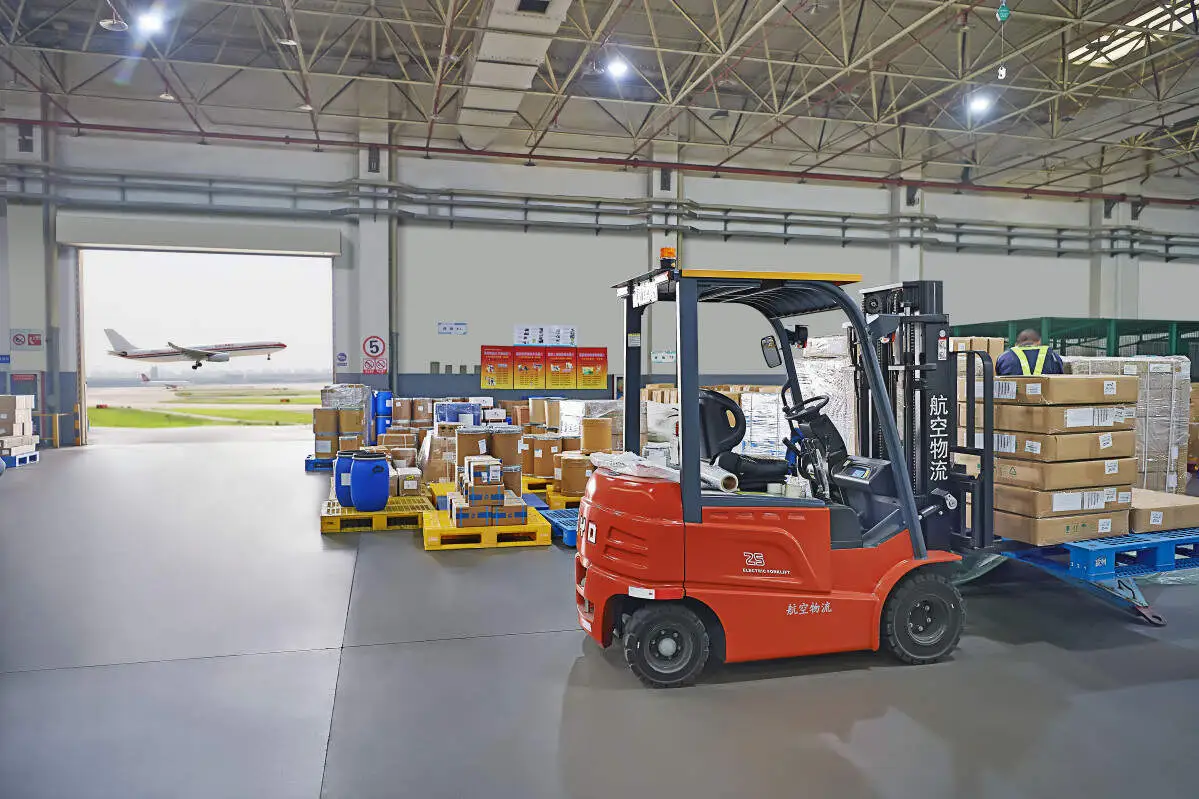
With the improvement of operational efficiency and environmental protection requirements in the warehousing and logistics industry, lithium-ion transformation has become an important direction for the upgrading of warehousing fleets, among which the replacement of narrow-aisle forklifts is one of the key links, which needs to be scientifically planned in combination with actual scenarios.
Pre-evaluation and demand analysis
Storage environment suitability assessment
Before starting the replacement, it is necessary to comprehensively evaluate the narrow channel width, shelf layout, and ground carrying capacity of the storage site to ensure that the new forklift can smoothly travel through the narrow space, while adapting to the ground conditions in different areas, to avoid problems such as blocked passage or increased equipment wear and tear.
Job Requirements Matching Analysis
Combined with the daily operation of the cargo weight, handling frequency and battery life requirements, the operation intensity of different periods is counted to determine the load capacity and battery life of the forklift, so as to ensure that the replacement equipment can fully cover the daily operation needs and avoid insufficient capacity or waste of resources.
Key points for selection of narrow-channel forklifts
Lithium battery system performance considerations
Priority should be given to the stability and charging and discharging efficiency of the lithium battery system, and a lithium battery configuration suitable for narrow channel operation should be selected to ensure that the battery can maintain stable output under frequent start-stop and low-speed steering scenarios, while taking into account fast charging performance and reducing the time for equipment to stop charging.
Narrow channel adaptation design requirements
Focusing on the turning radius, body width, and operation flexibility of the forklift, choose a model with a compact body design to ensure that when steering, stacking, and other operations are completed in narrow passages, the position can be precisely controlled to avoid colliding with shelves or goods, and improve operation safety and efficiency.
Replacement implementation and transition management
Step-by-step replacement strategy
Adopting a batch replacement method, forklifts in areas with high operating intensity are replaced first, while some of the original equipment is retained as backup to ensure that warehousing operations are not affected during the transformation. After the first batch of lithium-ion forklifts operate stably, the replacement of the entire fleet is gradually completed.
Personnel operation training
Carry out special project training for the operation characteristics and maintenance points of lithium forklifts, so that operators are familiar with the start-up, charging and emergency handling processes of lithium battery equipment, master the operation skills of narrow channel operations, and reduce the risk of equipment failure or safety accidents caused by improper operation.
Post-operation and maintenance and cost control
Lithium battery maintenance points
Establish a regular lithium battery detection mechanism, pay attention to battery power attenuation, temperature changes, etc., and promptly clean the dust and debris on the battery surface to ensure that the battery is in good working condition and prolong the battery life.
Energy consumption monitoring and optimization
Through the installation of an energy consumption monitoring system, the energy consumption data of the forklift is tracked in real time, the energy consumption law under different operating scenarios is analyzed, and the operation process and charging time are adjusted to further reduce the energy consumption cost and improve the economic efficiency of the lithium-ion forklift.


