
 简体中文
简体中文 繁体中文
繁体中文 Deutsch
 日本語
日本語 한국어
한국어 Tiếng Việt
 Русский
 ไทย
ไทย Bahasa Indonesia
 Bahasa Melayu
 Filipino
 لالعربية
 Français

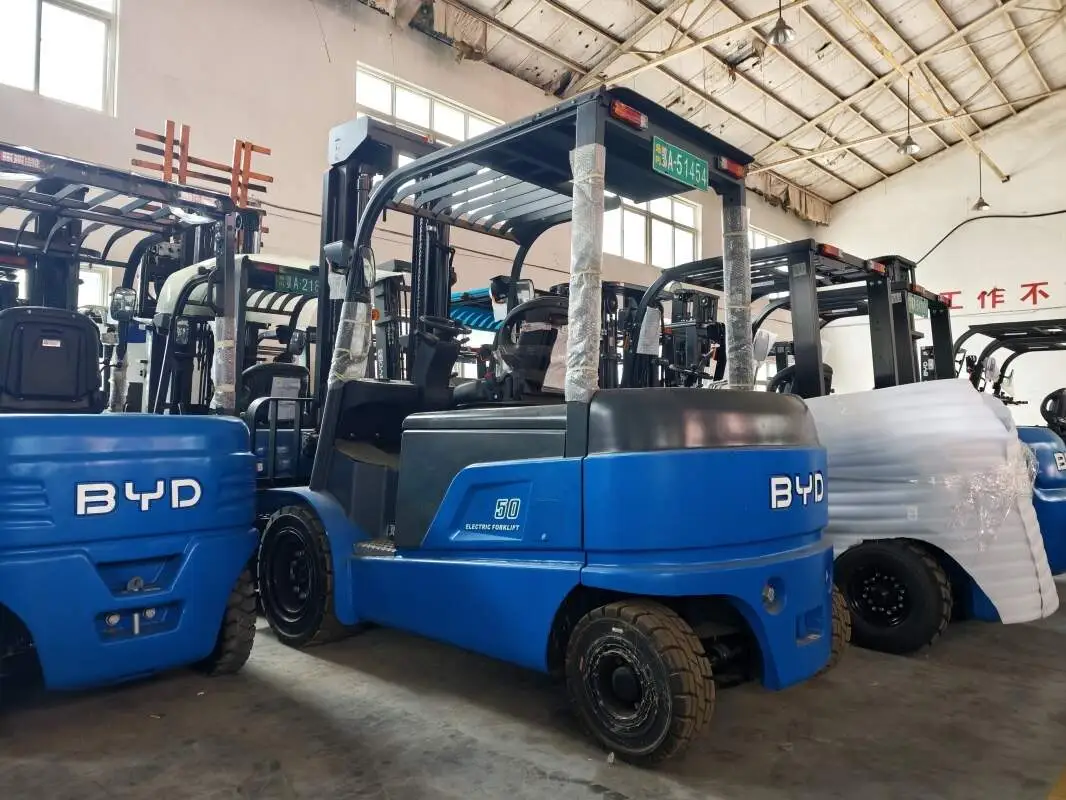
With the development of warehousing, logistics, cold chain transportation, and other industries, narrow-channel lithium-ion forklifts are widely used due to their high space utilization and low energy consumption, but there are differences in the performance requirements of forklifts under different operating conditions. Customized configuration has become the key to adapting to multi-scenario operations.
Warehousing working condition adaptation configuration
In narrow channel scenarios such as conventional e-commerce warehouses and small three-dimensional warehouses, the working space is compact and the types of goods are diverse. For such working conditions, the length and fork distance of the fork can be customized to adjust to different sizes of pallets and goods to avoid space waste. At the same time, optimize the flexibility of the steering system, reduce the turning radius, and ensure smooth steering of the forklift in the narrow channel. In addition, the fork side shift function can be configured on demand to improve the accuracy of cargo handling and reduce the frequency of manual adjustment.
Exclusive configuration for cold chain working conditions
The low temperature and high humidity environment in the cold chain warehouse requires high stability of the forklift. For such working conditions, a lithium battery suitable for low temperature needs to be customized to ensure that a stable discharge efficiency can be maintained in a low temperature environment and to avoid a sudden drop in battery life. At the same time, the electrical components and hydraulic systems of the forklift are sealed and protected to prevent condensate from infiltrating and causing component failure. In addition, anti-skid tires can be configured to improve the grip on the low temperature ground and ensure the safety of the operation.
Heavy-duty narrow channel working condition configuration
In some industrial plants and heavy cargo storage scenarios, heavy-duty goods need to be carried in narrow passages. For such working conditions, high-strength fork materials need to be customized to improve the load-bearing capacity of the fork and avoid deformation. At the same time, the forklift frame structure is reinforced to enhance the overall stability. Large-capacity lithium batteries can also be customized according to the operation time to meet the battery life requirements of long-term heavy-duty operations and reduce the frequency of charging in the middle.
In summary, the customized configuration of multi-condition narrow-channel lithium-ion forklifts needs to be adjusted in combination with factors such as space, temperature, and cargo weight in specific operation scenarios. Through targeted configuration optimization, it can not only improve the adaptability of forklifts, but also effectively improve operation efficiency and reduce operating costs.


