
 简体中文
简体中文 繁体中文
繁体中文 Deutsch
 日本語
日本語 한국어
한국어 Tiếng Việt
 Русский
 ไทย
ไทย Bahasa Indonesia
 Bahasa Melayu
 Filipino
 لالعربية
 Français

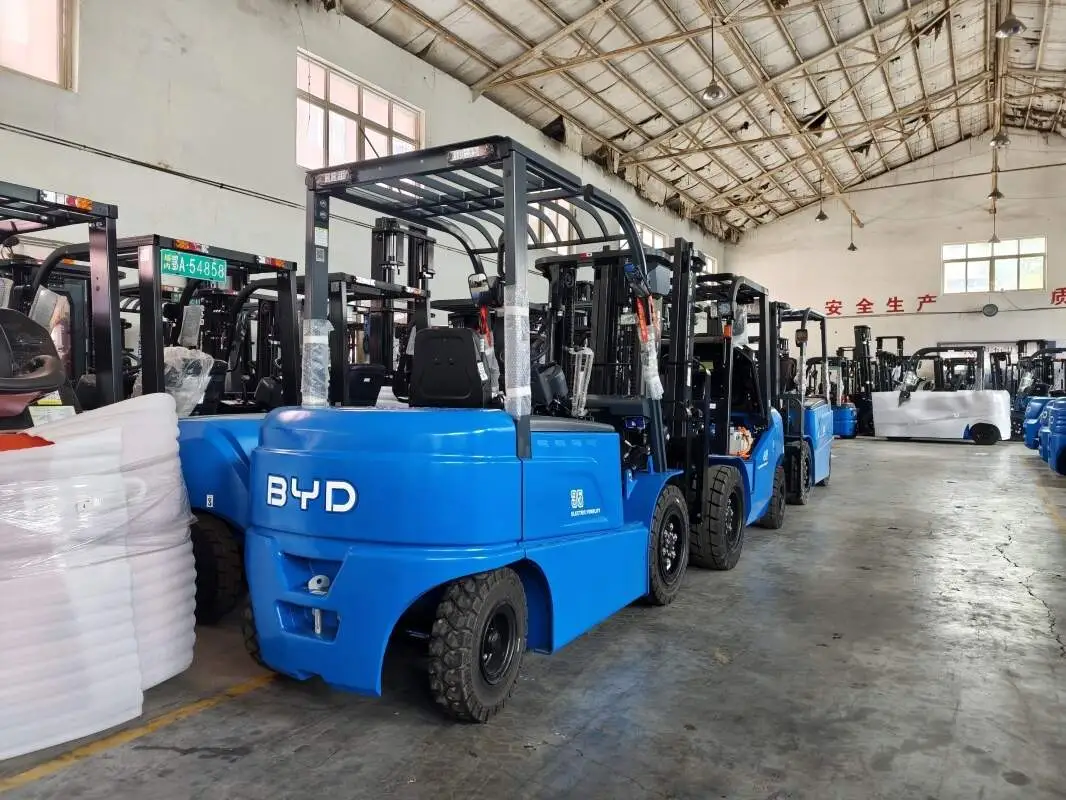
The daily material handling operations in the workshop often have the characteristics of long duration and complex working conditions, which put forward higher requirements for the endurance, stability and environmental adaptability of the handling equipment. Among the many handling equipment, lithium iron phosphate lithium electric forklifts have gradually become the best choice to meet the long-term operation needs of the workshop due to their various characteristics.
The core requirements for long-term work in the workshop
The material handling in an industrial workshop usually runs through multiple production links, from raw materials into storage to finished products out of storage, and the operation time may cover the entire working day, or even the continuous operation of multiple shifts. This requires the forklift to have sufficient battery life to avoid interruptions due to frequent charging. At the same time, there may be environmental factors such as dust and small temperature differences in the workshop, and the forklift needs to be able to operate stably in this environment. In addition, the working space in the workshop is limited, and the forklift needs to adapt to frequent start-stop and steering conditions to ensure operation efficiency.
Adaptation characteristics of lithium iron phosphate forklift
Battery life to match long-term operation requirements
Lithium iron phosphate batteries have the characteristics of long cycle life and stable discharge, which can provide continuous and sufficient power support for forklifts. Under normal operating intensity, a single charge can meet the needs of continuous operation for several hours, without frequent replenishment in the middle, effectively reducing the interruption time of the operation and meeting the rhythm of long-term operation in the workshop.
Environmental adaptability fit workshop scene
The lithium iron phosphate battery has good adaptability to temperature, and can maintain stable performance output under the common room temperature environment or small temperature difference changes in the workshop. At the same time, the dustproof and waterproof design of the lithium battery forklift can cope with the dust environment in the workshop, reduce the risk of equipment failure, and ensure the continuity of operation.
Condition adaptation to ensure efficient operation
In response to the operating conditions of frequent starts and stops in the workshop and small space steering, the power system of the lithium iron phosphate forklift responds quickly, operates flexibly, and can quickly adapt to different operating rhythms, reducing operation waiting time and improving overall material handling efficiency.
Maintenance convenience reduces job stagnation
Compared with traditional fuel forklifts, the daily maintenance of lithium iron phosphate forklifts is easier, without the need to regularly replace oil, filters and other components, only need to regularly check the battery status and equipment basic components, and the maintenance time is short, which can minimize the operation stagnation caused by maintenance and ensure the smooth progress of long-term operations.
Overall, lithium iron phosphate forklifts can adapt to the needs of workshops for long-term operations in terms of battery life, environmental adaptation, working condition matching, and maintenance convenience, providing efficient and reliable material handling support for industrial production workshops.


