
 简体中文
简体中文 繁体中文
繁体中文 Deutsch
 日本語
日本語 한국어
한국어 Tiếng Việt
 Русский
 ไทย
ไทย Bahasa Indonesia
 Bahasa Melayu
 Filipino
 لالعربية
 Français

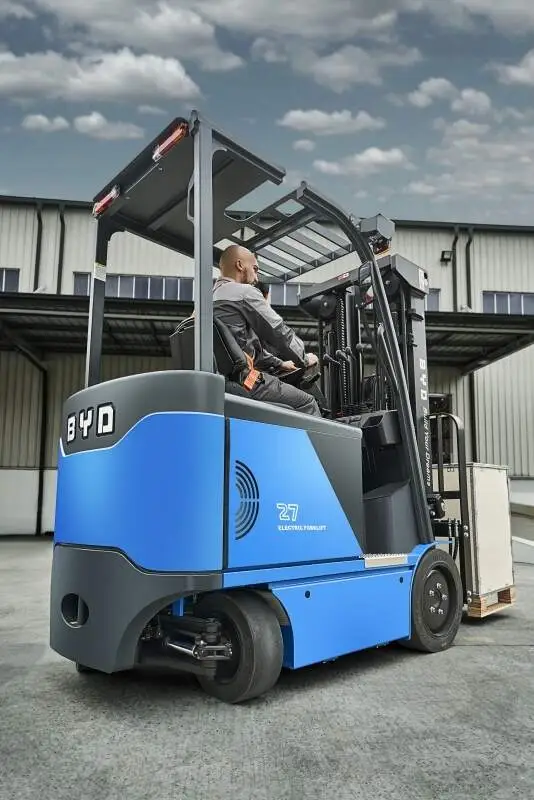
Logistics transit warehouse is the core node of goods circulation, and the efficiency of stacking operations directly affects the overall logistics turnover speed. Faced with the characteristics of many types of goods, high stacking density and fast operation rhythm, appropriate equipment and scientific operation methods are the keys to improving efficiency. BYD's second-generation reach truck has become a common equipment for many transit warehouses by virtue of its adaptability.
Optimize the pickup route to reduce idling losses
The goods in the transit warehouse are usually stored according to the turnover rate and category. The operator can sort out the location of the goods to be stacked in advance and plan the optimal pickup path. Priority is given to handling goods close to the outbound port or with high turnover rate to reduce the distance for forklifts to go back and forth. At the same time, the flexible steering performance of the vehicle is used to pass smoothly in the narrow passage to avoid wasting working time due to route congestion.
Precise alignment stacking, shortening operation time
In stacking operations, the precise alignment of the fork and the cargo space directly affects the stacking speed. Operators can use the vehicle's vision design to clearly observe the relative position of the fork and the pallet, adjust the vehicle's attitude smoothly, and complete the alignment at one time. In addition, plan the stacking height reasonably according to the weight and volume of the goods, maximize the use of space within the allowable range of the warehouse capacity, reduce the frequency of subsequent stacking operations, and further improve the overall efficiency.
Do a good job in daily maintenance to ensure continuous operation
The stable operation of the equipment is the basis of efficiency. It is necessary to regularly check the battery status, steering system and fork wear of the BYD second-generation forward car. Replenish the power in time, clean up the sundries of the steering parts, and replace the seriously worn fork accessories to avoid the interruption of the operation due to equipment failure and ensure the continuity of the stacking operation.
Standardize operating habits and strengthen the efficiency foundation
Operators need to be proficient in the control logic of the vehicle and be familiar with the functions of various buttons to avoid delays in operation due to misoperation. Stay focused during the operation and strictly follow the safety operation specifications, such as slowly lifting the forks when stacking to avoid falling goods, and improving the operation rhythm under the premise of ensuring safety. At the same time, regularly carry out operation skills exchanges, share practical skills, and gradually improve the overall operation level.


