
 简体中文
简体中文 繁体中文
繁体中文 Deutsch
 日本語
日本語 한국어
한국어 Tiếng Việt
 Русский
 ไทย
ไทย Bahasa Indonesia
 Bahasa Melayu
 Filipino
 لالعربية
 Français

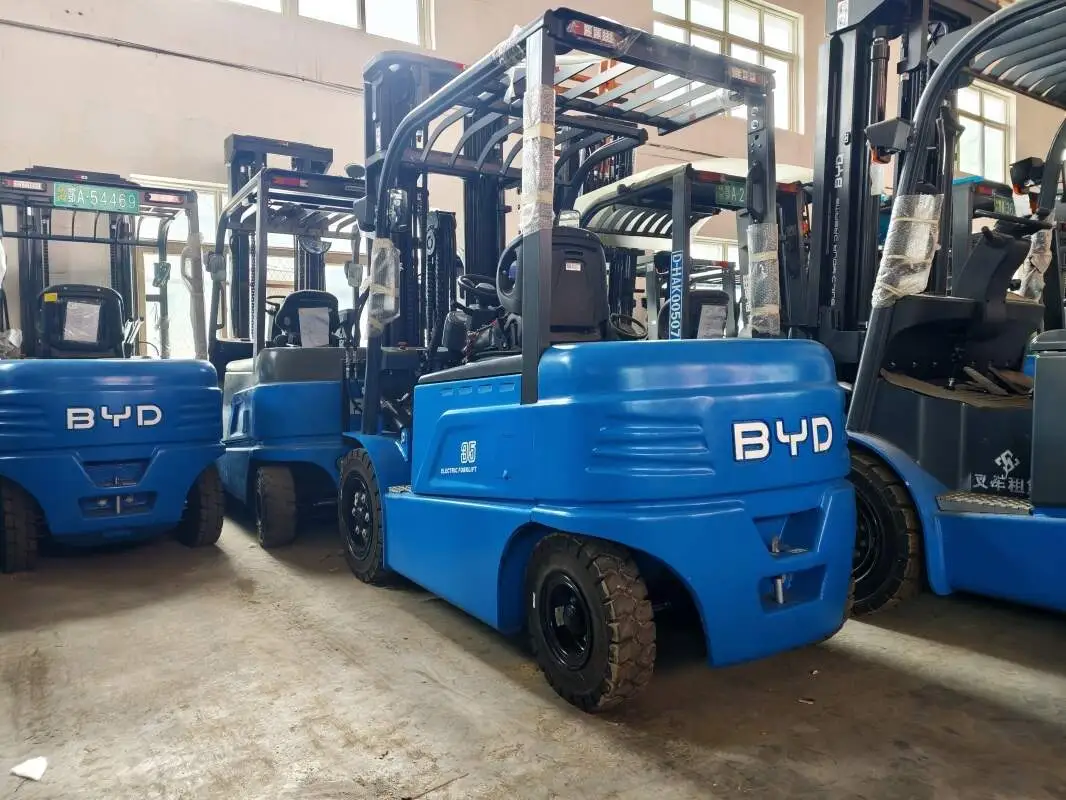
In high-frequency scenarios of material handling such as logistics warehousing, manufacturing and processing, the unplanned downtime loss of forklift equipment is an important factor affecting the operation efficiency of enterprises and driving up costs. Traditional forklifts often experience sudden downtime due to complex maintenance processes and unstable performance of core components, which brings many inconveniences to production scheduling. Maintenance-free lithium-ion forklifts, with their own technical characteristics, provide a reliable path for reducing equipment downtime loss.
The main reasons for the shutdown loss of traditional forklifts
Downtime caused by cumbersome daily maintenance
The power components of traditional forklifts require regular maintenance operations such as hydration, cleaning, and testing. If the operation and maintenance personnel fail to follow up in time, it is easy to cause problems such as battery power loss and component aging, which in turn leads to equipment downtime. In addition, complex maintenance processes also take up a lot of equipment usable time and indirectly increase downtime losses.
Failure triggered by unstable battery performance
The power batteries used in traditional forklifts are prone to performance fluctuations in scenarios such as low temperature and high load, and even malfunctions such as leakage and short circuit. Such sudden problems often lead to direct downtime of the equipment and long repair cycles.
The core advantages of maintenance-free lithium forklifts to reduce downtime losses
Maintenance-free batteries reduce operation and maintenance pressure
The maintenance-free lithium battery used in the lithium forklift does not require regular hydration, cleaning and other operations, and the operation and maintenance personnel only need to conduct a simple appearance inspection, which greatly reduces the downtime caused by the maintenance process. At the same time, the sealed design of the lithium battery reduces the probability of component damage and reduces the failure caused by improper maintenance.
Stable performance for complex scenarios
The charging and discharging performance of lithium batteries is more stable, and it can still maintain good power output under extreme scenarios such as low temperature and high load, reducing the risk of downtime caused by performance fluctuations. In addition, the cycle life of lithium batteries is longer, reducing the downtime of equipment due to battery replacement.
Intelligent monitoring avoids failures in advance
Most maintenance-free lithium-ion forklifts are equipped with an intelligent monitoring system that can monitor battery status and power component operation data in real time. If any abnormalities are found, an early warning will be issued, and the operation and maintenance personnel can intervene in advance to avoid sudden downtime.
The value of operation and maintenance in actual scenarios
Increase the overall availability of the device
The maintenance-free features and stability can significantly reduce the annual downtime of lithium-ion forklifts. According to industry data, the equipment availability of maintenance-free lithium-ion forklifts can be increased by more than 15% compared to traditional forklifts, directly translating into higher material handling efficiency.
Reduce the comprehensive cost of operation and maintenance
Reducing maintenance operations means saving a lot of labor costs and consumables costs, while reducing downtime losses also reduces indirect losses caused by production interruptions, resulting in significant cost reduction and efficiency gains for enterprises.
For enterprises that rely on material handling, reducing equipment downtime loss is a key link to improve operational efficiency. Maintenance-free lithium-ion forklifts reduce downtime incentives at the source by optimizing power systems, simplifying DevOps flow, and strengthening intelligent monitoring, providing enterprises with more reliable material handling solutions.


