
 简体中文
简体中文 繁体中文
繁体中文 Deutsch
 日本語
日本語 한국어
한국어 Tiếng Việt
 Русский
 ไทย
ไทย Bahasa Indonesia
 Bahasa Melayu
 Filipino
 لالعربية
 Français

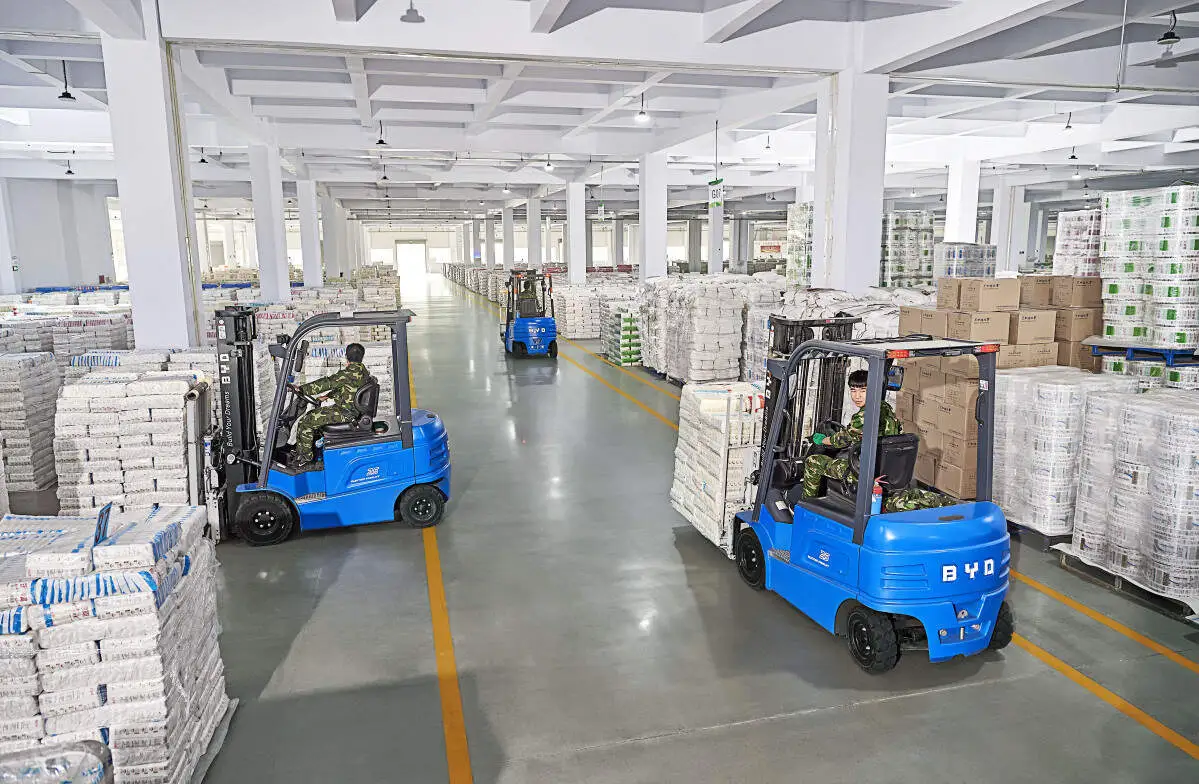
In the daily operation of the factory, handling equipment is the core tool to ensure the efficiency of material flow. Many companies will face the choice of leasing or purchasing. Lithium-ion forklifts, as the current mainstream option, also need to be considered in combination with actual needs.
Leasing and purchasing decision-making considerations
Enterprises must first clarify their own operating cycle and demand stability. If it is a short-term project or seasonal peak operation, leasing handling equipment is more flexible and does not require long-term idle costs. If the factory has a fixed daily handling demand and the operation volume is stable, purchasing equipment can share the cost in long-term use, which is more economical.
Cost accounting is also a key link. The advantage of leasing is that the initial investment is low, only rent needs to be paid, and the maintenance, maintenance and fault repair of equipment are usually the responsibility of the supplier, which reduces the operation and maintenance pressure of the enterprise; procurement needs to bear the cost of equipment purchase, and subsequent human and material resources need to be invested in daily maintenance. However, in the long run, the cumulative cost will be lower than the continuous lease. In addition, enterprises also need to balance their short-term cash flow and long-term asset investment according to their own financial situation.
Selection points of lithium battery forklifts
Matching the load demand is the foundation. Enterprises need to choose a lithium-ion forklift with the appropriate load grade according to the weight and size of the daily handling goods, as well as the ramp and shelf height of the operation scene. If the load is small, it cannot meet the handling demand; if it is too large, it will cause energy waste and cost increase.
The adaptation of the working environment cannot be ignored. If there is moisture, dust, corrosive materials, etc. in the working environment of the factory, it is necessary to choose a lithium battery forklift with the corresponding protection level to ensure the stable operation of the equipment and prolong the service life. When operating in narrow passages, it is also necessary to pay attention to the steering flexibility and body size of the forklift to avoid traffic obstacles.
The battery life and charging conditions should match. Enterprises need to count the duration and frequency of single-day operations, and choose a lithium-ion forklift with a battery life that can cover daily operations. At the same time, according to the charging facilities in the factory, if there is sufficient charging space and time, regular charging models can be selected; if the operation gap is short, models that support fast charging can be given priority to reduce downtime and waiting time.
Finally, whether you choose to lease or purchase, you must pay attention to the reliability and service support of the equipment to ensure that you can obtain timely technical support during the operation process and maintain the smooth operation of the handling operation in the factory.


