
 简体中文
简体中文 繁体中文
繁体中文 Deutsch
 日本語
日本語 한국어
한국어 Tiếng Việt
 Русский
 ไทย
ไทย Bahasa Indonesia
 Bahasa Melayu
 Filipino
 لالعربية
 Français

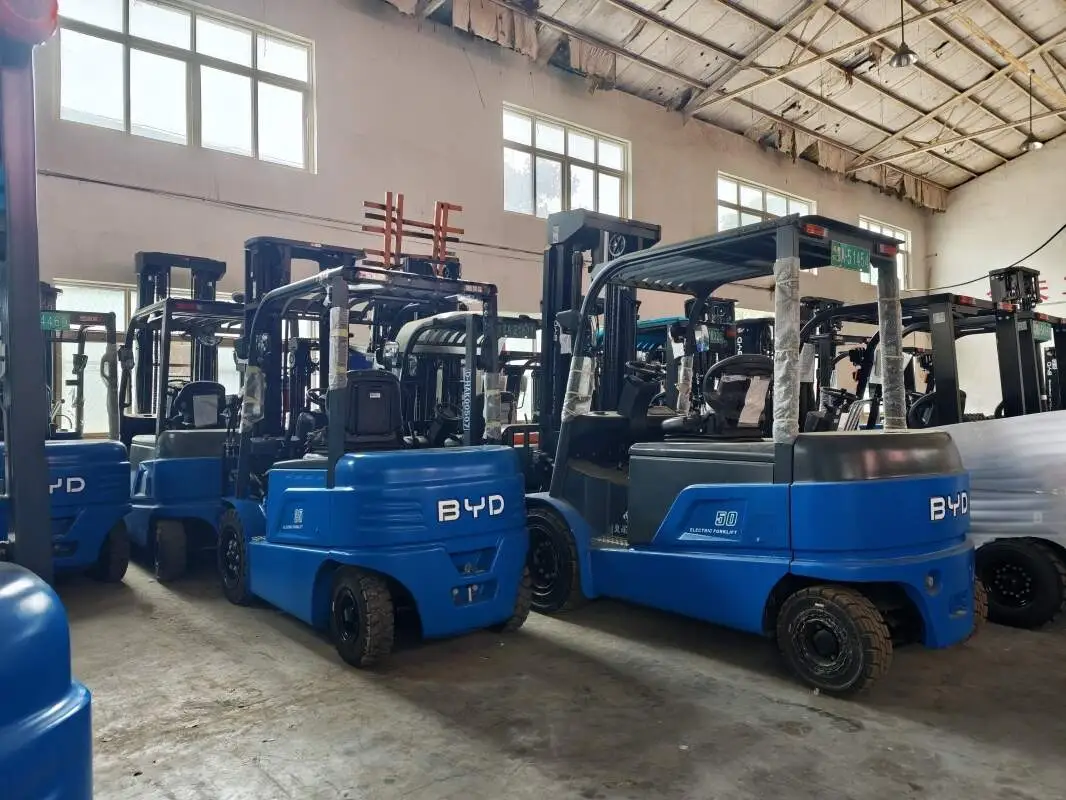
As the core hub of cargo circulation, the express transit warehouse has high cargo throughput and fast turnover rhythm. Lithium battery storage forklifts have become the core equipment of daily operations with the advantages of zero emission and stable battery life. Mastering the practical operation points of standardization can not only improve the efficiency of cargo turnover, but also effectively avoid operational risks.
The preparation and inspection before the operation is the foundation of safe operation. First of all, do a good job of vehicle inspection to confirm that the lithium battery is fully charged to avoid power failure in the middle of the operation; check the sensitivity of the braking system and the flexibility of the steering device to ensure that the driving and operation are controllable; at the same time check whether the forks, lifting racks and other components are in good condition without deformation or loosening. Secondly, check the working environment, clean up the debris and water in the passage, and ensure the smooth driving route; confirm that the ground in the cargo stacking area is flat to avoid bumps when the forklift is running; pay attention to whether there are other operators around, and communicate and warn in advance.
During the operation, it is necessary to strictly follow the operation specifications. When picking up the goods, adjust the spacing of the forks to fit the width of the goods, and slowly insert them into the bottom of the tray to ensure that the forks fully support the goods and then lift them smoothly to avoid the goods falling from the tilt; during the handling process, keep the height of the goods within the line of sight, control the speed when driving, and slow down in advance at turns and narrow passages to avoid sudden braking. When unloading, place the goods smoothly in the designated area, slowly land the forks, confirm that the goods are firmly placed, and then pull out the forks. It is strictly forbidden to leave the forklift when the goods are not fixed.
Safety protection is a key link in practical operation. Operators need to wear protective equipment such as hard hats and non-slip shoes, and it is strictly forbidden to wear loose clothing or accessories to avoid getting involved in equipment parts. Pay attention during operation, and it is strictly forbidden to play with mobile phones or chat with others; forklifts are given priority to avoid pedestrians when driving, and it is strictly forbidden to carry people; in case of emergencies, press the emergency brake button immediately to ensure the safety of personnel and equipment.
After the operation is completed, do a good job of maintenance. Park the forklift in the designated area, turn off the power supply and pull up the handbrake; clean the surface of the vehicle and the debris and stains on the fork to prevent parts from rusting; check the status of the lithium battery. If it is idle for a long time, it is necessary to replenish the power regularly to avoid battery power loss affecting the service life; record the operation on the day, and report the maintenance in time if any abnormalities are found in the vehicle.


