
 简体中文
简体中文 繁体中文
繁体中文 Deutsch
 日本語
日本語 한국어
한국어 Tiếng Việt
 Русский
 ไทย
ไทย Bahasa Indonesia
 Bahasa Melayu
 Filipino
 لالعربية
 Français

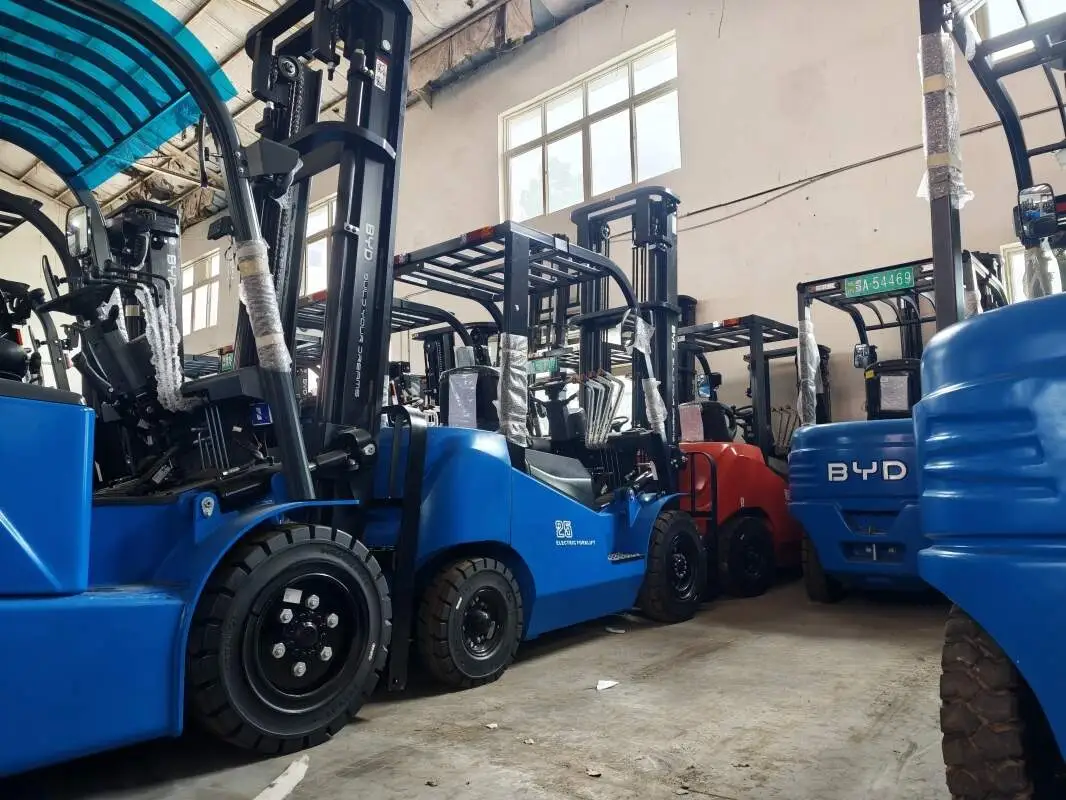
In warehousing, logistics, factory workshops and other scenarios, small lithium-ion forklifts have become the main equipment for short-distance handling operations due to their flexible, convenient, environmentally friendly and energy-saving characteristics. As a common accessory, side shifters seem inconspicuous, but they can bring many practical values to forklift operations and optimize overall operation efficiency.
Improve operational efficiency
In daily handling operations, forklifts often need to precisely place the goods to the designated position. Without the side shifter, the operator needs to adjust the parking position of the forklift several times to align the fork with the cargo space, which not only adds more operation steps, but also consumes additional time. With the side shifter, the operator does not need to move the forklift frequently. Just by controlling the side shifter device, the fork can move laterally left and right, quickly aligning the goods or cargo space, greatly reducing the time cost of a single operation and improving the overall operation efficiency. Especially when handling goods in batches, the effect of this efficiency improvement will be more obvious.
Optimize space utilization
The working space of small warehouses or workshops is often narrow and the channel width is limited, which brings no small challenge to the forklift operation. The existence of the side shifter allows the forklift to complete the precise alignment in the limited space. Even if the channel can only accommodate the forklift to pass through, the operator can complete the loading, unloading and stacking of goods through the side-moving fork without reserving additional adjustment space. This not only makes full use of the existing storage space and increases the storage capacity of goods, but also avoids the work blockage caused by space restrictions and improves the efficiency of the use of the site.
Reduce operating losses
During the handling process, the alignment deviation between the fork and the goods and the cargo space can easily lead to the collision and scratching of the goods, causing damage to the goods, and may also cause wear and tear to the forklift itself. The precise adjustment function of the side shifter allows the fork to fit the goods and the cargo space more accurately, reducing the risk of collision and reducing the loss rate of goods. At the same time, it can also reduce the wear and tear of the forklift parts and prolong the service life of the equipment. For the scene of handling fragile and valuable goods, this protective effect is particularly important.
Expand the job scenario
The addition of the side shifter makes the operation of small lithium-ion forklifts more adaptable. In addition to conventional storage and handling, when loading and unloading the truck, the side shifter can help the forklift flexibly adjust the fork position in the compartment to complete the loading and unloading of goods in different positions; when stacking goods, it can also accurately adjust the stacking position of the goods to ensure the neatness and stability of the stacking. Even in irregular work sites, the side shifter can assist the forklift to complete complex handling tasks, further expanding the application range of the equipment.
Overall, the side shifter for small lithium-ion forklifts is not an optional accessory, but a practical configuration that can improve operation efficiency from multiple dimensions such as efficiency, space, loss, and scene. It has a positive effect on optimizing the handling operation process and reducing operating costs.


