
 简体中文
简体中文 繁体中文
繁体中文 Deutsch
 日本語
日本語 한국어
한국어 Tiếng Việt
 Русский
 ไทย
ไทย Bahasa Indonesia
 Bahasa Melayu
 Filipino
 لالعربية
 Français

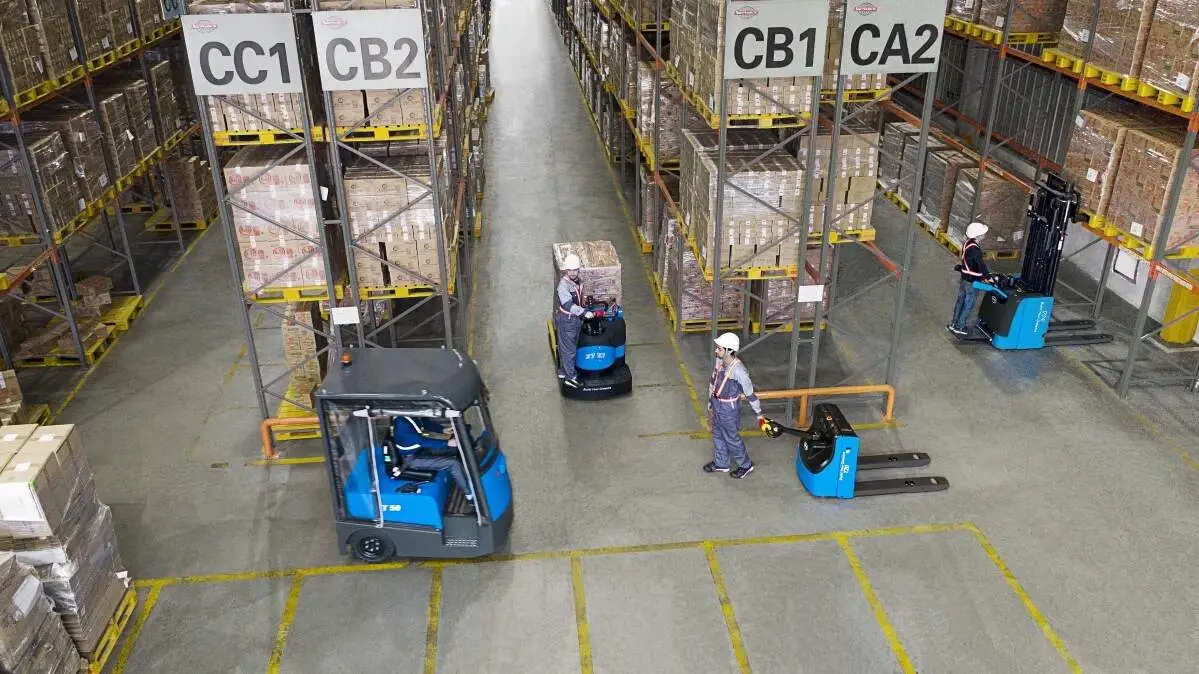
Scenarios such as fresh food distribution and cold chain storage place high demands on the efficiency and safety of cargo transshipment in warehouses. Small lithium-ion forklifts have gradually become the mainstream choice due to their flexible, energy-saving, and zero-emission characteristics. However, the cold storage environment is very different from the room temperature environment, and the selection needs to be based on actual needs.
Pay attention to the low temperature adaptability of the core components. First look at the battery pack, which is the key to the stable operation of small lithium battery forklifts at low temperatures. Products that have been dedicated tested in the common temperature range of cold storage should be preferred. This type of battery pack is usually designed with low temperature preheating or insulation, which can reduce the impact of low temperature on battery activity and ensure start-up speed and battery life stability. Secondly, look at the motor and controller. You need to choose a model that is suitable for low temperature to avoid the situation of operation card or power shortage due to component performance degradation.
Pay attention to the sealing and protection level of the body. The temperature fluctuation in the cold storage is large, and it is easy to produce condensation and frost melting water. Small forklifts need to have a high protection level to prevent liquid water from entering the motor, controller, battery and other core components to cause failure. At the same time, metal parts should be treated with corrosion-resistant surface treatment technology to avoid long-term exposure to high humidity and weak corrosion environment.
Pay attention to the body size and maneuver. Small cold storage passages are usually narrow, and the stacking height of goods is relatively fixed. When selecting models, measure the width of the passageway in the warehouse, the turning radius space and the stacking height of goods commonly used in advance, and choose models with compact bodies and flexible turns to ensure efficient operation in limited spaces. In addition, attention should also be paid to the convenience of operation, such as the adjustment range of the seat and the design of the joystick, which can improve the comfort of the operator and indirectly ensure the efficiency of the operation.


