
 简体中文
简体中文 繁体中文
繁体中文 Deutsch
 日本語
日本語 한국어
한국어 Tiếng Việt
 Русский
 ไทย
ไทย Bahasa Indonesia
 Bahasa Melayu
 Filipino
 لالعربية
 Français

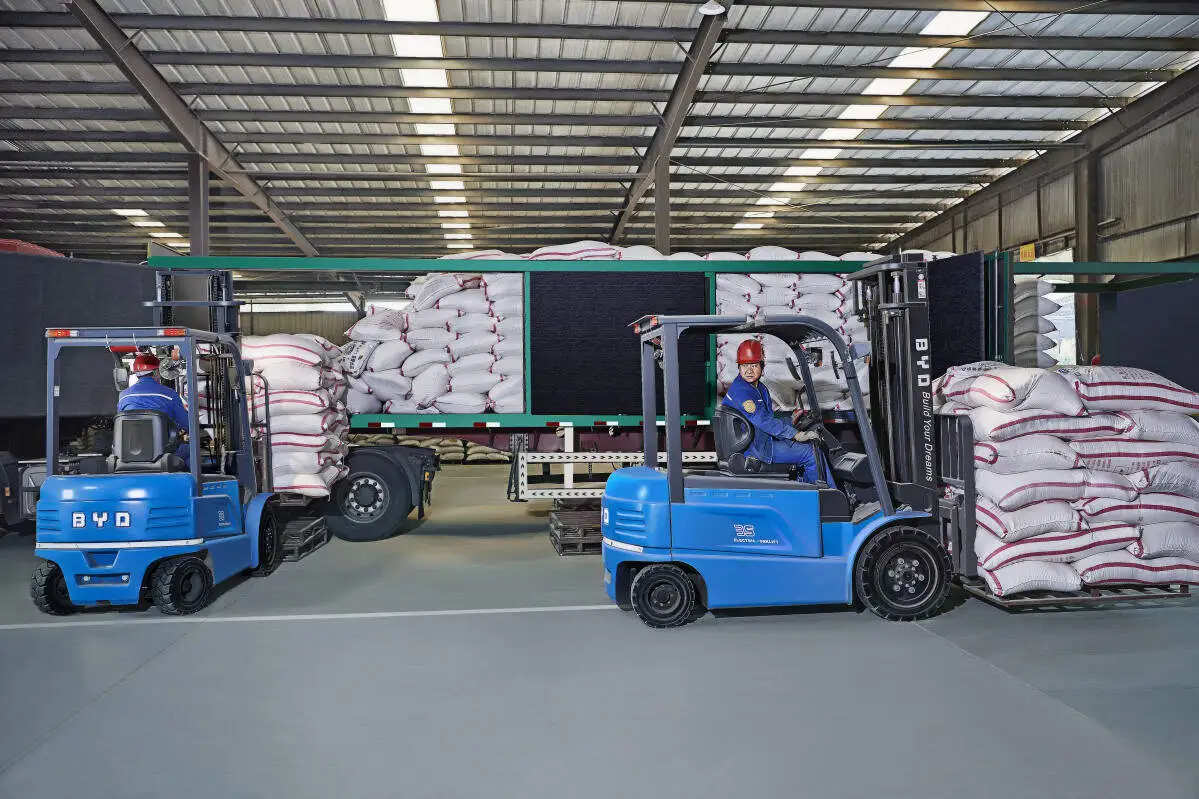
How to choose a small lithium battery forklift that can enter and exit the elevator? Don't step on these 5 practical points
First, clarify the applicable scenarios, such as floor material turnover in high-rise factories, small equipment or document handling in office buildings, stacking of goods in small warehouses or basements, etc. This type of space elevator has small car size, narrow passages, and high pollution from diesel forklifts. Ordinary electric forklifts are wide in size and fixed in height. Small lithium-ion forklifts that can enter and exit elevators are a more suitable choice. When purchasing, consider several core dimensions to avoid stepping on pits.
The first is the fit between the body size and the elevator car, which is the premise of being able to enter the elevator. It is necessary to measure the internal effective dimensions of your commonly used elevator in advance, including the net width, net depth and net height. The net height should be reserved for the height space of the highest cargo that may be carried daily. When purchasing, give priority to the minimum width and length of the side of the body. Generally, at least 10 to 15 cm of operation gap should be left on the side to facilitate getting on and off and adjusting the position. The length should avoid clamping the front and rear walls of the car. If it is a stacked-up model, it is also necessary to confirm whether the height of the door frame after it is reduced to the minimum meets the requirements. Some models can be equipped with the design of the door frame fine-tuning or temporarily lowering part of the structure
The second is the matching of the load and daily working conditions. Do not blindly pursue large loads, but choose the rated load in combination with the average weight of the goods handled in a single time. Generally, it is recommended that the average weight of the goods be controlled at about 80% of the rated load, which can not only prolong the service life of the vehicle, but also ensure the stability of the operation. Also confirm whether the stacking function is required. If it is necessary to clarify the maximum stacking height, ensure that it can meet the needs of floor shelves or stacking.
Then there is the battery life and charging speed. In terms of battery life, it should be combined with the daily handling time and distance selection. Generally, if it is used in high-rise office buildings in the morning and evening peaks, the battery life of 8 to 10 hours is enough. If it is a small warehouse that uses high frequency all day, you can choose a model that supports fast charging. Charging for 1 to 2 hours can meet half-day needs, or with a spare battery for quick replacement.
Finally, the operation and basic safety configuration. Preference is given to models with a small turning radius, which is convenient for steering in narrow passages or elevators. The design of the handle or steering wheel should be ergonomic, and it is not easy to fatigue after long-term operation. Basic safety configurations cannot be less, such as emergency power-off switches, fork anti-skid sleeves, drop buffering devices, overload protection, etc., which can effectively reduce operating risks.


