
 简体中文
简体中文 繁体中文
繁体中文 Deutsch
 日本語
日本語 한국어
한국어 Tiếng Việt
 Русский
 ไทย
ไทย Bahasa Indonesia
 Bahasa Melayu
 Filipino
 لالعربية
 Français

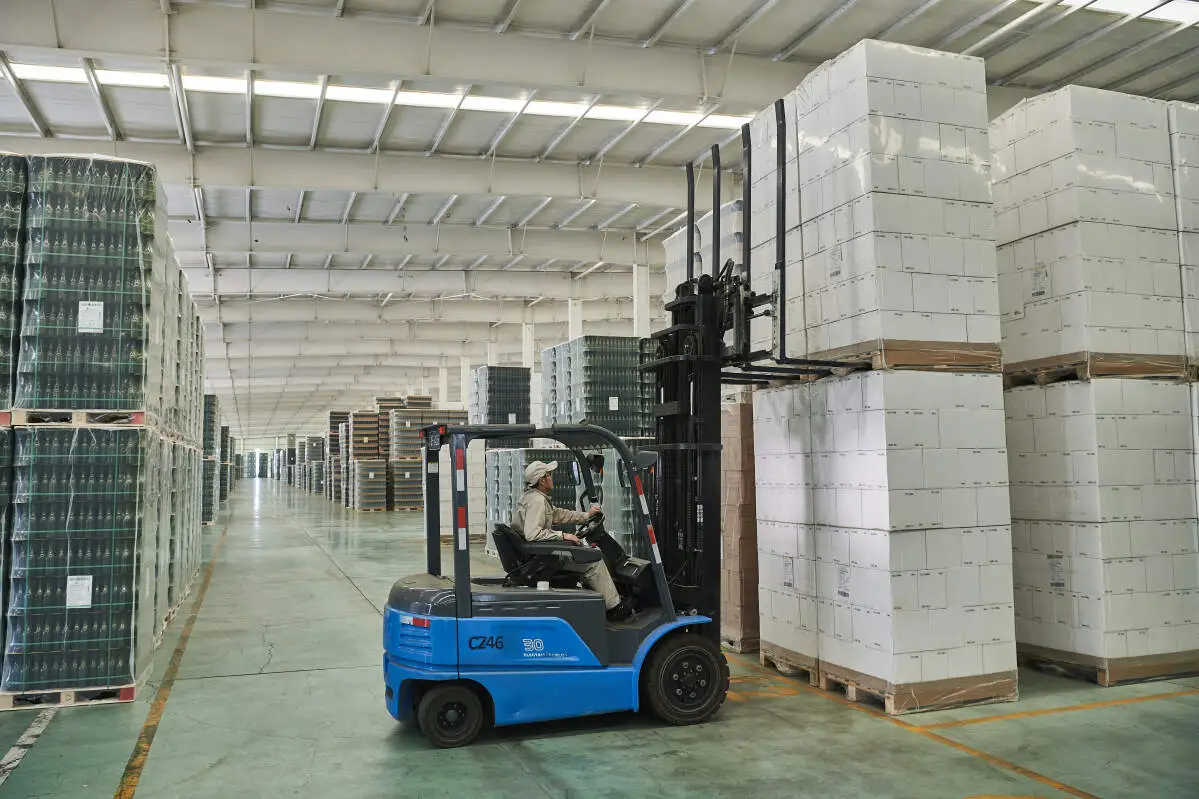
Core Difficulties and Equipment Requirements of Cold Storage Handling
The challenge of low temperature environment for handling equipment
The cold storage of quick-frozen food is in a low temperature environment of minus 18 ° C or even lower all year round. Cargo handling must not only ensure efficiency, but also cope with the severe test of low temperature on equipment. Traditional handling equipment is prone to problems such as power attenuation and component failure at low temperatures, which is difficult to meet the needs of stable operation in cold storage. Low temperatures will cause the activity of ordinary batteries to decrease, battery life to shorten, metal parts to become brittle, lubrication to fail, and increase the risk of failure. At the same time, the characteristics of fast-frozen food whole box stacking also have clear requirements for equipment stability and load capacity.
Cold Storage Operation Adaptation Advantages of Cold Resistant Lithium Battery Forklift
The performance guarantee of cold-resistant batteries
The cold-resistant lithium-ion forklift adopts battery technology suitable for low-temperature environments, which can maintain a stable discharge efficiency in a minus 20 ° C environment, avoid power drops, and ensure that a single operation can meet the needs of cold storage handling.
Low Temperature Adaptation Design of Body Components
The forklift body structure, hydraulic system, etc. are made of cold-resistant materials and special lubrication technology, which can still operate flexibly at low temperatures, reducing component wear and failure probability, and enhancing equipment service life and operation safety.
Practical workflow optimization solution
Movement planning in loading and unloading area and cold storage
Combined with the cold storage cargo storage layout, an exclusive handling route is planned to reduce invalid driving paths, and a pre-heating area is set up in the loading and unloading area to allow the forklift to warm up before entering the cold storage to avoid sudden cooling affecting the equipment.
Operational specifications for cargo handling
Operators need to be trained in low-temperature operations, drive at a uniform speed during handling, avoid sudden braking and acceleration to reduce the instantaneous load on the battery, and adjust the fork spacing and angle according to the characteristics of quick-frozen food packaging to ensure smooth handling of goods.
Daily maintenance points of cold-resistant lithium forklifts
Periodic battery performance testing
Check the battery voltage and battery life every week, clean the frost layer on the battery surface in time, maintain heat dissipation performance, and avoid power loss at low temperatures.
Low temperature maintenance of body parts
Monthly inspection of hydraulic systems, tires, braking systems, and other components, replacement of low-temperature appropriate lubricating oil, to ensure smooth operation of components, and timely troubleshooting of potential faults.


